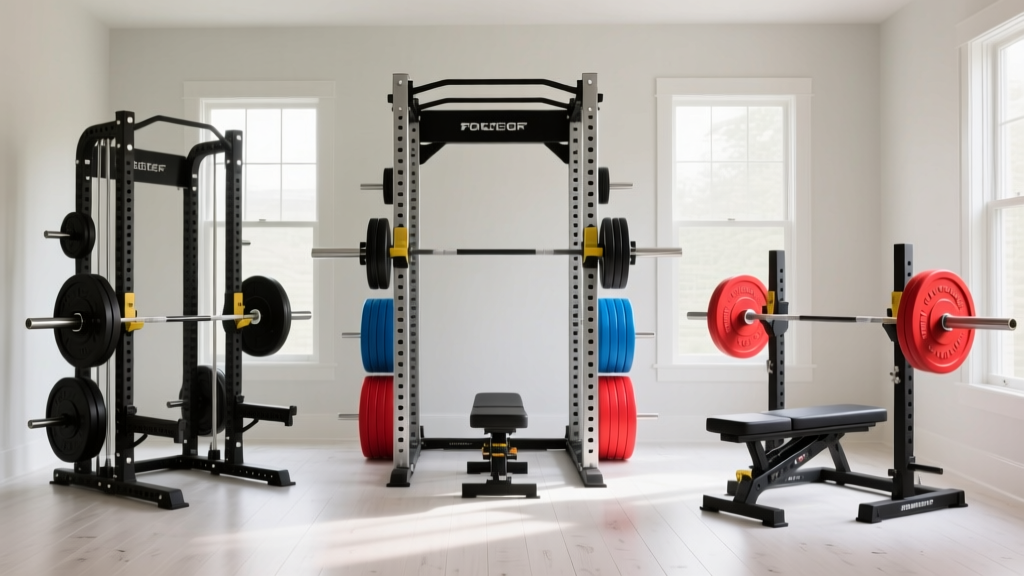
Power Rack vs Squat Rack vs Squat Stand: Best for Power Dumbbells
Compare power racks, squat racks, and squat stands for your home gym. Find the best setup for barbell lifts and heavy power dumbbells training.

The Home Gym Triad: Space, Safety, and Heavy Iron
Building a home gym in 2026 requires navigating a minefield of equipment choices, but no decision impacts your training safety and longevity more than your primary lifting station. When outfitting a garage or basement gym, lifters are immediately confronted with a triad of options: the full power rack, the half squat rack, and the minimalist squat stand. While most buying guides focus exclusively on barbell squats and bench presses, a critical piece of the puzzle is often ignored: how these structures accommodate heavy power dumbbells.
When we refer to 'power dumbbells' in this guide, we are talking about heavy-duty adjustable sets (like the PowerBlock Pro series or Nuobell 80s) and high-weight fixed urethane or hex pairs (70–120 lbs) used for serious hypertrophy, powerbuilding, and unilateral strength work. Hauling 90-pound adjustable dumbbells into position requires specific clearances, robust spotter systems, and heavy-duty storage solutions. Choosing the wrong rack style won't just limit your barbell work; it can make heavy dumbbell pressing dangerous and storage a nightmare.
Below, we break down the exact specifications, failure modes, and real-world pricing of power racks, squat racks, and squat stands to help you engineer the ultimate home gym setup.
Power Racks (Full Cages): The Solo Lifter's Fortress
A full power rack (often called a power cage) consists of four uprights connected by crossmembers, creating an enclosed lifting space. For lifters who train alone and rely heavily on power dumbbells for chest and shoulder work, this is the undisputed gold standard.
Why Power Racks Excel with Heavy Dumbbells
- Unmatched Solo Safety: If you are pressing 100 lb fixed hex dumbbells or maxing out a pair of PowerBlock Elites, failing a rep means dropping the weights. Inside a full cage, you can simply drop the dumbbells to the floor or onto specialized spotter decks without the risk of them bouncing back onto your face or torso.
- Interior Width Clearance: Bulky adjustable power dumbbells require significant horizontal clearance. Standard 43-inch inside width racks can cause the housings of blocky adjustables to clip the uprights during a deep dumbbell bench press. Upgrading to a 49-inch wide cage (like the Rogue RML-490F) provides the necessary lateral freedom.
- Attachment Ecosystem: Full cages allow you to mount heavy-duty dumbbell storage horns directly to the rear or side uprights, keeping 500+ lbs of iron securely anchored to the rig's footprint.
The Drawbacks: Footprint and Cost
The primary barrier to entry is space and capital. A standard 3x3 foot power rack requires a minimum ceiling height of 84 inches (or a specialized short-roof model for low-clearance basements). Furthermore, a high-quality 11-gauge steel cage with sandwich J-cups and spotter straps will cost between $1,200 and $1,800 in the current 2026 market, before factoring in shipping and optional bolt-down hardware.
Squat Racks (Half Racks): The Olympic Lifting Compromise
Half racks feature two main front uprights and two rear stabilization uprights, leaving the front of the lifting area completely open. They are favored by Olympic weightlifters who need to bail on snatches and cleans, but how do they handle heavy power dumbbells?
Half Rack Dynamics for Dumbbell Training
Half racks, such as the Rep Fitness PR-4000 or Bells of Steel Half Rack, utilize extended spotter arms that protrude outward from the front uprights. While these arms are excellent for catching a dropped barbell, they present a unique hazard for dumbbell work. If you fail a heavy dumbbell bench press and your arms give out asymmetrically, a 90 lb dumbbell can easily roll off the angled spotter arm and crash to the floor, potentially damaging your rubber mats or the dumbbell's internal adjustment mechanism.
However, half racks shine in rear storage. Most models feature dual-sided weight storage horns on the back uprights. This not only stores your power dumbbells and plate weight but also acts as a massive counterbalance, preventing the rack from tipping forward during heavy barbell rack pulls or kipping pull-ups.
Squat Stands: Minimalist Footprints with Major Caveats
Squat stands are exactly what they sound like: two independent, freestanding uprights designed to hold a barbell. Models like the Titan X-2 or Rogue SML-2 are incredibly popular for budget-conscious lifters and those with severe space constraints.
WARNING: Heavy Power Dumbbells and Squat StandsSquat stands are fundamentally unsafe for heavy, solo dumbbell bench pressing. Because the uprights are independent and rely entirely on a wide base or bolt-down anchors, the lateral shifting of heavy dumbbells—or dropping one side during a failed rep—can easily tip the stand. According to safety analyses by Garage Gym Reviews, independent stands should be strictly reserved for barbell squats, presses, and light-to-moderate dumbbell work where the lifter can safely stand the weights up without requiring a spotter or safety catch.
If your training revolves around heavy power dumbbells, squat stands should only be purchased if you are pairing them with a dedicated, heavy-duty adjustable bench and you possess the mobility to safely 'stand up' the dumbbells at the end of a set, or if you are exclusively using them for floor presses and goblet squats.
Head-to-Head Comparison Matrix
| Feature | Power Rack (Full Cage) | Squat Rack (Half Rack) | Squat Stands |
|---|---|---|---|
| Avg. 2026 Price | $1,200 - $1,800+ | $700 - $1,100 | $250 - $450 |
| Steel Construction | 3x3 11-Gauge | 3x3 11-Gauge | 2x2 or 3x3 (11 to 14-Gauge) |
| Solo Heavy Dumbbell Safety | Excellent (Enclosed drop zone) | Moderate (Risk of rolling off arms) | Poor (High tip-over risk) |
| Dumbbell Storage | High (Side/Rear attachments) | High (Rear counterbalance horns) | None (Requires separate tree) |
| Footprint (L x W) | ~48' x 48' (Standard) | ~48' x 48' (With spotter arms) | ~24' x 30' (Base footprint) |
| Best For | Powerbuilding, Heavy Hypertrophy | Olympic Lifts, Functional Fitness | Budget Setups, Small Spaces |
The 'Power Dumbbells' Clearance & Safety Protocol
When integrating heavy dumbbells into your rack ecosystem, you must pay attention to the micro-measurements that generic buying guides ignore. According to biomechanics and equipment testing data published by BarBend, the interaction between your dumbbell housing and the rack's J-cups dictates the fluidity of your workout.
- UHMW Plastic Liners: Ensure your rack's J-cups and spotter arms are lined with UHMW (Ultra-High Molecular Weight) plastic. Dropping raw steel or cast-iron power dumbbells onto bare metal spotter arms will chip the dumbbell's coating and degrade the structural integrity of the rack over time.
- Westside Hole Spacing: Look for uprights with 'Westside' spacing (1-inch hole spacing in the lower bench-press zone). When setting up safeties for heavy dumbbell floor presses or low-incline presses, that 1-inch precision prevents the safeties from being set too high (restricting range of motion) or too low (failing to catch a dropped dumbbell in time).
- Anchor Bolt Kits: If you are using a half rack or squat stand and insist on handling heavy dumbbells, you must bolt the rig into concrete. Free-standing flat-foot racks are rated for vertical barbell loads, not the chaotic lateral momentum of a failed 160 lb combined dumbbell press.
Expert Tip: 'If you are buying a full power rack specifically for heavy adjustable dumbbells, measure the exact width of your dumbbell at its widest point. Add 6 inches to that number. If the inside width of the rack you are ordering is less than that combined total, you will scrape the uprights on every single rep of dumbbell flyes and bench presses.' — FitGearPulse Equipment Testing Lab
2026 Decision Framework: Which Rack Should You Buy?
To finalize your purchase, run your specific situation through this decision matrix:
Scenario A: The Hardcore Powerbuilder
Your Profile: You train alone, push dumbbell presses to absolute failure, and own (or plan to own) pairs of 80+ lb power dumbbells. You have an 8-foot ceiling and a two-car garage.
The Verdict: Buy a Full Power Rack (49-inch width preferred). The enclosed cage is the only way to safely fail a heavy unilateral dumbbell press without risking injury or equipment damage. Budget roughly $1,500 for the rack, plus $200 for a heavy-duty utility bench and $150 for a pair of rear-mount dumbbell storage horns.
Scenario B: The Functional Athlete & Olympic Lifter
Your Profile: Your training is 60% barbell Olympic lifts, 30% kettlebell work, and 10% moderate dumbbell accessory work. You need open space in front of the rig for snatches and cleans.
The Verdict: Buy a Half Rack. The open front allows for bailing on missed snatches, while the rear storage horns perfectly organize your moderate-weight hex dumbbells and bumper plates. Look for models with flip-down safeties rather than extended pin-pipe spotters to keep the footprint tight when not in use.
Scenario C: The Urban Apartment or Budget Lifter
Your Profile: You are training in a spare bedroom or small apartment. You primarily use kettlebells, resistance bands, and light-to-moderate adjustable dumbbells (up to 50 lbs).
The Verdict: Buy Squat Stands. Pair them with a folding wall-mounted bench to maximize floor space. Strictly avoid heavy, max-effort dumbbell pressing without a human spotter present. Invest the money saved on the rack into a premium, heavy-duty adjustable dumbbell set and a high-density rubber matting system to protect your subfloor.
Frequently Asked Questions
Can I store round urethane power dumbbells on standard rack horns?
Yes, but with caution. Standard 1-inch diameter storage horns are designed for Olympic weight plates. While you can slide the handles of round urethane dumbbells onto these horns, the round heads will cause the dumbbells to spin and tilt. For round dumbbells, it is highly recommended to purchase specialized 'cradle' style dumbbell shelves that bolt into the upright's mounting holes, providing a flat, stable resting surface.
Are 2x2 uprights sufficient for heavy dumbbell training?
In 2026, 2x2 uprights (typically 14-gauge steel) are considered entry-level and are generally restricted to squat stands rated under 600 lbs. If your total working weight (barbell + plates, or combined heavy dumbbells) regularly exceeds 400 lbs, the lateral flex of 2x2 steel during re-racking can cause premature wear on J-cup pins. Always opt for 3x3, 11-gauge steel for serious powerbuilding.
Do I need a spotter arm for dumbbell work?
For full power racks, standard strap safeties or pin-pipe safeties spanning the width of the cage are superior to spotter arms for dumbbell work. Spotter arms are designed to catch the ends of a 7-foot barbell. Dumbbells operate independently, meaning a full-width cross-catch system is required to ensure both weights are halted simultaneously if your grip fails.
For more detailed teardowns of specific rack models and attachment compatibility, refer to the extensive testing archives at Rogue Fitness and independent home gym reviewers. Choosing the right rig is a decade-long investment; measure twice, anchor securely, and lift heavy.
More gear to consider
All reviews
Bumper vs Iron Plates: Elevating Your Dumbbells Routine Home Setup

Budget Dumbbell Racks for the Dumbbell Romanian Dead Lift (2026)

Cast Iron vs Competition Kettlebells Over an Aesthetic Dumbbell Set

Barbell Collar Clamp Comparison & Preacher Curl Dumbbell No Bench

Rack Setup: Barbell Collars & Dumbbell Exercises for Obliques
