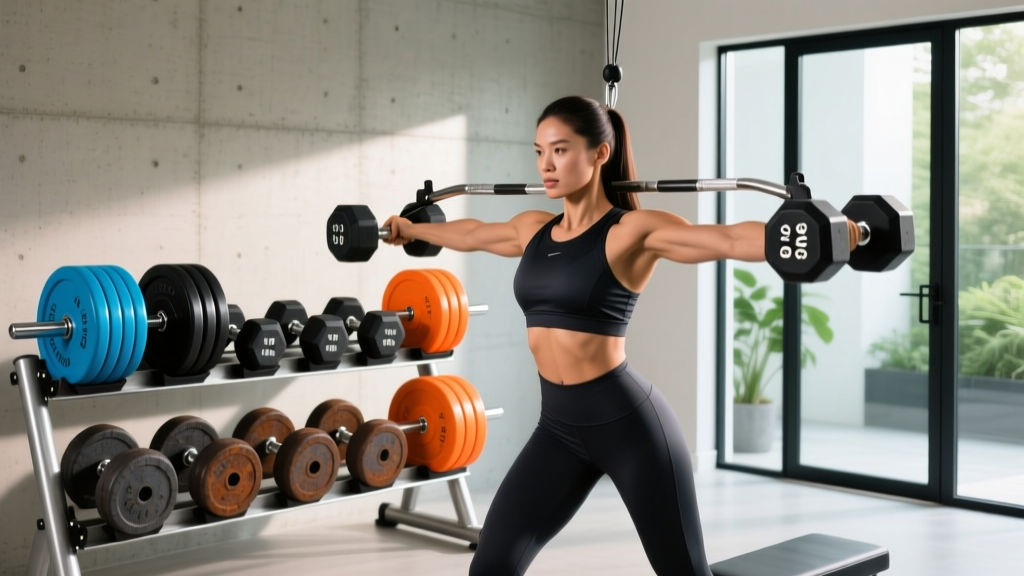
Power Rack vs Squat Rack vs Squat Stand: RDL Dumbbell Setup Guide
Confused by power rack vs squat rack vs squat stand? Our beginner guide breaks down footprints, costs, and how to optimize space for the RDL dumbbell.

The Home Gym Dilemma: Choosing Your Core Anchor
Building a home gym in 2026 is an investment in your long-term health, but the sheer volume of equipment options can paralyze beginners. The most critical decision you will make is selecting your primary lifting station: a power rack, a squat rack, or a squat stand. While they all hold a barbell, their footprints, safety features, and impact on your overall gym 'flow' are vastly different.
Many beginners make the mistake of buying the largest power rack they can afford, only to realize it dominates their garage and ruins the floor space needed for essential accessory movements. A perfect example? The RDL dumbbell variation. To properly execute a hip hinge with heavy dumbbells, you need specific floor clearances that a poorly planned rack setup can completely obstruct.
This step-by-step guide will walk you through the exact differences between these three structures, helping you choose the right gear for your space, budget, and exercise repertoire.
Step 1: Understand the Hardware (Specs & Pricing)
Before we map out your floor plan, you need to understand what you are actually buying. Here is a side-by-side comparison of the big three based on current 2026 market standards for high-quality, 11-gauge steel home gym equipment.
| Feature | Power Rack (4-Post) | Squat Rack (2-Post w/ Base) | Squat Stand (2 Independent) |
|---|---|---|---|
| Definition | Four uprights connected by crossmembers, fully enclosing the lifter. | Two front uprights with a large rear gusset/base for stability. | Two completely separate, freestanding uprights with small bases. |
| Avg Footprint | 48' x 48' (or 49' x 49' for 3x3 steel) | 48' wide x 30' to 40' deep | 18' x 18' per stand (requires 48' width between them) |
| 2026 Price Range | $800 - $1,500+ | $450 - $800 | $250 - $450 |
| Weight Capacity | 800 - 1,000+ lbs | 600 - 800 lbs | 500 - 800 lbs |
| Safety Spotting | Excellent (internal safety straps/pins) | Good (external spotter arms) | Poor to Fair (external arms, high tip risk if failed) |
Step 2: Evaluate Your Floor Space & The 'RDL Dumbbell' Factor
The most overlooked aspect of buying a rack is how it affects the space around it. This is where the RDL dumbbell test comes into play.
The Romanian Deadlift (RDL) is a foundational posterior chain movement. According to ExRx.net's biomechanical breakdown of the dumbbell Romanian Deadlift, the movement requires a deep hip hinge, slight knee flexion, and a bar path (or dumbbell path) that travels down the front of the legs. When you perform an RDL dumbbell set with heavy weights (e.g., 70 lb to 100 lb hex dumbbells per hand), your stance widens, and the dumbbells drift slightly forward and outward to clear your knees and hips.
The RDL Dumbbell Clearance Test
If you buy a 4-post power rack and attempt to do your RDL dumbbell sets inside the cage, the front uprights will likely block your hands or the dumbbells at the bottom of the hinge, forcing you to alter your biomechanics and risk lower back injury. If you step outside the power rack to do them, you need at least 4 feet of clear floor space in front of the rack. In a standard 10x10 foot spare bedroom gym, a 4-foot deep power rack leaves only 6 feet of room total—meaning a tall lifter doing RDLs will practically be hitting the wall.
The Solution: If your space is tight, a squat stand is the superior choice. Because the two stands are independent and have a tiny footprint, you can easily drag them apart or push them against a wall when not in use, opening up the entire center of your room for expansive RDL dumbbell workflows, kettlebell swings, and floor-based mobility work.
Step 3: Assess Safety and Spotter Requirements
Your choice must align with the exercises you plan to do alone. If you intend to bench press heavy without a spotter, a power rack is non-negotiable. The internal safety pins or UHMW plastic safety straps will catch a dropped barbell safely across your chest.
However, if your primary focus is on deadlifts, squats (where you can safely dump the bar backward), and accessory work like the RDL dumbbell, the heavy safety infrastructure of a power rack might be overkill. Squat racks with extended external spotter arms provide a great middle ground, offering decent safety for benching while taking up less visual and physical space than a full cage.
A Note on Squat Stand Safety
Beginners often buy squat stands because they are cheap and foldable. Be warned: if you fail a rep on a squat stand, the forward momentum of a dropped barbell can flip the stands entirely. Always bolt squat stands to a wooden platform if you plan to lift near your maximum capacity.
Step 4: Budget, Storage, and Upright Sizing
When configuring your rack, you will encounter the debate between 2x3 inch and 3x3 inch steel uprights. In 2026, 3x3 inch 11-gauge steel with 5/8-inch holes (often called 'Westside' hole spacing in the bench zone) is the gold standard for serious home gyms. It offers vastly superior stability and compatibility with a wide range of attachments like lat pulldowns and belt squat mechanisms.
But what about storage? Heavy RDL dumbbell sets require significant weight. If you are using adjustable dumbbells (like Nuobell or PowerBlock), they sit neatly on a floor tray. But if you are using fixed hex or urethane dumbbells, you need a tiered rack. Power racks often feature weight storage horns on the back crossmembers, which help balance the rack when loaded with heavy barbell plates, but they are rarely designed to hold bulky dumbbells. You will likely need to budget an extra $150 to $250 for a dedicated, heavy-duty A-frame dumbbell rack to keep your workout area free of tripping hazards.
Step 5: The Final Decision Matrix
Use this quick checklist to finalize your purchase:
- Choose the Power Rack if: You have a dedicated 2-car garage or large basement, you plan to bench press heavy without a spotter, and you want to add attachments like a cable pulley system later.
- Choose the Squat Rack if: You want the safety of spotter arms for benching but need to save 12 to 18 inches of depth in your room to allow for barbell and RDL dumbbell floor work.
- Choose the Squat Stand if: You are in a small apartment or bedroom, your budget is under $400, you primarily do squats, deadlifts, and dumbbell work, and you need to maximize open floor space.
Conclusion: Build for the Movements You Actually Do
It is easy to get caught up in the aesthetics of a massive, fully-loaded power rack seen on social media. But a functional home gym is built around the movements you actually perform. By considering the spatial requirements of essential hinges like the RDL dumbbell, you ensure that your equipment serves your training, rather than restricting it. Measure your space, map out your exercise flow, and choose the anchor that lets you move freely and safely for years to come.
For more detailed equipment specifications and to verify current 2026 steel pricing, always check manufacturer spec sheets directly, such as the Rogue R-3 Power Rack specifications, before finalizing your layout.
More gear to consider
All reviews
Safe Storage for Back Arm Exercises with Dumbbells: Rack Care

Barbell Collar Types Compared: Securing Dumbbell Rear Shoulder Raises

How to Pack Dumbbells for Moving: 2026 Bumper vs Iron Plate Trends
Hex vs Urethane for the Dumbbell Rear Foot Elevated Split Squat

2026 Adjustable Dumbbell Setup & Men's Dumbbell Workout Program