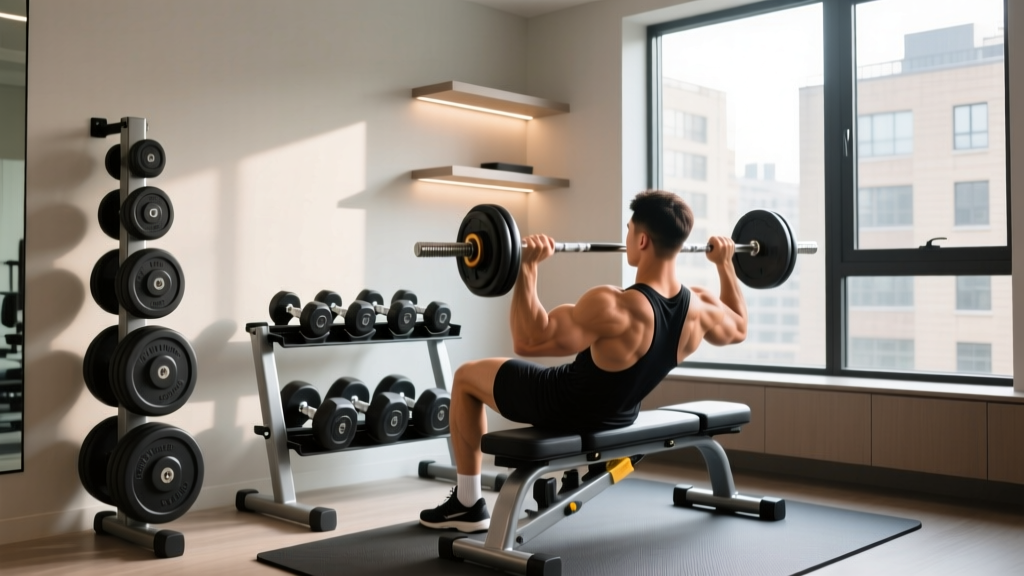
Space Optimization: Loadable Dumbbells & the Dumbbell Lying Row
Discover how to optimize compact home gym layouts using loadable dumbbells, ensuring proper clearance for the dumbbell lying row and maximizing space.

The Spatial Dilemma: Loadable Dumbbells in Compact Gyms
As home gym footprints continue to shrink in 2026, the shift toward high-density, multi-functional layouts has made loadable dumbbells with interchangeable plates an essential investment. Unlike fixed-weight hex or urethane dumbbells that require massive, multi-tiered storage racks, a set of plate-loaded handles or modular interchangeable systems allows you to share a single set of weight plates between your barbell and dumbbell movements. This drastically reduces both the financial barrier to entry and the physical square footage required for a complete free-weight zone.
However, space optimization is not merely about static storage footprints; it is about dynamic operational clearance. When you transition from a static storage perspective to active movement patterns, the physical dimensions of loadable dumbbells introduce unique spatial challenges. Nowhere is this more apparent than during the dumbbell lying row (often performed chest-supported on an incline bench). This highly effective back isolation movement demands precise spatial awareness, specific bench geometry, and strict equipment tolerances to execute safely and effectively in a tight layout.
⚠️ Layout Warning: A standard 20-inch Olympic loadable dumbbell handle, when loaded with 45-pound bumper plates, can exceed 24 inches in total lateral width. In a compact 50-square-foot gym, this oversized profile frequently collides with bench stabilizers, power rack uprights, or the floor itself during deep eccentric stretches.Biomechanics Meets Floorplan: The Dumbbell Lying Row
The dumbbell lying row—specifically the chest-supported incline variation—is a staple for targeting the latissimus dorsi, rhomboids, and rear deltoids without imposing axial loading on the lumbar spine. According to the National Strength and Conditioning Association (NSCA), maintaining a neutral spine while achieving a full scapular stretch is critical for maximizing hypertrophy and preventing compensatory momentum.
To achieve this full range of motion (ROM), the dumbbells must hang freely at the bottom of the movement. If you are using loadable dumbbell handles with interchangeable plates, the lateral width of the loaded sleeves becomes the limiting factor. If the plates strike the floor or the rear crossbar of your adjustable bench before your lats are fully stretched, you are effectively shortening the ROM and robbing yourself of the exercise's primary mechanical tension.
Clearance Matrix: Handle Length vs. Bench Incline
When designing your layout, you must calculate the vertical clearance required based on your bench height and the width of your loaded interchangeable plates. Most commercial and premium home gym benches (such as the Rogue AB-3 or Rep Fitness FB-5000) sit at a standard 17.5-inch pad height. Below is a clearance matrix to help you select the right loadable handle and plate combination for the dumbbell lying row.
| Handle Type & Length | Plate Profile (Example) | Total Lateral Width | Dumbbell Lying Row Viability (17.5" Bench) |
|---|---|---|---|
| 10" Standard Handle | Cast Iron 10lb (5" dia) | ~12 inches | Excellent: Full ROM, no floor contact. |
| 15" Olympic Handle | Urethane 25lb (6.5" dia) | ~16 inches | Good: Full ROM, minimal clearance margin. |
| 20" Olympic Handle | Rubber Bumper 45lb (17.7" dia) | ~22 inches | Poor: Plates strike floor before full lat stretch. |
| Modular Block (e.g., Ironmaster) | Interchangeable Steel Blocks | ~8.5 inches (Square) | Optimal: Maximum clearance, compact footprint. |
Top Loadable & Modular Systems for Tight Footprints
Choosing the right loadable dumbbell system dictates how efficiently you can execute the dumbbell lying row while maintaining a clutter-free layout. Here is a deep dive into the top contenders for space-constrained environments in 2026.
- Rogue Loadable Dumbbell Handles (15" and 20"): Priced around $195 to $245 per pair, these feature 50mm Olympic sleeves with a black cerakote or zinc finish. The 15-inch version is the sweet spot for space optimization; it holds enough 10lb and 25lb urethane plates to reach 70+ lbs per hand while keeping the overall width narrow enough to clear the floor during a lying row. The 20-inch version is better suited for floor-based movements or users with exceptionally long arms, but it severely limits incline bench clearance.
- Ironmaster Quick-Lock V2: Starting at $459 for a base set, this is not a traditional cylindrical sleeve, but a modular system using interchangeable steel blocks that lock into a square, fixed-dumbbell profile. Because the weight expands outward in a dense cube rather than laterally along a sleeve, the Ironmaster system completely eliminates the floor-strike issue during the dumbbell lying row. It is the gold standard for replicating the feel of premium urethane hex dumbbells without the storage rack.
- Titan Fitness Olympic Dumbbell Handles: At roughly $139 per pair, these are the budget-friendly workhorses. However, the sleeve end-caps are secured with snap-rings rather than threaded bolts. Under the high lateral torque generated during heavy, unilateral lying rows, cheaper snap-rings can fail, causing interchangeable plates to slide off mid-rep. Always upgrade to bolt-on collars or use high-quality Osko clamps when using budget loadable handles for horizontal pulling movements.
Designing a 50-Square-Foot Free Weight Zone
Integrating loadable dumbbells and an adjustable bench into a 5x10 or 7x7 foot space requires a deliberate layout strategy. Follow this step-by-step flow to maximize operational clearance for the dumbbell lying row and other complex movements.
- Anchor the Rack First: Position your power rack or squat stand against the shortest wall. Ensure there is a minimum of 24 inches of clearance behind the uprights for plate loading and barbell racking.
- Establish the 'Drop Zone': Designate a 3x4 foot area directly in front of the rack, covered by 3/4-inch horse stall mats. This is where your adjustable bench will live during dumbbell lying rows and chest presses.
- Bench Orientation for Lying Rows: When setting up for the dumbbell lying row, angle the bench at 30 to 45 degrees. Crucially, orient the bench so the user's head faces away from the power rack uprights. This prevents the loadable dumbbell sleeves from striking the metal uprights during the concentric pulling phase.
- Vertical Plate Storage: Store your interchangeable plates on a vertical tree or wall-mounted pegboard rather than a horizontal A-frame. This reclaims up to 8 square feet of floor space, giving you the lateral width needed to maneuver wide-grip loadable dumbbells safely.
Expert Troubleshooting: Edge Cases & Failure Modes
Even with a meticulously planned layout, loadable dumbbells introduce mechanical variables that fixed dumbbells do not. Understanding these edge cases is what separates a functional home gym from a frustrating one.
Sleeve Tolerances and Plate Rattle
Olympic loadable handles typically feature a 50mm sleeve diameter. If your interchangeable plates have hub inserts that are machined to 51mm or 52mm (common in budget rubber-grip plates), the plates will rattle violently during the eccentric lowering phase of the dumbbell lying row. This not only ruins the mind-muscle connection but accelerates wear on the handle's zinc coating. Always pair precision-machined handles with urethane or cast-iron plates featuring tight 50.2mm tolerances.
Bench Tipping on Asymmetrical Layouts
When performing single-arm dumbbell lying rows (using one heavy loadable dumbbell while the other arm is unsupported), the asymmetrical weight distribution can cause lightweight, narrow-base adjustable benches to tip laterally. If your layout restricts you to a compact, foldable bench, you must wedge the bench's rear stabilizer foot against a heavy sandbag or the base of your power rack to prevent catastrophic tipping during heavy unilateral pulls.
"The true measure of a compact gym layout isn't just how much equipment you can store in it, but how much of the room's volume you can safely utilize through a full range of motion. A 20-inch loadable dumbbell is a fantastic tool, but if your bench height and ceiling clearance turn your dumbbell lying row into a partial-rep floor tap, your layout has failed the biomechanical test." — FitGearPulse Layout Engineering Team
By carefully matching your loadable dumbbell handle length to your bench geometry, and respecting the spatial requirements of movements like the dumbbell lying row, you can build a world-class, space-optimized training environment that sacrifices zero performance.
More gear to consider
All reviews
How to Work Pecs With Dumbbells: Neoprene Sets Compared

Barbell Buying Guide: Weight, Knurling & Brachialis Dumbbell Exercises

Barbell Collar Types & Close Grip Dumbbell Press Muscles Worked
Rubber Hex vs Urethane: Maintaining Bells of Steel Urethane Dumbbells
Space Optimization: Kettlebells, Dumbbell Drag Curls & Gym Layouts
