Power Rack vs Squat Stand: Setup for the Dumbbell Lateral Lunge
Compare power racks, squat racks, and stands for your 2026 home gym. Learn installation steps, flooring needs, and clearance for the dumbbell lateral lunge.

The Spatial Dilemma: Cage vs. Half Rack vs. Stand
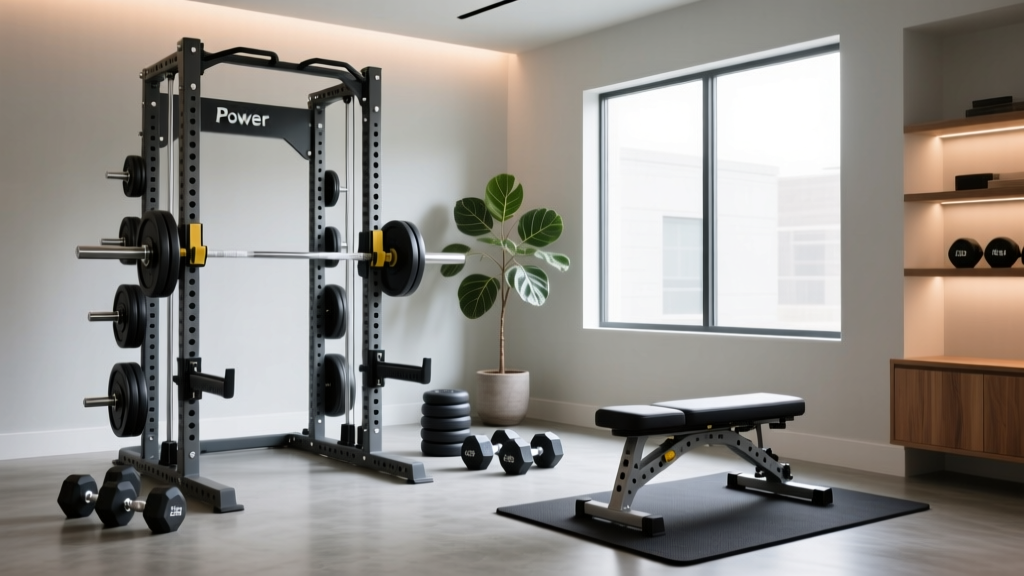
Designing a home gym in 2026 requires more than just buying the heaviest iron you can find; it demands a rigorous analysis of your spatial footprint. When deciding between a full power rack, a half squat rack, and a minimalist squat stand, most lifters focus solely on barbell clearance. However, a truly functional training space must accommodate dynamic, multi-planar accessory movements. The ultimate stress test for your gym layout? The dumbbell lateral lunge.
The dumbbell lateral lunge requires significant lateral wingspan, a flat non-compressing floor, and unobstructed side-to-side clearance. If you anchor a 48-inch wide power rack two feet from a wall, you immediately choke the lateral space needed to execute a proper frontal plane lunge with heavy dumbbells. Below, we break down the exact installation walkthroughs, spatial requirements, and flooring specifications to ensure your rack setup supports both heavy axial loading and expansive lateral movements.
| Equipment Type | Standard Footprint (W x D) | Avg. 2026 Price Range | Lateral Clearance Rating | Best For |
|---|---|---|---|---|
| Power Rack (Full Cage) | 48' x 48' (Interior 24' x 48') | $700 - $1,200 | Poor (Restricted by uprights) | Heavy solo squats, kipping pull-ups |
| Squat Rack (Half Rack) | 48' x 48' (with rear storage) | $600 - $950 | Moderate (Open front/sides) | Olympic lifts, plate storage |
| Squat Stand (Independent) | 49' x 48' (Uprights only) | $350 - $550 | Excellent (360-degree access) | Dumbbell lateral lunge, low ceilings |
Step-by-Step Installation Walkthrough
Proper installation is non-negotiable. A poorly anchored rack subjected to the eccentric braking forces of a missed squat or the shear forces of dropping heavy dumbbells will shift, damaging your subfloor and creating a severe safety hazard.
Step 1: Subfloor Assessment and Mat Selection
Before unboxing your uprights, address the floor. The BarBend Home Gym Flooring Guide emphasizes that compressible flooring is the enemy of both heavy squats and lateral lunges. When performing a dumbbell lateral lunge, your lead foot strikes the ground at an angle, generating immense lateral shear force. If you use interlocking EVA foam tiles, the foam will compress unevenly, leading to ankle valgus and potential ligament strain.
- The Solution: Use 3/4-inch thick vulcanized rubber mats (commonly sold as horse stall mats, approx. $50-$60 per 4x6 sheet).
- Installation: Lay a 6-mil polyethylene moisture barrier over concrete first to prevent mold, then lay the rubber mats. Use double-sided carpet tape at the seams to prevent the mats from sliding apart during lateral lunging drills.
Never place a squat stand or power rack directly on EVA foam. The point-load of a 3x3-inch steel upright combined with 500 lbs of loaded barbell weight will permanently crush the foam, causing the rack to lean and the anchor bolts to bend.
Step 2: Anchoring the Uprights
According to facility safety guidelines outlined by the National Strength and Conditioning Association (NSCA), all freestanding racks must be secured to the structural floor. The method depends entirely on your subfloor material.
For Poured Concrete Slabs:
- Position the rack and mark the anchor holes through the base plates.
- Move the rack and drill 1/2-inch diameter holes using a hammer drill and a carbide masonry bit. Drill 1/2 inch deeper than the anchor length (typically 4 inches deep for a 3-3/4 inch anchor).
- Vacuum the concrete dust out of the hole. Failure to do this will prevent the anchor from seating fully.
- Insert 1/2' x 3-3/4' Red Head wedge anchors through the base plate and into the concrete.
- Tighten with a torque wrench to 60 ft-lbs. Do not use an impact driver, as over-torquing will strip the threads or snap the bolt.
For Wood Subfloors (Garage with Plywood/OSB):
You cannot use wedge anchors in wood. You must locate the floor joists (typically 16 inches on center) and use 1/2-inch structural lag screws (minimum 4 inches long) driven directly through the base plates into the center of the joists. If the rack's base plate holes do not align with your joists, you must install structural blocking (2x8s) between the joists beneath the subfloor to provide a secure mounting point.
Optimizing Layout for the Dumbbell Lateral Lunge
Why dedicate an entire section of a rack setup guide to a single dumbbell exercise? Because the dumbbell lateral lunge is the ultimate diagnostic tool for gym spatial planning. To perform this movement correctly with 50 lb+ dumbbells, an average-height lifter requires a lateral wingspan of roughly 6 to 7 feet. Furthermore, the Garage Gym Reviews Power Rack Guide notes that modern home gyms must prioritize 'flow'—the ability to transition between exercises without moving heavy equipment.
The Power Rack Problem: If you center a 4-foot wide power rack in a 10-foot wide room, you only have 3 feet of clearance on either side. This is insufficient for a full-depth lateral lunge. You will either hit the wall with your dumbbell or compromise your knee tracking by shortening your stride.
The Squat Stand Solution: Squat stands (like the Rogue SML-2C or REP PR-1100) consist of two independent uprights. By placing them against the back wall and angling your workout space outward, you gain 360-degree access. You can set up your barbell for back squats, strip the bar, grab your dumbbells, and immediately perform lateral lunges directly in front of or even slightly behind the uprights without any cage walls restricting your path.
2026 Equipment Recommendations by Footprint
Based on current 2026 market availability and spatial efficiency, here are the top-tier installations for different room sizes:
- Best for Tight Spaces & Lateral Flow: REP Fitness PR-1100 Squat Stand ($329). With a compact 48' x 48' base and no rear crossmembers to trip over, it offers maximum floor space for lunges and agility work.
- Best Hybrid for Safety & Space: Titan T-2 Series Power Rack ($599). At 24 inches deep, this is a 'short-depth' cage. It provides the safety of enclosed spotter arms for solo benching while leaving ample front-to-back and side-to-side room for accessory movements.
- Premium Half-Rack: Rogue S-2 Squat Rack 2.0 ($815). Features a footprint that includes rear weight storage, keeping your 45lb plates off the floor and out of your lateral lunge runway.
Common Installation Failure Modes
Even experienced DIYers make critical errors during rack installation. Avoid these specific failure modes:
- The 'Floating' Anchor: If your concrete slab has a thin screed layer over a gravel base, the wedge anchor might expand in the weak top layer and pull out under load. Always ensure your concrete is a minimum of 3,000 PSI and at least 4 inches thick.
- Shimming Errors: Garage floors are rarely perfectly level. If your rack rocks, do not use plastic wedges to level the base plates. The plastic will shatter under dynamic loads. Instead, use steel machinist shims or pour a non-shrink structural grout under the base plate.
- J-Cup Height Miscalculation: When installing spotter arms, test your lowest squat depth with an empty bar. A common error is setting the spotter arms too high, causing the bar to bounce off them during the eccentric phase of a squat, which can severely injure the lifter's spine.
Frequently Asked Questions
Can I use a power rack in a room with an 84-inch ceiling?
Yes, but you must buy a 'short' rack. Standard power racks are 90 to 93 inches tall. Brands like REP Fitness and Rogue offer 72-inch and 80-inch models specifically designed for low-clearance basements. Remember to account for the height of your pull-up bar and the clearance needed to load plates on the top of the sleeves.
Do I really need to bolt my squat stand to the floor?
If you are strictly doing controlled, slow-rep exercises with a spotter, some heavy-duty stands (like the Rogue SML-2C with extended base feet) are stable enough un-bolted. However, if you perform dynamic movements, drop weights, or use resistance bands attached to the base, bolting is mandatory to prevent the stand from tipping forward.
How do I protect my walls from dumbbell strikes during lateral lunges?
If your layout forces you to lunge parallel to a drywall partition, install 3/4-inch thick rubber wall guards or horse stall mats cut vertically and adhered to the wall with construction adhesive. This protects both the drywall and the knurling on your dumbbells.
More gear to consider
All reviews
Free Weights vs Dumbbells: Bumper Plate vs Iron Plate Guide

Power Rack vs Squat Rack vs Stand: How to Use Dumbbells for Exercise
Olympic Barbell Guide: Knurling & Bent Over Dumbbell Row Machine Alts
Best Racks for Your Workout Plan With Dumbbells in 2026
10 Minute Full Body Dumbbell Workout: Neoprene Guide