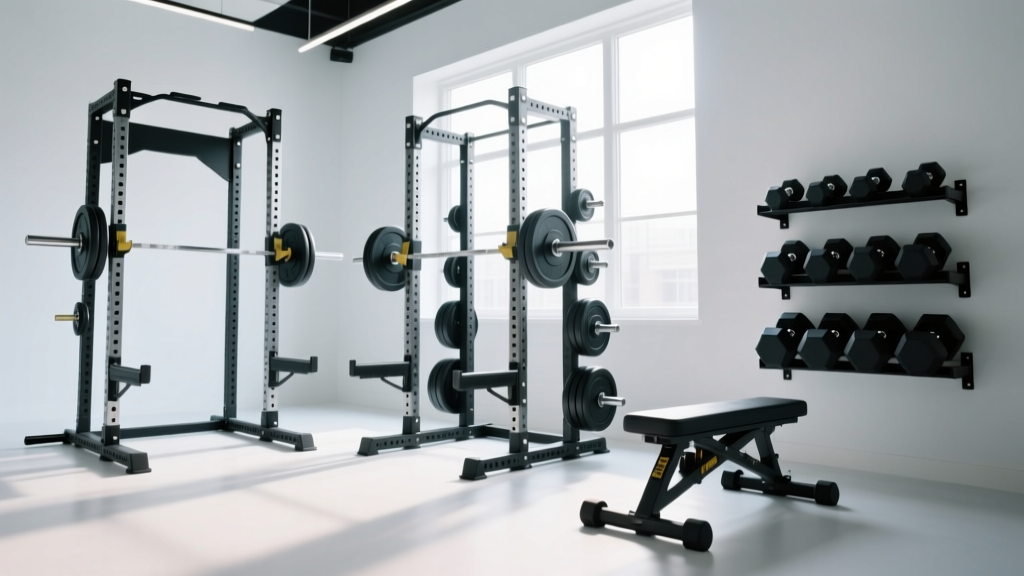
Power Rack vs Squat Rack vs Squat Stand & Circle Dumbbells
Compare power racks, squat racks, and squat stands for your home gym, plus how to integrate and store circle dumbbells safely in 2026.

The Foundation of Your 2026 Home Gym Ecosystem
Building a commercial-grade home gym requires more than just buying the heaviest barbell you can find. The true anchor of your training space is the racking system. In 2026, the market is saturated with options, but the decision ultimately boils down to three primary categories: the full power rack, the half rack (squat rack), and the minimalist squat stand. Each serves a distinct biomechanical and spatial purpose, and choosing incorrectly can bottleneck your training progress or, worse, compromise your safety.
Furthermore, modern functional fitness has introduced specialized equipment that complicates storage and spatial planning. A prime example is the rise of circle dumbbells—circular-profile dumbbells featuring perfectly round urethane heads or specialized ring-grip variations designed for rolling-resistance floor work and dynamic grip training. While hex dumbbells stack predictably, circle dumbbells introduce unique rolling torque hazards that directly influence which rack attachments and storage solutions you should invest in. This guide breaks down the structural realities of the big three racking systems and provides a definitive framework for integrating niche free weights safely.
Head-to-Head Matrix: Rack Categories Compared
Before diving into the nuances of upright gauge and hole spacing, review the baseline specifications that define the 2026 market standards for these three systems.
| Feature | Power Rack (Full Cage) | Squat Rack (Half Rack) | Squat Stand (Minimalist) |
|---|---|---|---|
| Footprint | 48' x 48' to 53' x 53' | 48' x 36' (Open Front) | 24' x 24' to 30' x 30' |
| Upright Steel | 3x3' 11-Gauge (Standard) | 3x3' or 2x3' 11-Gauge | 2x2' or 2x3' 14-to-11-Gauge |
| Safety Mechanism | Internal Pin-Pipe or Strap | Extended External Spotter Arms | Short External Spotter Arms |
| Avg. Price Range | $650 - $1,400+ | $450 - $900 | $150 - $350 |
| Circle Dumbbell Storage | High (Internal Tier Shelves) | Medium (Rear Gusset Shelves) | Low (Requires Separate Rack) |
Deep Dive: The Power Rack (Full Cage)
The power rack is the undisputed king of safety and versatility. Constructed from four to six vertical uprights, it creates an enclosed cage that allows you to fail a lift safely without a human spotter. According to extensive testing by BarBend's equipment analysts, the industry standard has firmly settled on 3x3-inch 11-gauge steel with 5/8-inch hardware, popularized by the Rogue R-3 and Rep Fitness PR-4000 lines.
Biomechanical & Spatial Advantages
- Westside Hole Spacing: Premium 2026 models feature 1-inch hole spacing in the 'bench zone' (the lower half of the upright), allowing for micro-adjustments to J-cup heights that protect your rotator cuffs during heavy pressing.
- Internal Working Width: Standard racks offer 43 inches of inside width, while competition-style racks offer 49 inches. If you plan to perform heavy dumbbell bench presses inside the cage, the 49-inch width is mandatory to prevent scraping the uprights.
- Attachment Ecosystem: Full cages support lat pulldown towers, dip stations, and integrated weight storage without compromising the rig's center of gravity.
Deep Dive: The Squat Rack (Half Rack)
Often confused with squat stands, a true half rack (or squat rack) features two primary front uprights and a rear stabilizing crossmember, usually with weight storage horns. It is designed for Olympic weightlifters and functional fitness athletes who need the freedom to step back from the bar or drop it safely without hitting the rear uprights of a full cage.
The Spotter Arm Geometry
Because half racks are open-front, they rely on extended external spotter arms. These arms must extend at least 18 to 24 inches forward to catch a barbell if you fail a squat and dump it forward. The primary failure mode of cheaper half racks is the rotational torque applied to the upright when a heavy barbell impacts the tip of a long spotter arm. Always look for models that feature reinforced gusset plates where the spotter arm receiver meets the upright.
Deep Dive: Squat Stands
Squat stands are the minimalist's choice, consisting of two independent or lightly connected uprights. They are inexpensive and highly portable, making them ideal for garage gyms with severe space constraints. However, as noted by the experts at Garage Gym Reviews, squat stands demand strict discipline. Without an enclosed cage, walking the bar out requires perfect balance, and failing a rep requires you to dump the bar forward or backward, which can destroy flooring or bend the barbell if the spotter arms are not perfectly aligned.
The Circle Dumbbells Factor: Storage & Safety Anomalies
While the barbell dictates the rack choice, your accessory equipment dictates your attachment choices. Circle dumbbells—characterized by their perfectly circular urethane heads or specialized ring-grip variations—have surged in popularity for functional fitness and rolling-resistance floor work. However, their geometry presents a unique failure mode in home gym storage.
The Rolling Torque Hazard
Traditional hex dumbbells sit flat on saddle pegs or tiered trays. Circle dumbbells, lacking flat edges, are prone to rolling torque. If placed on a standard 1-inch round storage peg attached to a rack's upright, the center of gravity constantly shifts. This creates a rotational hazard that can snap cheaper peg welds over time or cause the dumbbell to slip off entirely, creating a severe foot-crush hazard.
'Integrating circular-profile free weights into a rig requires a shift from peg-based storage to cradle-based storage. The kinetic energy of a rolling 50lb urethane head will easily dislodge standard friction-based pegs.' — Home Gym Engineering Best Practices, 2025
Solutions for Circle Dumbbell Integration
- 3-Tier Cradle Shelves: Opt for a power rack that supports flat, UHMW-lined shelf attachments on the rear gussets. These shelves cradle the circular profile, eliminating rolling torque entirely.
- Saddle Brackets: If using a half rack, invest in specialized U-channel saddle brackets rather than single-pin storage horns. The U-channel catches the circular head and prevents lateral movement.
- Independent Floor Racks: If your chosen squat stand lacks attachment real estate, do not attempt to hang circle dumbbells from the stand's base. Purchase an independent, 3-tier floor rack and position it outside the rig's fall zone.
Diagnostic Decision Framework: Which System Do You Need?
Use this step-by-step diagnostic flow to finalize your 2026 equipment purchase:
- Step 1: Assess Your Spotter Situation. Do you train alone with heavy sub-maximal or maximal loads? If yes, eliminate Squat Stands immediately. You need the internal safeties of a Power Rack or the heavy-duty extended arms of a Half Rack.
- Step 2: Evaluate Your Olympic Lifts. Do you perform full cleans and snatches from the floor? A full Power Rack will restrict your bar path and risk damaging the uprights. Choose a Half Rack with an open front.
- Step 3: Measure Your Ceiling and Floor. Standard power racks are 84 to 93 inches tall. If your ceiling is under 90 inches, you must seek out specialized 'short' racks (usually 72 inches) which require custom pull-up bar configurations.
- Step 4: Audit Your Dumbbell Collection. If your inventory includes more than two pairs of circle dumbbells, prioritize racks with a 4-post rear gusset design capable of supporting tiered shelf attachments to manage the rolling weight safely.
Final Thoughts on Rig Safety Standards
The intersection of heavy barbell training and specialized accessories like circle dumbbells demands a rigorous approach to equipment selection. The National Strength and Conditioning Association (NSCA) consistently emphasizes that environmental safety and equipment stability are just as critical as the programming itself. Whether you opt for the fortress-like security of a full power rack, the dynamic utility of a half rack, or the space-saving footprint of a squat stand, ensure that your storage solutions are specifically engineered for the geometry of your free weights. In 2026, there is no excuse for compromising on structural integrity when the market offers highly modular, commercial-grade solutions for every garage footprint.
More gear to consider
All reviews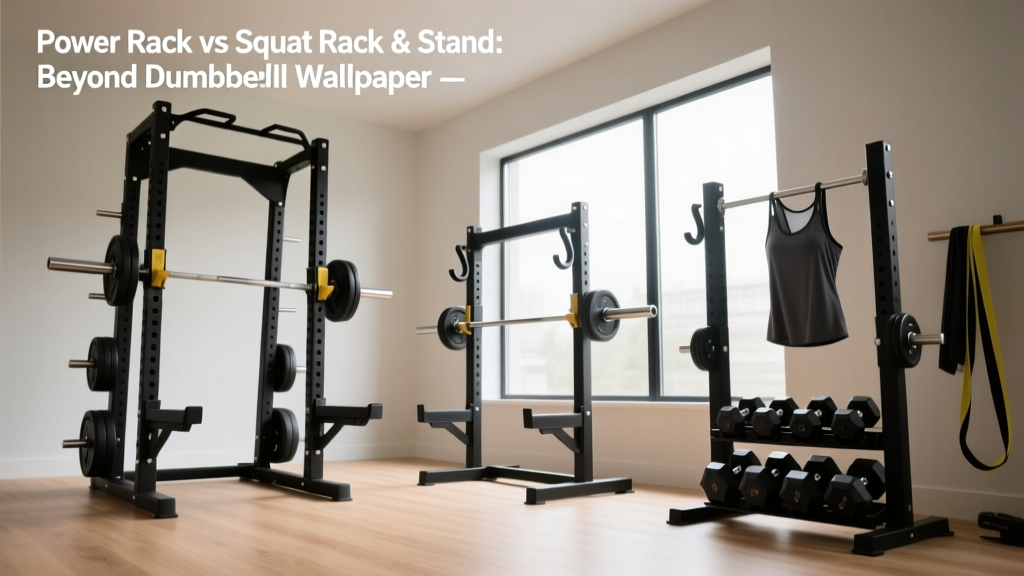
Power Rack vs Squat Rack vs Stand: Beyond Dumbbell Wallpaper
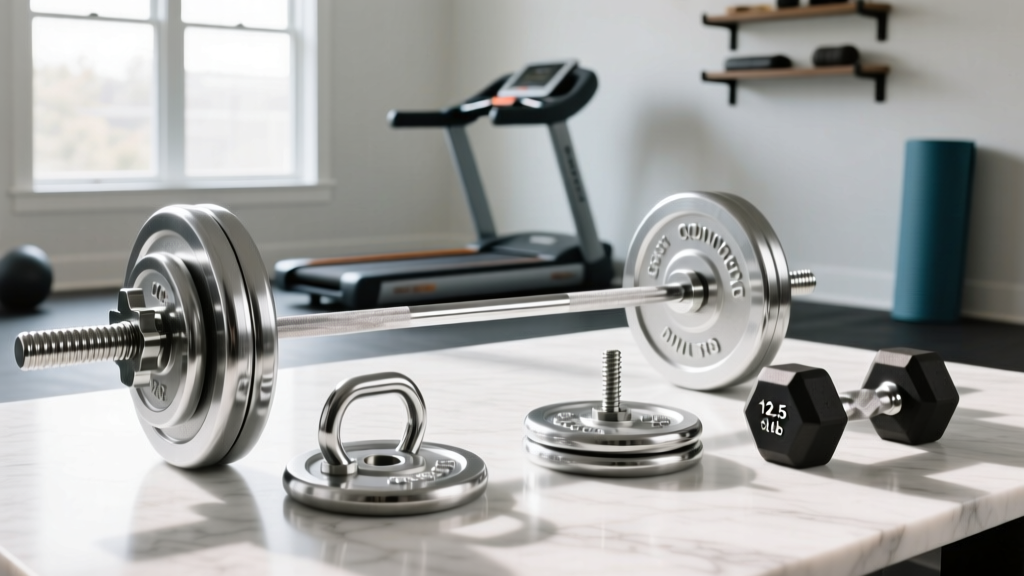
Barbell Collar Types Compared: Slippage & 12.5 lb Dumbbell Hacks
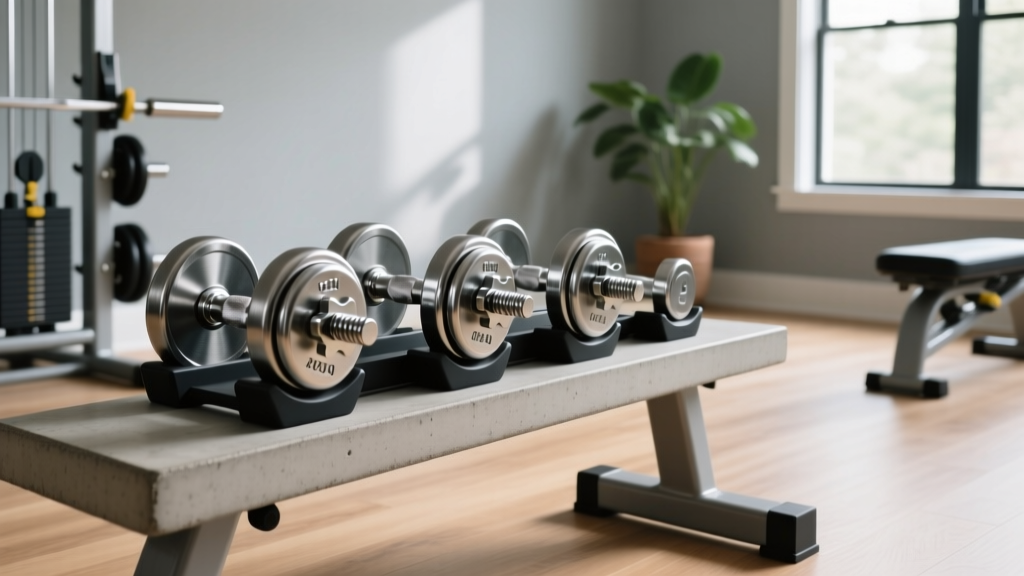
Adjustable Dumbbells: Troubleshooting Dumbbell Bench Standards

Best Dumbbell to Barbell Converter vs Kettlebells: 2026 Trends

Value Analysis: Loadable Dumbbells for Dumbbell Chest Press Exercises
