
Olympic vs Standard Plates & Love Handles Workout With Dumbbells
Compare Olympic vs standard weight plates for your home gym, plus a targeted love handles workout with dumbbells to build a complete, balanced physique.

The Foundation: 1-Inch Standard vs. 2-Inch Olympic
When outfitting a home gym, the most critical foundational decision isn't the brand of your power rack—it is the weight plate ecosystem you choose to invest in. The divide between standard (1-inch center hole) and Olympic (2-inch center hole) weight plates dictates the trajectory of your strength progression, equipment longevity, and overall training versatility. While Olympic plates are the undisputed standard for heavy barbell compound lifts, standard plates still hold a unique, cost-effective niche, particularly for loading adjustable spin-lock dumbbells used in high-rep isolation work.
In this comprehensive 2026 buying guide, we break down the exact metallurgical, dimensional, and economic differences between these two plate types. Furthermore, we bridge the gap between heavy iron and aesthetic conditioning by providing a highly effective love handles workout with dumbbells that utilizes standard adjustable dumbbells to target the obliques.
Quick Spec Summary
- Standard Plates: 1-inch (25.4mm) center hole. Best for budget setups, adjustable dumbbells, and light-to-moderate isolation work.
- Olympic Plates: 2-inch (50.8mm) center hole. Engineered for heavy loading, barbell whip, and rotational sleeve mechanics.
Comprehensive Comparison Matrix
Understanding the mechanical differences is vital before purchasing your first set of iron or bumper plates. Below is a direct comparison of the two primary weight plate standards available on the market today.
| Feature | Standard (1-Inch) | Olympic (2-Inch) |
|---|---|---|
| Center Hole Diameter | 1 inch (25.4mm) | 2 inches (50.8mm) |
| Max Barbell Load Capacity | ~150 - 200 lbs (before bar bending) | 700 - 1,500+ lbs (yield dependent) |
| Average 2026 Price Per Pound | $0.90 - $1.40 / lb | $1.80 - $3.50 / lb |
| Sleeve Rotation Mechanics | None (fixed solid bar) | Bushings or Needle Bearings |
| Primary Use Case | Adjustable dumbbells, light home gyms | Powerlifting, Olympic lifting, CrossFit |
The Economics of Iron: Cost Analysis and Longevity
From a purely financial perspective, standard cast iron plates are the entry point for most home gym owners. A 300-pound set of standard plates from brands like CAP Barbell or Yes4All will typically cost between $250 and $350 in 2026. However, the hidden cost of standard plates lies in their ceiling of progression. Standard barbells lack rotating sleeves, meaning that during dynamic movements like cleans or snatches, the rotational inertia of the plates transfers directly to your wrists, increasing injury risk.
Conversely, Olympic plates represent a long-term investment. Urethane-coated Olympic plates from premium manufacturers like Rogue or Eleiko can cost upwards of $3.00 per pound, but they are virtually indestructible. They feature precise weight tolerances (often within 1% of stated weight) and are designed to be dropped from overhead without fracturing. If you plan on lifting for more than two years, the cost-per-use of Olympic plates heavily outweighs the initial savings of standard iron.
Applied Biomechanics: Love Handles Workout With Dumbbells
While Olympic plates and barbells are essential for heavy compound movements that drive systemic metabolic demand, standard 1-inch plates are the unsung heroes of the adjustable spin-lock dumbbell. These adjustable dumbbells are the perfect, space-saving tool for high-rep, targeted isolation work. If your goal is to tighten the midsection, you need a dedicated love handles workout with dumbbells that targets the external and internal obliques.
The Myth of Spot Reduction vs. Muscle Hypertrophy
It is a well-documented biomechanical fact that you cannot burn fat exclusively from your love handles through lateral flexion. According to the National Strength and Conditioning Association (NSCA), spot reduction is a physiological myth; fat loss occurs systemically through a caloric deficit. However, building the underlying oblique muscles creates a structured, corset-like effect that pulls the waistline in and improves overall core stability during heavy squats and deadlifts.
The 20-Minute Dumbbell Oblique Circuit
Using a pair of adjustable standard dumbbells loaded with 1-inch plates, perform the following circuit. Select a weight that allows you to reach muscular failure within the prescribed rep ranges. Rest exactly 45 seconds between exercises, and 90 seconds between full rounds. Complete 4 total rounds.
- Strict Dumbbell Side Bends (15 reps per side): Hold a single dumbbell in your right hand. Keeping your torso perfectly vertical and avoiding any forward lean, laterally flex your spine to lower the weight toward your knee, then contract the opposite oblique to pull yourself back to the starting position. As detailed in ExRx's biomechanics guide on side bends, controlling the eccentric (lowering) phase for a full 2 seconds is critical for maximizing muscle fiber recruitment.
- Standing Dumbbell Woodchoppers (12 reps per side): Hold one dumbbell with both hands. Start with the weight at your left hip, then explosively rotate your torso and pivot your lead foot to chop the weight up and across your body to the opposite shoulder. This mimics functional, multi-planar core stabilization.
- Weighted Russian Twists (20 total reps): Sit on the floor, lean back to a 45-degree angle, and elevate your feet. Hold a single dumbbell and rotate your torso to tap the plate on the floor on each side of your hips. Focus on moving your shoulders, not just your arms.
- Single-Arm Farmer's Carry (40 yards per side): Load a heavy standard dumbbell. Walk slowly, focusing entirely on resisting lateral flexion. Your contralateral obliques must fire isometrically to keep your spine neutral.
Equipment Failure Modes: What to Watch For
When mixing plate types and cheap bars, be aware of specific mechanical failure modes:
- Standard Bar Bending: Standard 1-inch bars are typically made of lower-grade steel. Loading them past 150 lbs (e.g., four 25-lb standard plates per side) will cause permanent plastic deformation (bending) of the bar shaft.
- Thread Stripping on Spin-Locks: The primary failure point for standard adjustable dumbbells used in the oblique workout above is the threaded collar. Over-tightening or cross-threading the star nuts during heavy woodchoppers can strip the threads, causing plates to slide off mid-rep.
- Olympic Bumper Degradation: If you opt for Olympic bumper plates, avoid dropping highly technical, low-weight loads (like a single 10-lb bumper plate on each side) from overhead. The lack of surface area distribution can crack the center steel insert.
Frequently Asked Questions
Can I use Olympic plates on standard dumbbell handles?
No. Olympic plates feature a 2-inch center hole, while standard dumbbell handles are exactly 1 inch in diameter. The plates will simply slide off. You must use standard 1-inch plates for standard adjustable dumbbells, or invest in specialized (and often bulky) adapter sleeves, which are generally not recommended for dynamic movements like woodchoppers.
Are urethane plates worth the premium over rubber?
Yes, especially for indoor home gyms. Rubber plates (often made from recycled tires) emit a strong, lingering odor due to off-gassing volatile organic compounds (VOCs). Urethane is a synthetic polymer that is completely odorless, highly resistant to UV fading, and features a much higher durometer (hardness) rating, meaning it won't dent or deform when stored on weight trees.
How heavy should my dumbbells be for the love handles workout?
The obliques are highly endurance-oriented postural muscles. For the side bends and twists outlined above, aim for a weight that challenges you in the 12-20 rep range. For most intermediate lifters, this falls between 15 lbs and 35 lbs per dumbbell. Prioritize strict form and slow eccentrics over sheer load to protect the lumbar spine.
More gear to consider
All reviews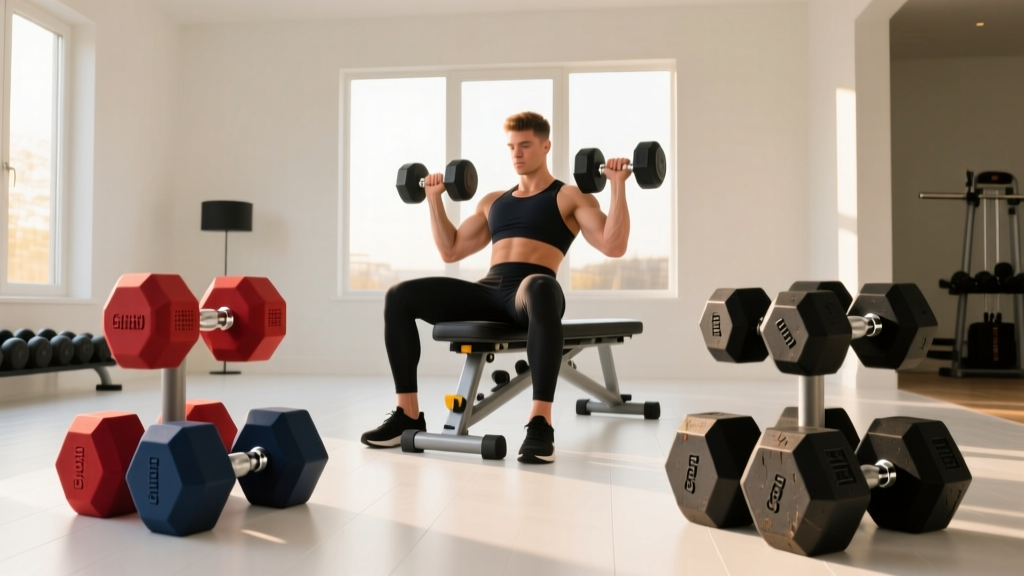
Seated Dumbbell Shoulder Press: Rubber Hex vs Urethane Space Guide

Single Arm Dumbbell Row Muscles Worked: Rack Maintenance Guide

Pec Deck Fly with Dumbbells: Neoprene Grip & Form Troubleshooting
EZ Curl vs Straight Bar: Space Layout & Dumbbell Image

Olympic Barbell Setup: Weight, Knurling & Dumbbells Movie Myths
