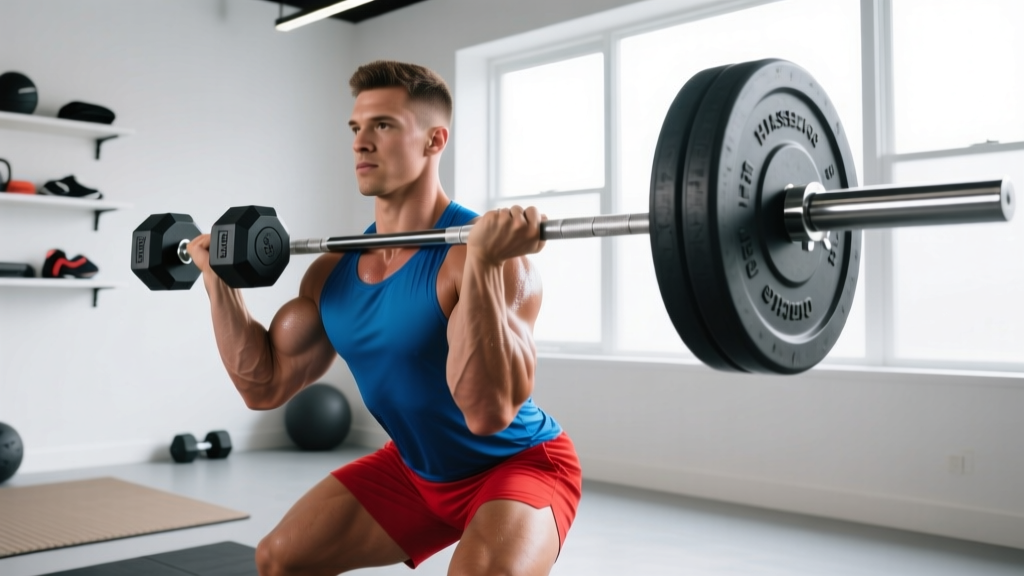
Power Clean with Dumbbells vs Barbell: Weight & Knurling Guide
Troubleshoot your transition from a power clean with dumbbells to an Olympic barbell. Learn how bar weight, whip, and knurling impact your front rack.

The Dumbbell Ceiling: Troubleshooting Your Transition
Mastering the power clean with dumbbells is one of the most effective ways to develop explosive triple extension, improve shoulder mobility, and build foundational power without the steep learning curve of a barbell. However, as we move through 2026, more home gym owners and athletes are hitting the inevitable "dumbbell ceiling." Once you surpass 100-pound hex dumbbells, grip fatigue, asymmetrical compensation, and equipment availability severely limit your progress.
When athletes transition from a power clean with dumbbells to an Olympic barbell, they frequently make catastrophic purchasing errors. Buying the wrong barbell doesn't just stall your progress; it actively causes injury. The rigid feel of dumbbells trains your body to expect a solid, unyielding catch. If you buy a stiff powerlifting barbell with aggressive knurling to mimic that rigidity, you will tear your clavicle skin and bruise your wrists during the front rack catch. This troubleshooting guide breaks down the critical mistakes lifters make regarding Olympic barbell weight, knurling profiles, and rotational mechanics when upgrading from dumbbells.
Mistake #1: Ignoring Knurling Profiles (The Collarbone Killer)
The most common troubleshooting issue for lifters transitioning from dumbbells to barbell cleans is severe skin tearing and bruising across the upper chest and anterior deltoids during the catch phase. This is almost always a knurling mismatch.
Decoding the Knurl: Hill, Mountain, and Volcano
Knurling refers to the machined pattern on the steel shaft that provides grip. According to comprehensive testing by BarBend's Olympic Barbell Guide, the shape of the knurl dictates how the bar interacts with your body during the front rack position:
- Hill Knurl: Found on premium weightlifting bars (like Eleiko). The peaks of the knurl are rounded off. It provides sufficient grip for pulling but is gentle enough that catching 225 lbs on your collarbones won't leave you bleeding.
- Volcano Knurl: The industry standard for high-end training bars (popularized by Rogue). It features a rimmed peak with a crater in the middle, offering aggressive grip for the pull but a wider surface area that disperses pressure during the catch.
- Mountain Knurl: Sharp, aggressive, and pointed. Excellent for deadlifts and powerlifting, but an absolute nightmare for Olympic weightlifting. Catching a heavy clean with a mountain knurl will shred your sternum.
The Fix: When buying an Olympic barbell specifically for cleans, avoid "multi-purpose" bars with aggressive center knurls. Look for a dedicated weightlifting bar with a mild hill or refined volcano knurl, and ensure the center knurl is either completely smooth or exceptionally passive.
Mistake #2: Misunderstanding Bar Weight, Diameter, and Whip
Dumbbells are completely rigid. When you catch a 90-pound dumbbell in the power clean position, 100% of the kinetic energy is absorbed by your skeletal structure and musculature. Many lifters assume a barbell should behave the same way, leading them to purchase stiff 29mm powerlifting bars. This is a massive troubleshooting failure.
The Role of Barbell "Whip"
"Whip" is the elastic deformation of the barbell under load. A proper Olympic weightlifting bar is designed to flex. When you drop under the bar to catch a heavy clean, the bar bends, absorbing a significant portion of the downward kinetic energy and reducing the blunt force trauma on your wrists, elbows, and clavicles.
Furthermore, shaft diameter plays a crucial role in the hook grip and the catch. Men's Olympic bars feature a 28mm shaft and weigh exactly 20kg (44 lbs). Women's Olympic bars feature a 25mm shaft and weigh 15kg (33 lbs). The 25mm shaft is easier to wrap the fingers around for a secure hook grip, which is vital when transitioning from the neutral grip of a dumbbell power clean to the pronated grip of a barbell.
⚠️ Troubleshooting Alert: Wrist Pain on the Catch
If you are experiencing sharp wrist pain or bruising on the front rack catch after switching from dumbbells, check your bar's tensile strength and whip. Bars with a tensile strength over 200k PSI (typical of power bars) will not flex. You need a bar with a tensile strength between 190k and 195k PSI, which provides the optimal "whip" to absorb the impact of a heavy clean.
Mistake #3: Bushings vs. Bearings for Rotational Speed
When performing a power clean with dumbbells, the weights rotate independently of your hand, requiring minimal wrist turnover speed. A barbell, however, is a single fixed unit. As the bar travels upward, it spins rapidly. If the sleeve rotation is sluggish, the bar's rotational inertia will force your wrists into extreme, painful extension during the catch.
Cheap entry-level bars use basic bronze bushings. While fine for slow lifts like squats and presses, they create friction during the violent turnover of a clean. Dedicated Olympic bars utilize needle bearings, which allow the sleeves to spin almost frictionlessly, matching the speed of your wrist turnover and saving your joints from torque-induced injuries.
2026 Comparison Matrix: Top Olympic Bars for Cleans
To help you avoid these common purchasing mistakes, we have analyzed the top weightlifting bars currently on the market, focusing on knurl passivity, whip, and rotational mechanics. Data compiled alongside insights from Garage Gym Reviews and USA Weightlifting technique standards.
| Barbell Model | Price (Approx.) | Knurl Profile | Tensile Strength / Whip | Sleeve Mechanism |
|---|---|---|---|---|
| Rogue Olympic WL Bar | $395.00 | Refined Volcano (Mild Center) | 190k PSI (High Whip) | Needle Bearings |
| Eleiko Performance WL | $895.00 | Hill (Very Passive) | 190k PSI (Optimal Whip) | Needle Bearings |
| American Barbell SS Oly | $345.00 | Mountain (Aggressive) | 190k PSI (Moderate Whip) | High-Quality Bushings |
Note: While the American Barbell is a phenomenal piece of equipment, its mountain knurl makes it less ideal for high-volume clean and jerk sessions compared to the Rogue or Eleiko options.
Troubleshooting the Front Rack Catch: A Step-by-Step Fix
Even with the perfect barbell, lifters transitioning from a power clean with dumbbells often struggle with the barbell front rack. Dumbbells allow you to keep your elbows slightly flared and your wrists in a neutral position. A barbell demands strict mobility. Follow this troubleshooting checklist to fix your catch:
- Grip Width: Widen your grip by one thumb-width outside your shoulders. A grip that is too narrow forces the elbows to drop, causing the bar to crash onto the sternum rather than resting on the deltoids.
- Elbow Velocity: The turnover must be aggressive. Think about "punching your elbows forward" the moment the bar passes your chest. Slow elbows result in a crushed wrist.
- Thoracic Extension: Unlike the dumbbell clean, where you can lean back slightly to catch the weight, the barbell clean requires a rigid, upright torso. Squeeze your glutes and brace your core at the exact moment of impact to create a stable shelf for the bar.
"The transition from dumbbells to the barbell is where most athletes expose their mobility deficits. The barbell does not forgive a lack of thoracic extension or lat flexibility. You must let the whip of the bar work for you, rather than fighting it with rigid arms."
— NSCA Certified Strength and Conditioning Specialist Guidelines
Final Verdict: Upgrading Your Arsenal in 2026
The power clean with dumbbells is an incredible tool for hypertrophy, unilateral power development, and learning the mechanics of the second pull. But to truly unlock your central nervous system's power output, the Olympic barbell is mandatory. By avoiding the common mistakes of buying overly stiff shafts, ignoring knurling passivity, and neglecting needle bearings, you will save your joints, protect your skin, and finally conquer the weights that dumbbells simply cannot handle.
More gear to consider
All reviews
Rubber Hex vs Urethane for Your Hamstring Dumbbell Exercise

Best Adjustable Dumbbells for Barbell and Dumbbell Curls (2026)

Power Rack vs Squat Rack: Setup for Standing Dumbbell Chest Exercise
Power Rack vs Squat Stand for Various Exercises with Dumbbells

Top Dumbbell Racks to Organize Your Beginner Dumbbell Routine (2026)
