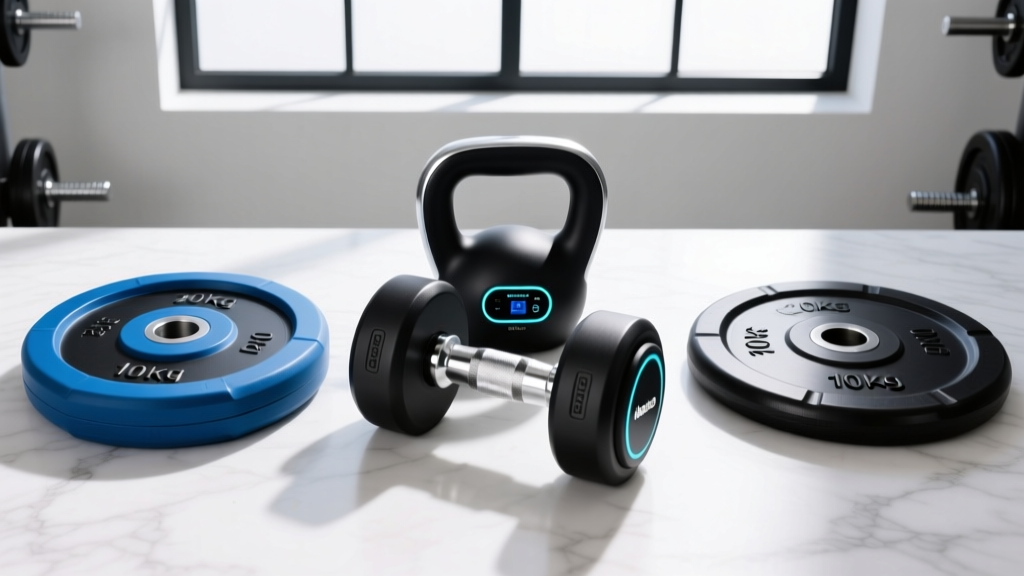
Kabata Smart Dumbbells & Bumper vs Iron Plate Guide
We review the 2026 Kabata smart dumbbells and settle the bumper plate vs iron plate debate for your home gym rack. Expert picks, specs, and pricing inside.

The 2026 Home Gym Evolution: Smart Tech Meets Heavy Iron
Building a comprehensive home gym in 2026 requires balancing cutting-edge fitness technology with foundational, old-school iron. On the isolation and accessory side of the spectrum, adjustable dumbbells have undergone a massive technological leap. On the compound lifting side, the debate over how to load your barbell remains as fierce as ever. In this expert hands-on review, we are putting the highly anticipated Kabata smart dumbbells through their paces, before transitioning into a deep-dive, head-to-head bumper plate vs iron plate comparison to help you finalize your power rack setup.
Hands-On Review: Kabata Smart Dumbbells
The Kabata Halo system has disrupted the adjustable dumbbell market by replacing fragile mechanical dials and plastic pins with a robust magnetic resistance mechanism. Priced at approximately $899 for the 5 to 50 lb pair, the Kabata smart dumbbells represent a premium investment aimed at serious lifters who demand durability and digital integration.
Build Quality and Magnetic Dial Mechanism
Unlike traditional adjustable dumbbells that rely on interlocking metal trays, the Kabata units feature a solid, knurled steel handle encased in a high-density aluminum and urethane housing. The weight selection is managed via a magnetic dial at the end of the handle. Because there are no internal plastic gears to strip, the failure rate associated with dropping the dumbbell mid-set—a notorious weak point for competitors like Bowflex or Nuobell—is virtually eliminated.
Expert Insight: The magnetic dial is incredibly satisfying, offering a tactile 'click' at every 5 lb increment. However, because it relies on magnets, you must be vigilant about metallic dust. If you use magnetic chalk or have steel shavings from a nearby power rack, the dial housing can attract debris, requiring occasional compressed air cleaning to maintain smooth rotation.App Integration and Tracking
The Kabata companion app connects via Bluetooth, automatically logging your volume, time under tension, and rest periods. According to comprehensive testing by Garage Gym Reviews, the auto-tracking feature is highly accurate for standard hypertrophy rep ranges, though it occasionally struggles to register isometric holds or ultra-slow eccentric phases. For the data-driven lifter, the seamless integration justifies the premium price tag.
The Barbell Foundation: Bumper Plate vs Iron Plate Comparison
While the Kabata smart dumbbells handle your accessory work, your barbell is the engine of your strength program. When outfitting your Olympic barbell, you are faced with a critical choice: bumper plates or cast/machined iron plates. This decision impacts your flooring, your barbell sleeves, your wallet, and your lifting style.
Material, Construction, and Durometer Ratings
Bumper plates are constructed from solid rubber or urethane, designed to be dropped from overhead without destroying your platform or the barbell. The hardness of this rubber is measured using the Shore A Durometer scale. Competition-grade bumpers (like those reviewed on Rogue Fitness) typically feature a durometer rating between 85 and 92 Shore A, providing a 'dead bounce' that prevents the plate from ricocheting back at the lifter.
Iron plates, conversely, are exactly what they sound like: solid cast or machined steel. Machined iron plates are milled down to exact specifications, offering a tight weight tolerance of +/- 1%, whereas cheaper cast gray iron plates can vary by up to 5%. Iron plates feature a much thinner profile, allowing you to load significantly more weight onto a standard 16.3-inch barbell sleeve before running out of real estate.
Specification & Performance Matrix
| Feature | Kabata Smart Dumbbells | Virgin Rubber Bumper Plates | Machined Iron Plates |
|---|---|---|---|
| Primary Use Case | Isolation, Hypertrophy, Tech Tracking | Olympic Weightlifting, CrossFit, Drops | Powerlifting, Heavy Squats/Presses |
| Average Cost | ~$899 (5-50 lb Pair) | ~$3.50 - $5.00 per lb | ~$2.00 - $3.00 per lb |
| Drop Tolerance | Low (Do not drop magnetic dials) | Extremely High (Overhead drops) | Low (Will crack floors/plates) |
| Profile Thickness | Compact, Fixed Footprint | Thick (Limits max barbell load) | Thin (Maximizes sleeve capacity) |
| Noise Level | Silent (Magnetic clicks) | Low (Thud on impact) | Extremely Loud (Metal on metal) |
Real-World Failure Modes & Edge Cases
To make an informed purchasing decision, you must understand how this equipment fails in a real-world garage gym environment over a 5-to-10-year lifespan.
Bumper Plate 'Tacoing' and Insert Blowout
The most common failure mode for cheaper crumb-rubber bumper plates is 'tacoing'—where the plate bends in on itself like a taco shell when dropped at an angle from a high pull or snatch. Over time, this lateral stress causes the steel center insert to separate from the rubber matrix. Expert Fix: Always buy virgin rubber bumpers with a hooked steel insert or a forged steel hub, which mechanically locks into the rubber rather than relying solely on adhesive.
Iron Plate Hub Wear and Floor Destruction
Iron plates do not degrade in terms of their structural integrity, but their center hubs can wear down. If you frequently slide iron plates on and off a barbell without using collars, the inner diameter can warp slightly, leading to a 'rattle' during heavy deadlifts. Furthermore, dropping iron plates—even from knee height—will transfer kinetic energy directly through your flooring, potentially cracking concrete slabs or splintering wooden subfloors. If you choose iron, 3/4-inch thick horse stall mats are a non-negotiable requirement.
Kabata Dial Jamming
As mentioned, the Kabata smart dumbbells are virtually indestructible regarding impact, but they are vulnerable to environmental debris. Chalk dust mixed with humidity can create a paste that infiltrates the magnetic dial housing. We recommend storing them on a dedicated rack away from your primary chalk bucket and wiping the handles with a dry microfiber cloth post-workout.
"The biggest mistake home gym owners make is buying bumper plates for strict powerlifting. If you are only doing controlled squats, bench presses, and low-hip deadlifts, the thick profile of bumpers will limit your max load and waste your money. Buy machined iron, invest in a good deadlift platform, and use the savings on a better barbell."
The 2026 Buying Framework: Which Should You Choose?
Use this decision tree to finalize your free weight and rack configuration:
- Choose Kabata Smart Dumbbells if: You have limited floor space, prioritize hypertrophy and isolation movements, want automatic workout tracking without wearing a smartwatch, and have the budget for premium, space-saving tech.
- Choose Bumper Plates if: Your programming includes Olympic weightlifting (snatches, clean and jerks), CrossFit-style metcons, or any movement where the barbell will be dropped from the hips or overhead. They are also mandatory if your gym is in a shared living space where noise dampening is critical.
- Choose Machined Iron Plates if: You are a powerlifter or strength-focused lifter who rarely drops the barbell. You need to load 400+ lbs onto your barbell for squats and deadlifts, and you want the most cost-effective, space-efficient way to accumulate heavy tonnage. Reference the Rogue Machined Iron Plates lineup for industry-leading tolerance standards.
Final Verdict
The ultimate 2026 home gym does not force you to choose between smart tech and heavy iron—it integrates both. Pair the Kabata smart dumbbells for your upper-body accessory and joint-friendly isolation work, and load your Olympic barbell with a hybrid approach: use a pair of 10lb or 15lb virgin rubber bumpers on the ends of the bar to protect your floor and barbell bearings, while filling the rest of the sleeve with calibrated machined iron plates for maximum loading capacity.
More gear to consider
All reviews
Best Adjustable Dumbbells for Incline Dumbbell Chest Fly (2026)

Olympic Barbell Weight: Upgrading the Bent Over Dumbbell Row Female

Dumbbell Sumo Deadlift Zones: Rack & Storage Layouts

Space-Saving Racks for Chest and Arm Exercises with Dumbbells

Targeting the Lower Back with Dumbbells: Neoprene Home Guide
