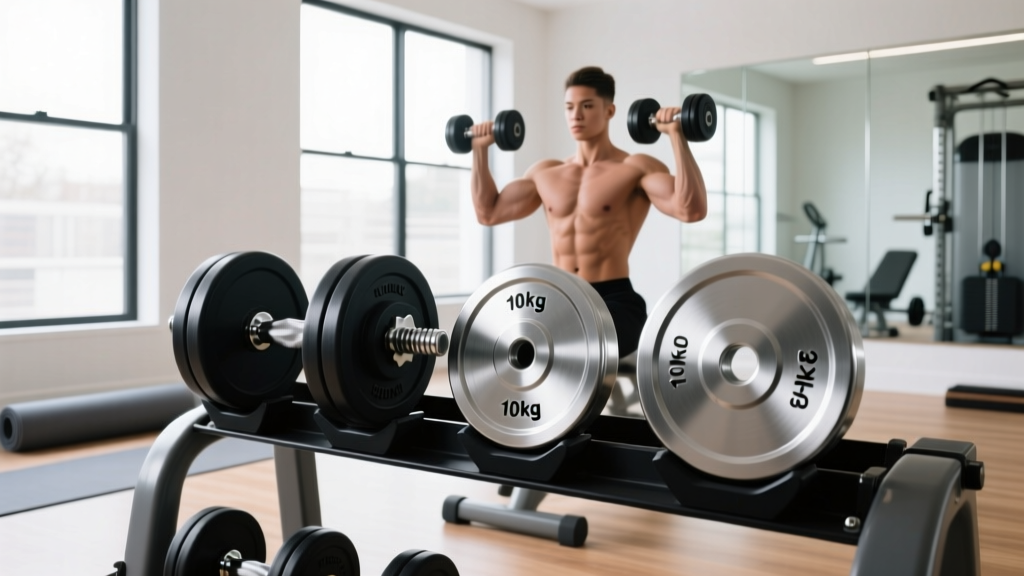
Pectoral Muscle Exercises With Dumbbells: Plate Guide
Upgrading from pectoral muscle exercises with dumbbells? Compare Olympic vs standard weight plates for your home gym in this beginner step-by-step guide.

The Ceiling Effect: Why Move Past Dumbbells?
If you have spent the last year mastering pectoral muscle exercises with dumbbells, you have likely built a formidable foundation of chest hypertrophy and stabilizer strength. Dumbbells offer an unparalleled range of motion, allowing for deep stretches at the bottom of a press that a barbell simply cannot match. However, as your strength progresses into advanced territory, you will inevitably hit a logistical ceiling.
According to ExRx.net's biomechanical breakdown of the dumbbell bench press, the movement requires significant shoulder stabilization. When you progress to 90lb or 100lb dumbbells, the act of getting the weights into position—often called the 'kick-up' technique—places immense shear stress on the rotator cuff and biceps tendons. Without a specialized spotting rack or a training partner, heavy dumbbell pressing becomes a liability. Transitioning to a barbell setup allows for micro-loading, safer heavy pressing, and central nervous system overload. But before you buy a bar, you must make the most critical equipment decision in your home gym journey: choosing between Olympic and standard weight plates.
Step 1: Decoding the Core Dimensions
The fitness industry uses the terms 'Olympic' and 'Standard' to differentiate equipment based on the diameter of the barbell sleeve and the corresponding hole in the weight plate. Understanding these exact measurements is non-negotiable for a safe home gym.
| Feature | Olympic Plates & Bars | Standard Plates & Bars |
|---|---|---|
| Sleeve / Hole Diameter | 2 inches (50.4mm exact) | 1 inch (25.4mm exact) |
| Barbell Tensile Strength | 190,000+ PSI (Minimal bending) | Often under 130,000 PSI (Prone to warping) |
| 45lb Plate Diameter | 17.7 inches (450mm) | Varies, typically 14.5 inches |
| Max Safe Load Capacity | 800lbs to 1,500lbs+ | 200lbs to 350lbs (Bar failure risk) |
| Compatibility | Universal across commercial gyms | Proprietary / Budget home gear |
The 2-Inch Olympic Standard
Despite the name, Olympic plates are the universal standard for almost all commercial gyms, CrossFit boxes, and serious home garages. The 50mm sleeve allows for thicker, heavier-duty barbell construction, incorporating bronze bushings or needle bearings that allow the sleeves to spin independently of the shaft. This spin is crucial for Olympic weightlifting, but it also reduces torque on your wrists during heavy bench presses and rows.
The 1-Inch Standard Plate
Standard plates are almost exclusively found in budget-friendly, entry-level home gym kits sold at big-box sporting goods stores. The 1-inch solid steel bars lack rotating sleeves and are highly susceptible to permanent bending (the 'taco effect') if loaded past 250lbs or dropped. While they are cheaper upfront, they represent a dead-end investment for serious lifters.
Step 2: Evaluating Your Space and Flooring
Before clicking 'checkout' on a 300lb plate set, you must measure your training footprint. Olympic 45lb bumper plates have a strict International Weightlifting Federation (IWF) mandated diameter of 17.7 inches. This ensures that regardless of the weight loaded, the barbell sits at the exact same height off the floor for deadlifts and cleans.
⚠️ Safety Warning: The Adapter Trap
Many beginners buy cheap 1-inch standard bars and attempt to use plastic or aluminum 'sleeve adapters' to fit 2-inch Olympic plates onto them. Never do this. These adapters introduce a massive point of failure. During a heavy bench press, the lateral pressure can crack the adapter, causing the plates to slide off the sleeve mid-rep. Always match your plate hole to the barbell sleeve natively.
Step 3: Material Breakdown and 2026 Pricing
As we navigate the 2026 fitness equipment market, global freight stabilization has brought cast iron prices back down to earth, while premium urethane remains a luxury tier. Here is what you can expect to pay per pound (USD) when building your first plate set.
- Cast Iron (Olympic): $1.25 - $1.80 per lb. The gold standard for home gyms. They are dense, take up minimal space on the sleeve, and last multiple lifetimes. Look for machined hub inserts (like the Rogue Fitness Echo Bumper Plates or their cast iron equivalents) to protect your barbell sleeves from scratching.
- Virgin Rubber Bumpers (Olympic): $2.50 - $3.50 per lb. Essential if your home gym lacks dedicated dropping platforms. These 17.7-inch plates absorb impact and protect your concrete garage floor. However, they are thicker than iron, meaning you can fit less weight on the bar (usually maxing out around 500lbs on a standard 7ft bar).
- Urethane (Olympic): $4.50 - $7.00+ per lb. The premium choice. Urethane does not degrade, smell, or bounce like rubber. It is virtually indestructible but usually cost-prohibitive for beginners outfitting a full home gym.
- Standard Cast Iron (1-inch): $1.00 - $1.50 per lb. Cheap, but limits your ceiling. The National Strength and Conditioning Association (NSCA) frequently notes that equipment limitations are a primary driver of training plateaus in novice lifters.
Step 4: Step-by-Step Purchasing Checklist
Follow this exact sequence to ensure your transition from dumbbells to a barbell setup is seamless, safe, and budget-efficient.
- Buy the Barbell First: Invest in a 7-foot, 20kg (44lb) Olympic barbell with a minimum tensile strength of 190k PSI and a center knurl. The bar is the most important piece of equipment; plates are just dead weight.
- Calculate Your Starting Load: If your current dumbbell bench press max is 80lbs per hand (160lbs total), your barbell max will likely be around 185-205lbs due to increased stability. Buy enough plates to load 225lbs immediately, with room to grow.
- Select the Material: If you are strictly doing powerlifting and bodybuilding (bench, squat, deadlift) in a garage, buy Cast Iron. If you plan on doing Olympic lifts (cleans, snatches) or lack floor padding, buy Rubber Bumpers.
- Purchase Matching Collars: Do not use the cheap spring clips that come in starter kits. Buy locking aluminum or nylon Olympic collars (e.g., Rogue HG 2.0 Collars) to prevent plate shift during uneven loading or floor presses.
- Plan for Storage: Olympic plates require a vertical weight tree or horizontal wall pegs. Standard plates often come with cheap A-frame racks, but Olympic trees require a heavy-duty steel base to prevent tipping.
Frequently Asked Questions
Can I mix standard and Olympic plates in my gym?
You can physically own both, but they are not interchangeable on the same barbell. Furthermore, if you ever decide to upgrade or sell your gear, standard 1-inch plates have virtually zero resale value in the secondary market, whereas Olympic plates hold their value exceptionally well and are always in demand.
Do I need bumper plates for the bench press?
No. Bumper plates are designed to be dropped from overhead or the shoulder. For pectoral and upper body exercises where the weight is controlled to a rack or floor, cast iron is actually preferable because its thinner profile allows you to load more weight onto the barbell sleeves and keeps the center of gravity tighter to the shaft.
Why do some 45lb plates weigh slightly more or less than 45lbs?
Cheap imported cast iron and low-tier rubber bumpers can have a variance of up to 5% (meaning a 45lb plate might actually be 42lbs or 47lbs). In 2026, reputable brands calibrate their Olympic plates to within 1% accuracy. If you are tracking progressive overload meticulously, always buy from established fitness manufacturers rather than generic marketplace listings.
More gear to consider
All reviews
Power Rack, Squat Rack, or Stand: Dumbbell Exercises for Muscle Gain

Barbell Collar & Clamp Types for Seated Dumbbell Power Cleans
Loadable Plates for Side Lateral Raises With Dumbbells: Space Guide
Beyond the Dumbbell Pec Workout: 2026 Kettlebell Market Analysis
Rack Storage & Maintenance for the Lying Dumbbell Curl
