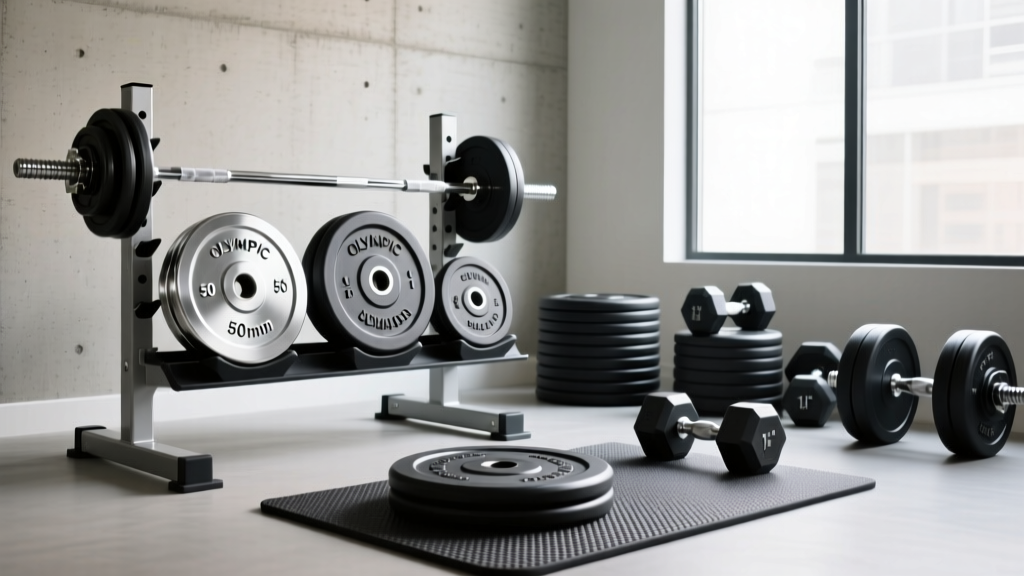
Olympic vs Standard Plates: A Guide for Dumbbell Frog Pumps
Discover the key differences between Olympic and standard weight plates. This step-by-step guide helps you choose the right gear for dumbbell frog pumps.

Building a home gym is one of the best investments you can make for your fitness journey, but navigating the equipment aisle can quickly become overwhelming. If you have ever stared at a wall of iron wondering why some plates have massive holes while others have tiny ones, you are not alone. The debate between Olympic vs standard weight plates is a rite of passage for every beginner.
This step-by-step guide will walk you through the exact dimensional differences, material specs, and real-world applications of both plate types. More importantly, we will look at how your choice of plates impacts specific isolation movements—like dumbbell frog pumps—where the physical bulk of your equipment can make or break your biomechanics.
Step 1: Decode the Sizing (The 1-Inch vs. 2-Inch Rule)
Before looking at prices or materials, you must understand the fundamental difference in sizing. The terms 'Standard' and 'Olympic' do not refer to the quality of the iron; they refer to the diameter of the center hole and the barbell sleeve they fit onto.
- Standard Plates: Feature a 1-inch (25.4 mm) center hole. They are designed to fit on lighter, often solid-steel or chrome-plated dumbbell handles and entry-level barbells.
- Olympic Plates: Feature a 2-inch (50.8 mm) center hole. According to Wikipedia's barbell specifications, this 50mm sleeve standard was established to accommodate heavy-duty, rotating sleeves necessary for Olympic weightlifting and heavy powerlifting.
Step 2: Match Plates to Your Movements (The Dumbbell Frog Pump Test)
Why does plate sizing matter for exercises that primarily use dumbbells? Let us look at a highly effective, beginner-friendly glute isolation exercise: the dumbbell frog pump.
Popularized by biomechanics experts and certified by organizations like the American Council on Exercise (ACE), the frog pump requires you to lie supine, press the soles of your feet together, drop your knees outward, and thrust your hips upward while balancing a dumbbell on your pelvic crease.
The Standard Plate Failure Mode
Beginners often buy 14-inch standard spin-lock dumbbell handles because they are cheap (usually $15 to $20). However, loading a standard handle with 1-inch cast iron plates creates a massive problem for floor-based hip thrusts and frog pumps. A standard 25-pound cast iron plate has a diameter of roughly 11.5 inches. When loaded on both sides of a short handle, the physical width and bulk of the plates will scrape against your inner thighs or the floor during the concentric phase of the frog pump, completely ruining your range of motion and leverage.
The Olympic & Selectorized Solution
For movements like dumbbell frog pumps, you need compact weight distribution. While Olympic dumbbell handles exist, they are incredibly thick and heavy unloaded. The best 2026 solution for heavy frog pumps is either using compact Olympic Urethane plates on specialized short-sleeve dumbbell handles, or investing in selectorized adjustable dumbbells (like Nuobell or PowerBlock) which mimic Olympic compactness without the 2-inch hole requirement.
Step 3: Compare the Specs and Materials
Once you understand the sizing, you must choose your material. Standard plates are almost exclusively made of cast iron or cement-filled plastic. Olympic plates offer a much wider variety of materials suited for different environments.
| Feature | Standard (1-Inch) | Olympic Cast Iron | Olympic Bumper | Olympic Urethane |
|---|---|---|---|---|
| Center Hole | 1 inch (25.4mm) | 2 inches (50.8mm) | 2 inches (50.8mm) | 2 inches (50.8mm) |
| Primary Use | Light home gyms, basic curls | Heavy powerlifting, squats | Olympic lifts, drops | Commercial gyms, quiet drops |
| Max Bar Load | ~200 lbs (sleeve limit) | 800+ lbs | 500+ lbs | 800+ lbs |
| Floor Impact | High (will crack tile) | High (requires mats) | Low (designed to drop) | Very Low (dead bounce) |
Step 4: Calculate Your 2026 Home Gym Budget
Pricing for weight plates fluctuates based on global steel and rubber markets. As of 2026, here is the realistic price-per-pound breakdown you should expect when shopping from premium retailers like Rogue Fitness or budget importers.
- Standard Cement/Vinyl Plates: $0.50 - $0.80 per lb. (Avoid these. They are excessively bulky and degrade quickly).
- Standard Cast Iron: $1.20 - $1.80 per lb. (A decent choice only if you are strictly building a light-duty, budget-friendly space).
- Olympic Cast Iron (Machined): $2.00 - $2.80 per lb. (The gold standard for home garage gyms. Machined edges ensure accurate weight and a snug fit on the sleeve).
- Olympic Rubber/Urethane: $3.50 - $6.00+ per lb. (Ideal for indoor spaces where noise and floor protection are paramount).
"Investing in Olympic plates from day one, even if you start with just 100 pounds of iron, prevents the 'sunk cost fallacy' that plagues most beginners who eventually upgrade to heavier, safer Olympic barbells."
Step 5: Avoid These 3 Beginner Purchasing Mistakes
1. Buying Standard Plates for Heavy Compound Lifts
Standard 1-inch barbells generally max out around 200 to 250 pounds before the sleeves run out of physical space or the bar begins to bend dangerously. If you plan to deadlift or squat seriously, standard plates will bottleneck your progress within six months.
2. Ignoring Plate Diameter for Floor Work
As mentioned with the dumbbell frog pump, the physical diameter of your plates matters. Standard 10lb iron plates are often the same diameter as 25lb plates, just thinner. This means even light weights will hit the floor prematurely during floor presses or frog pumps. Olympic bumper and urethane plates follow standardized diameter tiers, making floor-work much more predictable.
3. Mixing Up Collars and Clips
Standard spin-lock collars use a threaded nut system that takes 30+ seconds to screw on and off, killing your rest periods. Olympic spring collars or clamp collars take two seconds to secure. When you are supersetting heavy squats with high-rep dumbbell frog pumps, speed and safety in loading your equipment are critical.
⚠️ Safety Warning: Never attempt to use a 1-inch to 2-inch sleeve adapter for heavy lifting. While these cheap plastic or steel adapters exist to let you put standard plates on an Olympic bar, they introduce a dangerous amount of lateral play and can crack under heavy eccentric loads.Frequently Asked Questions
Can I use Olympic plates on a standard barbell?
No. The 2-inch hole of an Olympic plate will slide right off a 1-inch standard barbell sleeve, creating a massive safety hazard. You must use an adapter, which is only recommended for very light, static isolation exercises.
Are standard weight plates worth buying in 2026?
Standard plates are only worth buying if you are outfitting a very small apartment gym with light-duty adjustable dumbbells for basic movements. For any barbell work, heavy squats, or dynamic floor exercises, Olympic plates remain the undisputed industry standard.
What is the best dumbbell setup for glute isolation?
For heavy dumbbell frog pumps and hip thrusts, skip the plate-loaded spin-lock handles entirely. Invest in a pair of adjustable selectorized dumbbells (ranging from 5 to 50 lbs) or use a specialized glute-training sandbag that contours to your hips without the hard metal edges of iron plates pressing into your pelvic bone.
More gear to consider
All reviews
Dumbbell Rack Care: Organizing Weights for Women's Lateral Raises

Beyond the Best Workout with Dumbbells: Olympic Barbell Buying Guide

Neoprene Dumbbells for Swiss Ball Dumbbell Chest Press
Dragon Ball Z Dumbbells vs Neoprene: Home Gym Mistakes & Fixes
EZ vs Straight Bar: Layouts & Dumbbell Hollow Hold Space Tips
