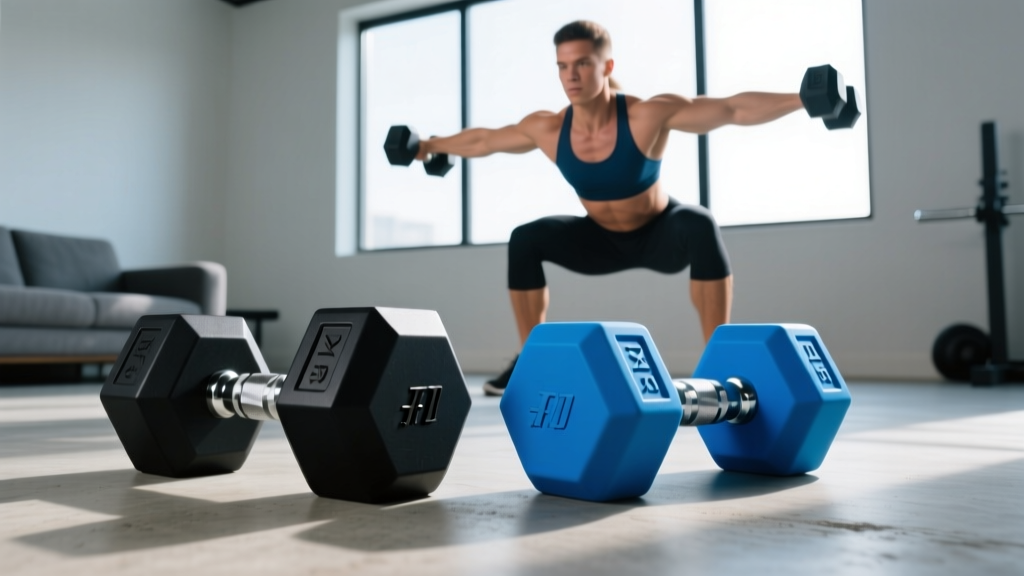
Rubber Hex vs Urethane Care: Back Shoulder Workout with Dumbbells
Learn how to maintain rubber hex and urethane dumbbells for your back shoulder workout with dumbbells. Expert care tips, failure modes, and longevity.

The Hidden Toll of Posterior Chain Training on Your Gear
When programming a back shoulder workout with dumbbells, lifters typically focus on the posterior deltoids, rhomboids, and mid-traps through movements like chest-supported rear delt flyes, bent-over W-raises, and single-arm rows. While your mind is on muscle hypertrophy and scapular retraction, your equipment is enduring a silent war against sweat, chalk, and impact. The rear deltoid is a small, stubborn muscle group that often requires high-volume drop sets and extended time-under-tension. This means your hands are gripping the knurled steel handles longer, transferring more acidic sweat and magnesium carbonate (chalk) into the metal and onto the rubber or urethane heads.
Choosing between rubber hex dumbbells and urethane dumbbells is a common dilemma for home gym owners and facility managers in 2026. However, the true differentiator in long-term value isn't just the initial purchase price—it is the maintenance protocol required to keep them functional and hygienic. In this guide, we break down the material science, exact failure modes, and step-by-step longevity tips for both materials, specifically tailored to the rigors of back and shoulder training.
Material Breakdown: Vulcanized Rubber vs. Polyurethane
To understand how to care for your dumbbells, you must first understand their chemical composition. The two dominant materials in the free weight industry react very differently to the environment of a heavy training session.
Rubber Hex Dumbbells
Rubber hex dumbbells, such as the widely used CAP Barbell Cast Iron Hex Rubber Coated Dumbbells, are manufactured using vulcanized rubber. This process involves heating natural or synthetic rubber with sulfur to create cross-links, resulting in a durable, shock-absorbent coating. In 2026, these remain the budget-friendly king, typically costing between $1.50 and $2.25 per pound. However, vulcanized rubber is highly susceptible to UV degradation and chemical breakdown from ammonia-based cleaners.
Urethane Dumbbells
Polyurethane (urethane) is a premium elastomer that is virtually impervious to sweat, UV light, and harsh cleaning chemicals. Premium models like the Rogue Urethane Dumbbells represent the gold standard for commercial and high-end home gyms, commanding a premium of $3.75 to $5.00 per pound. Urethane does not off-gas (meaning no lingering "rubber smell") and maintains its structural integrity for decades, though it is less forgiving when dropped on bare concrete due to its higher density and lower shock-absorption rate compared to soft rubber.
| Feature | Rubber Hex (e.g., CAP Barbell) | Urethane (e.g., Rogue Fitness) |
|---|---|---|
| Average Cost (2026) | $1.50 - $2.25 / lb | $3.75 - $5.00 / lb |
| Sweat & Acid Resistance | Moderate (can degrade over time) | Exceptional (impervious) |
| UV Light Tolerance | Poor (becomes brittle/sticky) | Excellent (UV stable) |
| Odor Off-Gassing | High initially, fades over months | None |
| Impact Tolerance | High (absorbs drops well) | Moderate (can chip on bare concrete) |
Step-by-Step Maintenance Protocols for Longevity
Whether you are finishing a grueling back shoulder workout with dumbbells or wrapping up a heavy leg day, implementing a strict maintenance routine will double or triple the lifespan of your equipment. Here is the exact protocol we recommend for both material types.
Step 1: Post-Workout Sweat Neutralization
Human sweat has a pH ranging from 4.5 to 7.0, making it mildly acidic. During high-rep rear delt flyes, sweat inevitably drips down the handle and pools where the steel shaft meets the rubber or urethane head.
- For Rubber Hex: Never use bleach, ammonia, or generic household surface cleaners (like Windex). Ammonia destroys the plasticizers in vulcanized rubber, causing the heads to melt into a sticky, black tar that will ruin your gym floor and clothes. Use a mild dish soap diluted in warm water, or a dedicated pH-neutral gym wipe.
- For Urethane: Urethane can handle harsher chemicals, but a simple wipe-down with a microfiber cloth and a 50/50 water and white vinegar solution is sufficient to kill bacteria without degrading the material's matte finish.
Step 2: Knurling and Chalk Extraction
A proper back shoulder workout with dumbbells requires an aggressive grip, especially when performing bent-over rows where gravity is actively trying to pull the weight from your hands. Lifters heavily rely on chalk, which packs tightly into the diamond-patterned knurling.
- Dry Brush: Immediately after your workout, use a stiff nylon brush (never a brass or steel wire brush, which will strip the zinc or chrome plating) to scrub the handles. Brush in a circular motion to lift the magnesium carbonate out of the grooves.
- Deep Clean (Monthly): Mix a few drops of degreasing dish soap (like Dawn) with warm water. Scrub the handles with the nylon brush, then immediately dry them with a clean towel to prevent flash rusting.
- Oil Application: Once a month, apply a light coat of mineral oil or 3-in-One oil to the bare steel or chrome handles. Let it sit for 10 minutes, then wipe off the excess. This creates a hydrophobic barrier against sweat.
Step 3: Environmental Storage and UV Protection
If your home gym is in a garage or a room with direct sunlight, UV exposure is the number one enemy of rubber hex dumbbells. UV rays break down the sulfur bonds in vulcanized rubber, leading to dry rot, flaking, and eventual structural failure. Always store rubber dumbbells on a rack away from direct sunlight. Urethane dumbbells, conversely, are UV-stable and can be stored in sunlit rooms without fear of material degradation.
Expert Insight: "The most common failure mode we see in commercial gyms isn't from dropping the weights—it's from the janitorial staff spraying ammonia-based glass cleaners on the rubber dumbbell heads. Within six months, the rubber turns to a sticky sludge. Urethane completely eliminates this liability."
When to Retire Your Dumbbells: Edge Cases and Warning Signs
Even with meticulous care, free weights eventually reach the end of their lifecycle. Knowing when to retire a dumbbell is critical for safety, especially during exercises like dumbbell face pulls or overhead presses where a failing head could detach and cause severe injury.
⚠️ Red Flags for Rubber Hex Dumbbells
- Sticky Residue: If the rubber feels tacky even after cleaning, the plasticizers are leaching out. It is time to replace them.
- Head Wobble: If the rubber head shifts independently of the steel handle, the internal adhesive or mechanical bond has failed. Do not use these for dynamic movements.
- Deep Cracking: Surface scuffs are normal, but deep fissures indicate dry rot from UV exposure.
ℹ️ Red Flags for Urethane Dumbbells
- Delamination: While rare, if the urethane coating begins to peel away from the steel core (usually due to a manufacturing defect or extreme temperature fluctuations), the weight distribution is compromised.
- Handle Bend: If you drop a 70+ lb dumbbell from the top of a row onto bare concrete, the steel shaft can micro-bend. Roll the handle on a flat glass table; if it wobbles, the structural integrity is compromised.
Frequently Asked Questions
Can I use WD-40 to clean my dumbbell handles after a back shoulder workout?
No. WD-40 is a solvent and water displacer, not a long-term protectant. It will strip away any existing protective oils and leave a residue that attracts more dirt and chalk. Stick to mineral oil, 3-in-One oil, or specialized barbell oils for handle maintenance.
Why do my rubber dumbbells smell worse after I clean them?
If you are using hot water or harsh chemical sprays, you are likely accelerating the off-gassing process of the vulcanized rubber. Heat opens the pores of the rubber, releasing trapped sulfur compounds. Always use cold or room-temperature water and mild, pH-neutral soap.
Is urethane worth the extra cost for a home gym focused on hypertrophy?
If you are strictly doing controlled hypertrophy work—like a focused back shoulder workout with dumbbells involving slow eccentrics and chest-supported rows—urethane is an excellent investment. Because you aren't dropping the weights from overhead (as you might in CrossFit or Olympic lifting), the urethane will likely outlive you, making the higher upfront cost of $4.00+ per pound a one-time lifetime purchase.
Final Thoughts on Gear Longevity
The effectiveness of your back shoulder workout with dumbbells relies heavily on the reliability of your equipment. A slippery, chalk-caked handle or a degraded, sticky rubber head will ruin your mind-muscle connection and compromise your rear deltoid isolation. By understanding the distinct chemical properties of rubber hex versus urethane, and by implementing a strict, non-ammonia cleaning and oiling protocol, you ensure that your free weights remain a permanent, hygienic fixture in your training arsenal for decades to come.
More gear to consider
All reviews
The Dumbbells Acronym & Bumper vs Iron Plate Maintenance
Adjustable Dumbbell Mistakes & Dumbbell Side Bend Benefits Guide

Power Rack vs Squat Rack vs Squat Stand: Rigging Dumbbell Seal Rows
Beyond Chest and Shoulder Exercises with Dumbbells: Kettlebell Guide

Wide Grip Dumbbell Row Safety: Barbell Collars and Clamps Compared