Olympic vs Standard Plates: Upgrading Your Side Bend Dumbbell Setup
Compare Olympic vs standard weight plates for your home gym. Discover how plate diameter impacts heavy side bend dumbbell exercises and gear longevity.

Building a comprehensive home gym requires making foundational decisions that will dictate your training for decades. While most lifters obsess over power racks and barbells, the humble weight plate—and specifically the choice between standard (1-inch) and Olympic (2-inch) variants—often causes the most long-term friction. This debate becomes surprisingly critical when you start programming heavy isolation and core work, such as the heavy side bend dumbbell exercise, where equipment geometry directly impacts your biomechanics and range of motion.
In this head-to-head product comparison, we are putting standard cast iron plates against Olympic plates. We will analyze pricing, metallurgy, equipment compatibility, and the non-obvious real-world clearance issues that arise when loading plate-loaded dumbbell handles for lateral flexion movements.
Quick Spec Sheet: The Core Differences
- Standard Plates: 1-inch center hole. Typically cast iron. Max practical weight per dumbbell handle: ~50 lbs.
- Olympic Plates: 2-inch (50.4mm) center hole. Cast iron, urethane, or rubber bumper. Max practical weight per handle: 150+ lbs.
- Price Per Pound (2026 Avg): Standard ($1.20 - $1.60/lb) vs. Olympic Cast Iron ($2.00 - $2.80/lb).
The Biomechanics of Heavy Core Work: Why Plate Diameter Matters
To understand why plate selection matters beyond just barbell squatting, we have to look at unilateral and core exercises. Take the side bend dumbbell movement, which targets the quadratus lumborum and the internal/external obliques. According to exercise biomechanics databases like ExRx.net, proper execution requires a deep lateral flexion of the spine, lowering the dumbbell down the side of the leg until a deep stretch is felt in the opposite oblique.
When using a plate-loaded dumbbell handle, the physical diameter of the weight plates becomes a massive limiting factor.
The Clearance Problem
A standard 25-pound cast iron plate has a diameter of roughly 5.8 inches. When loaded onto a 14-inch standard dumbbell handle, the plate easily clears the iliac crest (the top of your hip bone) at the bottom of a side bend.
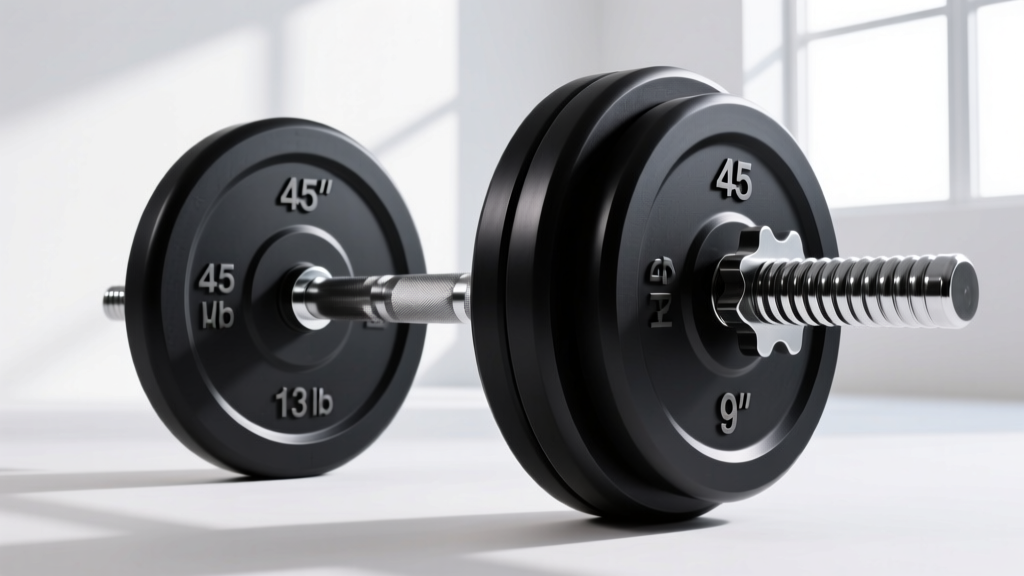
Conversely, an Olympic 45-pound bumper plate has a standardized diameter of 17.7 inches (450mm). If you load a 20-inch Olympic dumbbell handle with 45s or even 25s (which are still roughly 13 inches in diameter in Olympic sizing), the bottom edge of the plate will physically smash into your thigh or hip bone before your obliques reach full extension. This forces you to artificially shorten your range of motion, robbing you of the stretch-mediated hypertrophy that makes the side bend dumbbell exercise effective in the first place.
"Upgrading to Olympic plates is a non-negotiable for barbell lifts, but for heavy plate-loaded dumbbell core work, the wider profile of Olympic plates can actually hinder your range of motion if you aren't mindful of plate diameter and handle length."
Head-to-Head Comparison Matrix
Below is a direct comparison of how standard and Olympic plates stack up across the metrics that matter most to home gym owners in 2026.
| Feature | Standard Plates (1") | Olympic Plates (2") |
|---|---|---|
| Center Hole | 1 inch (25.4mm) | 2 inches (50.4mm) |
| Material Options | Cast Iron, Cement/Vinyl | Cast Iron, Urethane, Rubber Bumper |
| Weight Tolerance | +/- 5% to 10% | +/- 1% to 3% (Calibrated) |
| Drop Durability | Low (Will chip floors/plates) | High (Especially Bumpers/Urethane) |
| Resale Value | Low ($0.75 - $1.00/lb) | High ($1.50 - $2.50/lb) |
Standard Plates: The Budget-Friendly Starter Kit
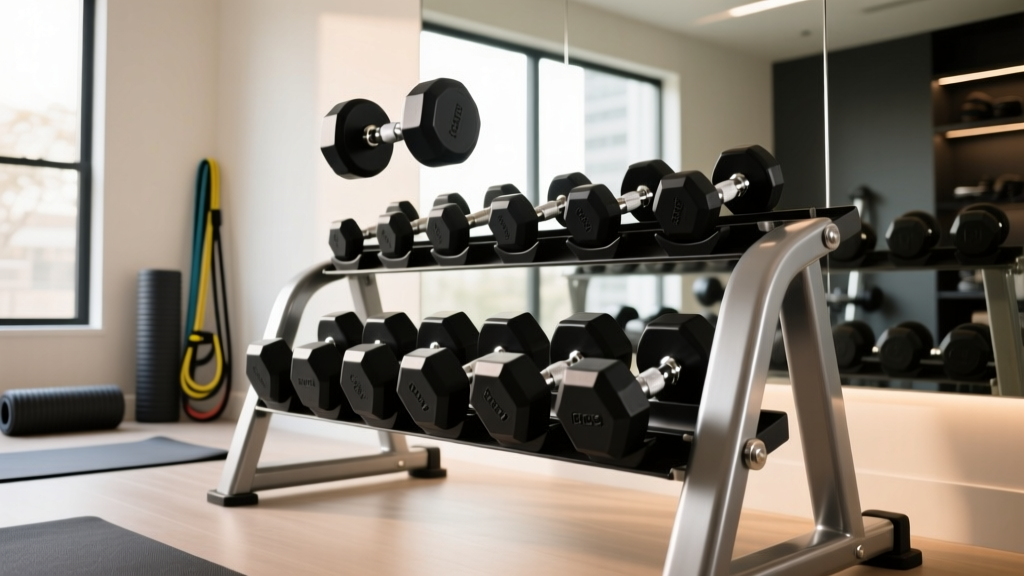
Standard plates feature a 1-inch center hole and are designed to fit entry-level barbells, adjustable dumbbell handles, and budget-friendly selectorized machines.
Where Standard Plates Excel
- Cost Efficiency: As of early 2026, you can easily find CAP Barbell or Yes4All standard cast iron plates for around $1.30 per pound. For a beginner outfitting a garage gym on a strict $500 budget, standard plates allow you to buy more total mass.
- Compact Storage: Standard plates are generally thinner and lack the wide stainless steel inserts found on Olympic plates, making them slightly easier to stack on standard A-frame racks.
- Grip Clearance for Dumbbells: As mentioned with the side bend dumbbell exercise, the smaller diameter of standard 10lb and 25lb plates provides excellent ground and hip clearance for plate-loaded dumbbell handles.
The Failure Points of Standard Gear
The primary failure mode of standard plates isn't the plate itself, but the equipment it mounts to. Standard 1-inch dumbbell handles are notoriously prone to bending. If you load a standard 14-inch handle with more than 60 pounds of iron, the tensile strength of the cheap steel sleeve will yield, resulting in a permanently bent handle that will no longer slide smoothly into your storage rack. Furthermore, standard plates almost never feature precision-machined center holes, leading to a frustrating 'sticking' sensation when trying to slide them onto a dumbbell handle mid-workout.
Olympic Plates: The Lifetime Investment
Olympic plates, characterized by their 2-inch (50mm) center holes, are the undisputed standard for commercial gyms, competitive powerlifting, and serious home garages. As noted in BarBend's comprehensive guide to weight types, the 2-inch standard was popularized to accommodate the thicker, higher-tensile-strength steel required for heavy Olympic weightlifting and powerlifting bars.
Material Variations: Iron vs. Urethane vs. Bumper
When buying Olympic plates, you aren't just choosing a hole size; you are choosing a material profile:
- Cast Iron / Machined Steel: The thinnest profile. Ideal for maximizing loadable sleeve space on a dumbbell handle. Models like the Rogue Machined Olympic Plates offer +/- 1% weight tolerance and a premium enamel finish, though they cost upwards of $3.50/lb.
- Urethane: Encased in a virtually indestructible polyurethane shell. These resist UV degradation, odor, and chipping. Perfect for home gyms in humid garages.
- Rubber Bumper Plates: Standardized at 17.7 inches in diameter regardless of weight (from 10lbs to 55lbs). Essential for dropping from overhead, but their massive diameter makes them highly problematic for plate-loaded dumbbell exercises like side bends or heavy lunges where ground clearance is vital.
The Handle Dilemma: 2-Inch Dumbbell Sleeves
If you commit to Olympic plates, you must buy Olympic dumbbell handles. These handles feature 2-inch sleeves, often with rotating bushings or bearings to reduce torque during curls and presses. However, the 2-inch grip thickness and the massive 50mm sleeve collars drastically reduce the 'loadable sleeve length'.
For example, a standard Rogue Loadable Dumbbell Handle has a total length of 20.25 inches, but only 6.5 inches of loadable sleeve space. If you use thick rubber Olympic plates, you might only be able to fit two 25lb plates per side, capping your dumbbell at 50lbs. For heavy side bends or shrugs, this is a severe limitation compared to fixed commercial dumbbells.
⚠️ Expert Warning: The 'Thick Grip' TaxMany Olympic dumbbell handles feature a thicker grip shaft (1.25" to 1.5") compared to standard handles (1"). While great for forearm hypertrophy, gripping a 1.5" handle while holding 80lbs for a high-rep side bend dumbbell set will cause your grip to fail long before your obliques do. If you prioritize core isolation, consider keeping a pair of standard 1" handles specifically for lighter, high-rep lateral flexion work, or invest in high-quality fixed hex dumbbells.
Expert Verdict & Purchasing Framework
Choosing between standard and Olympic plates ultimately comes down to your budget, your floor type, and the specific exercises you prioritize. Here is a practical decision framework to guide your 2026 equipment purchases:
Buy Standard Plates If:
- Your total plate budget is under $300.
- You are primarily doing light-to-moderate isolation work, physical therapy, or high-rep core circuits (like the side bend dumbbell) where hip clearance and a thinner grip are paramount.
- You are outfitting a temporary space (like a college dorm or small apartment) and plan to sell the gear on the used market in a few years without expecting a high return.
Buy Olympic Plates If:
- You plan to barbell squat, deadlift, or perform Olympic lifts (cleans/snatches) where dropping the weight is necessary.
- You want equipment that will literally outlive you, with a high resale value and universal compatibility with any commercial-grade rack or bench you might buy in the future.
- You have the budget to afford urethane or high-quality cast iron ($2.50+ per pound) to protect your home gym flooring and reduce noise.
The Hybrid Approach: The smartest home gym builders often default to Olympic plates for 90% of their training (barbells, heavy presses, rack pulls). However, they maintain a small, cheap set of 1-inch standard plates and a pair of 14-inch standard dumbbell handles strictly for accessory and core work. This hybrid setup ensures you never sacrifice your range of motion on exercises like the heavy side bend, while still reaping the structural benefits of Olympic gear for your primary compound lifts.
More gear to consider
All reviews
Beyond the Heel Elevated Dumbbell Squat: Olympic Barbell Guide
Side Lunges Exercise With Dumbbells: Top Loadable Picks

Is Curling 30 lb Dumbbells Good for Males? Adjustable Guide

Single Dumbbell Chest Press: Rubber Hex vs Urethane Layout Guide

Home Gym Setup for Squats with Dumbbell Press & Neoprene Weights