
Bumper vs Iron Plates: Full Body Dumbbell Compound Workout Trends
Analyze 2026 bumper vs iron plate market trends, pricing, and material science to optimize your hybrid gym and full body dumbbell compound workout setups.

The 2026 Hybrid Gym Shift: Why Plate Selection Dictates Training Flow
The fitness equipment market in 2026 is unequivocally defined by the rise of the 'hybrid athlete.' Gone are the days when consumers strictly siloed their training into powerlifting, Olympic weightlifting, or bodybuilding. Today's home gym owners demand versatile setups that support a 500-pound deadlift and seamlessly transition into a high-volume full body dumbbell compound workout for metabolic conditioning and hypertrophy. This paradigm shift has sparked a fierce debate and a noticeable market realignment in the weight plate sector: Bumper plates versus traditional cast iron.
According to recent industry analyses highlighted by Garage Gym Reviews, over 68% of new home gym buyers in 2025 and 2026 are prioritizing 'multi-modal' equipment. The choice between bumper and iron plates is no longer just about protecting your floor; it is about spatial economics, training flow, and material longevity. When you are pairing heavy barbell cycling with dynamic dumbbell movements, the physical footprint and dead-bounce characteristics of your plates directly impact the safety and efficiency of your training space.
Market Insight: The Hybrid Athlete Economy
The global home fitness equipment market has seen a 14% year-over-year growth in 'functional strength' accessories. Consumers are actively moving away from single-purpose gear, driving a massive surge in demand for precision-machined iron plates for maximal loading, alongside high-durometer urethane bumpers for functional floor work.
Material Science & Market Pricing: Bumper vs. Iron in 2026
To make an informed capital allocation for your gym, you must understand the current material science and pricing tiers. The 2026 market has largely phased out low-grade crumb rubber in premium spaces, favoring virgin rubber and advanced urethane composites. Below is the current market breakdown for standard 45lb (20kg) plates.
| Plate Category | Material Composition | Avg. Price / LB (2026) | Durometer (Shore A) | Primary Use Case |
|---|---|---|---|---|
| Economy Bumper | Recycled Crumb Rubber | $2.15 - $2.50 | 75A - 80A | Light drops, garage gyms |
| Training Bumper | Virgin Rubber | $3.80 - $4.50 | 85A - 88A | Olympic lifts, WODs |
| Elite Bumper | Urethane / PU Blend | $6.50 - $8.00 | 90A - 95A | Commercial, high-drop |
| Standard Cast Iron | Gray Cast Iron (Painted) | $1.50 - $1.85 | N/A (Rigid) | Powerlifting, Bodybuilding |
| Machined Iron | CNC Machined Steel/Iron | $2.50 - $3.25 | N/A (Rigid) | Calibrated lifting, IPF |
The Cast Iron Resurgence: Thin Profiles and Maximal Loading
Despite the dominance of rubber in functional fitness, cast iron is experiencing a massive resurgence in 2026, driven by the 'thin profile' advantage. A standard 45lb cast iron plate (like the Rogue Deep Dish or York Legacy) is roughly 1.2 inches thick. In contrast, a 45lb virgin rubber bumper is 3.2 inches thick. When you are loading a barbell to 495 lbs or more, iron plates fit comfortably on the sleeve, leaving adequate space for collars and bar whip.
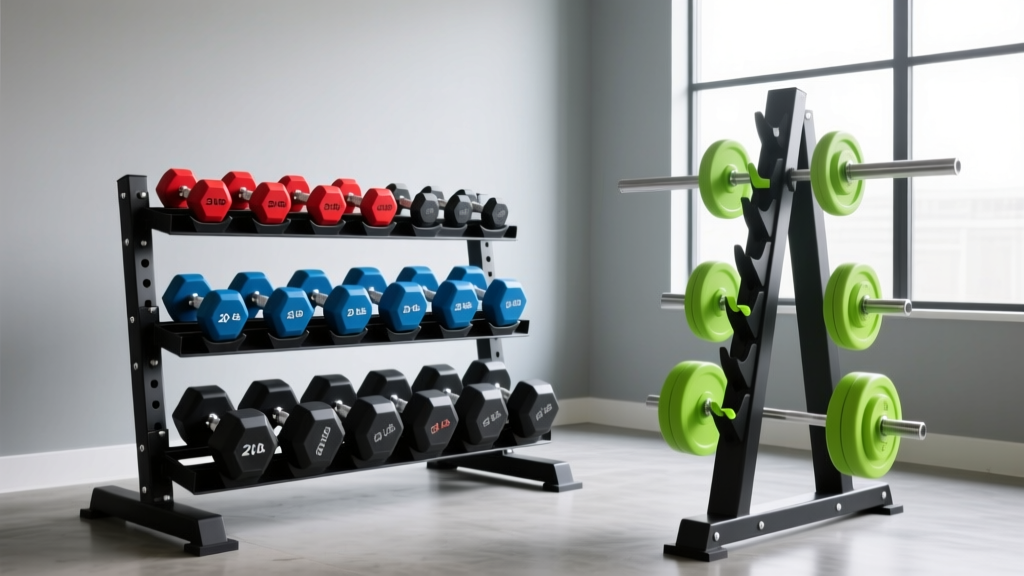
Furthermore, iron plates offer superior spatial efficiency on storage trees. For the hybrid athlete, minimizing the footprint of stored weight is crucial. Iron plates allow you to store 1,000 lbs of weight on a compact, wall-mounted rack, freeing up the floor space necessary to execute a sprawling full body dumbbell compound workout without tripping over stacked rubber bumpers.
The Bumper Evolution: From Crumb Rubber to Urethane Dominance
The bumper plate market has matured significantly. Early crumb rubber bumpers were notorious for off-gassing (the 'tire smell') and degrading under UV exposure. In 2026, the gold standard for premium home and commercial gyms is Urethane. Brands like Rep Fitness and Titan Fitness have introduced urethane-coated bumpers that boast a Shore A durometer rating of 90+, meaning they exhibit almost zero dead-bounce. This is a critical safety feature; a high-bounce crumb rubber plate dropped from overhead can ricochet unpredictably, posing a severe hazard if you have dumbbells or kettlebells scattered nearby for your next working set.
Spatial Economics: How Plates Impact Your Full Body Dumbbell Compound Workout
The intersection of barbell and dumbbell training is where the bumper vs. iron debate becomes highly practical. According to training principles outlined by the National Strength and Conditioning Association (NSCA), multi-modal conditioning requires seamless transitions between implements to maintain metabolic demand and heart rate zones.
Consider the logistics of a high-intensity session. You finish a heavy set of barbell front squats. Your programming immediately calls for a full body dumbbell compound workout featuring renegade rows, dumbbell thrusters, and walking lunges.
- The Bumper Plate Problem: All bumper plates, regardless of weight (even 10lb technique plates), share the same 17.7-inch (450mm) IWF standard diameter. If you leave your barbell loaded on the floor, the massive surface area of the bumpers creates a 'dead zone' in the center of your gym. This severely restricts the open floor space required for dynamic dumbbell movements, forcing you to alter your lunge trajectory or risk stepping on a rubber plate.
- The Iron Plate Advantage: A 45lb iron plate has a diameter of roughly 14.5 inches, and smaller fractional plates are even more compact. When a barbell is loaded with iron and set on the floor, the footprint is significantly smaller. The barbell sits closer to the ground (if not using mats), and the surrounding perimeter remains clear, allowing for unimpeded dumbbell maneuvers.
'In hybrid training environments, equipment footprint is a hidden variable that dictates workout density. The ability to transition from a barbell hinge to a unilateral dumbbell movement without spatial obstruction is what separates a functional home gym from a cluttered storage unit.'
Strategic Acquisition Framework for Hybrid Athletes
Based on 2026 market data and training ergonomics, we recommend a tiered acquisition strategy rather than an 'all-or-nothing' approach to plate purchasing. This framework optimizes your budget while supporting both heavy barbell work and high-volume dumbbell routines.
Phase 1: The Core Iron Foundation (60% of Total Weight)
Allocate the majority of your budget to high-quality, machined or painted cast iron plates. Iron remains the most cost-effective way to acquire heavy loads. Purchasing pairs of 45lb, 25lb, and 10lb iron plates will cover 90% of your progressive overload needs for squats, deadlifts, and presses. The thin profile ensures your barbell sleeve capacity is maximized, and your storage tree remains compact.
Phase 2: The Functional Bumper Supplement (40% of Total Weight)
Reserve your bumper plate purchase strictly for weights you will drop or use in Olympic variations. Buy a pair of 45lb and 25lb virgin rubber or urethane bumpers. Use these exclusively for power cleans, snatches, and high-rep touch-and-go deadlifts. By limiting your bumper inventory, you preserve the open floor space required to lay out your dumbbells for your full body dumbbell compound workout circuits.
Warning: The 10lb Bumper Plate Trap
Avoid buying 10lb and 15lb bumper plates unless you are coaching beginners in Olympic weightlifting. These plates are notoriously fragile due to the thin rubber cross-section around the steel hub. They warp and tear easily when dropped. For light barbell work or accessory lifts that transition into dumbbell complexes, use 10lb cast iron plates instead. They are virtually indestructible and cost less than $20 per pair.
Market Outlook & Final Verdict
The 2026 fitness equipment landscape rewards the informed consumer. The bumper vs. iron debate is no longer about which material is universally 'better,' but rather which material serves the specific biomechanical and spatial demands of your programming. Cast iron offers unmatched density, sleeve capacity, and spatial efficiency, making it the superior choice for maximizing floor space for functional movements. Bumper plates, specifically high-durometer urethane models, remain indispensable for impact absorption during dynamic barbell drops.
By adopting a hybrid plate inventory, you future-proof your gym. You ensure that your heavy barbell days are supported by precision iron, while your conditioning days—anchored by a demanding full body dumbbell compound workout—benefit from a clean, unobstructed training environment. Invest in the right materials for the right modalities, and your equipment will seamlessly adapt to the evolving trends of hybrid strength training.
More gear to consider
All reviews
Loadable Dumbbell Maintenance vs. Fixed Butterfly Workout Dumbbells
2026 Market Trends: Dumbbell Racks for Heavy Chest Fly Dumbbells

Barbell Setup & Knurling: What Do Incline Dumbbell Curls Work?

Barbell Buying Guide: Knurling & Seated Dumbbell Press Muscles Worked

2026 Rack Market: Storing Weights for the Close Dumbbell Press
