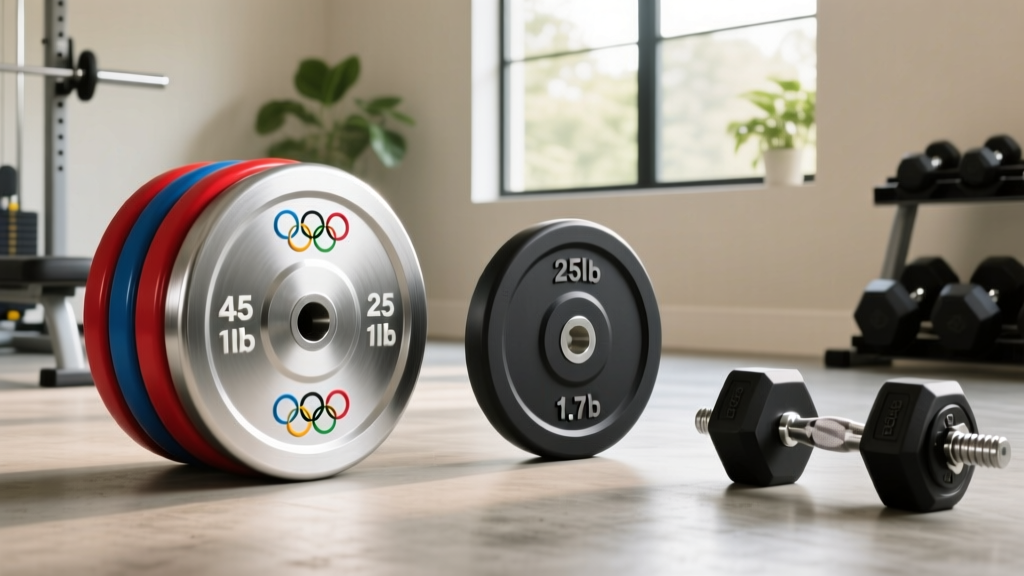
Olympic vs Standard Plates for Pectoral Exercises with Dumbbells
Compare Olympic vs standard weight plates to complement your pectoral exercises with dumbbells. We break down pricing, durability, and home gym specs.

The Chest-Day Progression: Beyond the Dumbbells
When building a home gym, mastering pectoral exercises with dumbbells is usually the first milestone. Dumbbells offer an unmatched range of motion, allowing for deep stretches and superior adduction across the midline to target both the clavicular and sternocostal heads of the pectoralis major. However, as your strength progresses, you will inevitably hit a ceiling. Loading 120-pound dumbbells into position for a heavy press is a logistical nightmare and a safety hazard. To continue overloading the chest muscles, you must transition to barbell benching or incorporate heavy plate-based resistance. This brings us to a critical crossroads for home gym owners: do you invest in a standard 1-inch weight plate ecosystem, or commit to the 50mm Olympic standard?
In this head-to-head comparison, we break down the metallurgy, pricing, and practical application of Olympic vs. standard weight plates, specifically tailored for lifters looking to complement their pectoral exercises with dumbbells and build a future-proof chest day arsenal.
Standard Weight Plates: The 1-Inch Ecosystem
Standard plates feature a 1-inch (25.4mm) center hole and are designed to fit on lightweight, solid steel or basic chrome barbells. They are the default choice for budget-friendly, entry-level home gym packages.
The Reality of Standard Iron
Most standard plates, such as the ubiquitous CAP Barbell Model A1 cast iron plates, are sand-cast and painted. In 2026, you can expect to pay between $1.20 and $1.60 per pound for standard iron. While affordable, the manufacturing tolerances are notoriously loose. The 1-inch holes can vary from 0.95 to 1.1 inches, leading to plates that either rattle violently during reps or get permanently jammed onto the barbell sleeve.
Failure Modes Under Heavy Chest Presses
The primary failure point of the standard ecosystem is not necessarily the plate itself, but the barbell it mounts to. Standard 1-inch barbells lack rotating sleeves and typically max out at a tensile strength of around 35,000 PSI. When you load a standard bar past 200 pounds for heavy bench presses, the bar is prone to permanent bending. Furthermore, the lack of sleeve rotation transfers immense torque to your wrists during the eccentric phase of a bench press, increasing the risk of joint strain.
The Hidden Costs of the 1-Inch Ecosystem
Many beginners are lured in by the low upfront cost of standard plates, but the long-term economics tell a different story. Standard plates are typically finished with a low-grade enamel paint that chips easily when plates are loaded onto the barbell or clanked together. Once the bare iron is exposed to the humidity of a garage gym, oxidation sets in rapidly. You will find yourself spending hours scrubbing rust with wire brushes and mineral spirits. Furthermore, the poor machining of 1-inch holes acts like a file against the chrome coating of standard barbells, stripping the finish and leading to severe corrosion on the bar sleeves themselves.
Olympic Weight Plates: The 50mm Gold Standard
Olympic plates feature a 2-inch (50mm) center hole and are engineered for high-tensile barbells with rotating sleeves. According to BarBend's comprehensive weight plate guide, the Olympic standard is the undisputed requirement for serious strength training and commercial gym environments.
Metallurgy and Machining Tolerances
Premium Olympic cast iron plates, like the Rogue Deep Dish or Titan Fitness Elite series, are machined to exacting tolerances. The 50mm holes are often lined with steel inserts or precision-drilled to ensure a snug, rattle-free fit on the barbell sleeve. Pricing for Olympic cast iron has stabilized in 2026, hovering between $2.20 and $3.00 per pound, while virgin rubber bumpers can push $4.50 per pound.
Why Olympic Matters for Pectoral Overload
When you transition from pectoral exercises with dumbbells to heavy barbell work, the barbell must flex and spin safely. Olympic barbells boast a tensile strength of 190,000 to 215,000 PSI and feature bronze or needle-bearing sleeves. This allows the plates to spin independently of the bar shaft, neutralizing rotational torque and protecting your rotator cuffs during heavy incline and flat bench presses.
Expert Insight: The Biomechanical BridgeWhile dumbbells allow for greater horizontal adduction (bringing the hands together), which ExRx.net's chest exercise directory notes is crucial for maximum pectoral contraction, the barbell allows for absolute maximal mechanical tension. You need Olympic plates to safely load the barbell for the 1-5 rep max range, stimulating the central nervous system in a way dumbbells cannot safely replicate past 100 lbs per hand.
Calibrated Steel vs. Bumper Plates: Which Olympic Variant is Best?
Once you commit to the 50mm Olympic standard, you face a secondary choice: cast iron, calibrated steel, or rubber bumpers. For lifters focused heavily on pectoral exercises with dumbbells and barbell bench presses, the physical dimensions of the plate matter immensely.
The Bench Press Sleeve Real Estate Problem
Rubber bumper plates are thick. A 45-pound bumper plate can be up to 3.2 inches wide. If you are bench pressing 315 pounds (three plates per side), you will consume over 19 inches of sleeve space on a standard 7-foot Olympic barbell, leaving barely enough room for your spring collars. Calibrated steel plates, like the Rogue Calibrated KG Steel Plates, are incredibly dense. A 25KG calibrated plate is only 0.6 inches thick. This allows you to load massive weight onto the bar without running out of sleeve space, making them the superior choice for elite bench pressers.
Head-to-Head Comparison Matrix
| Feature | Standard Plates (1-Inch) | Olympic Plates (50mm) |
|---|---|---|
| Center Hole Diameter | 1 inch (25.4mm) | 2 inches (50.4mm) |
| 2026 Avg. Cost (Iron) | $1.20 - $1.60 / lb | $2.20 - $3.00 / lb |
| Barbell Compatibility | Solid steel, non-rotating sleeves | High-tensile steel, rotating bearings |
| Max Safe Load (Bar+Plates) | ~200 lbs (before bar bends) | 1,000+ lbs |
| Plate Durability | Prone to hub cracking if dropped | Highly durable; bumpers absorb drops |
| Resale Value | Very low; difficult to sell used | High; retains 70-80% of retail value |
Integrating Plates into Your Chest Day Routine
Whether you are finishing up your pectoral exercises with dumbbells or warming up for heavy barbell sets, weight plates are versatile tools for chest hypertrophy. Here is how to utilize them effectively:
- The Svend Press (Plate Pinch Press): Press two 10-lb or 25-lb Olympic plates together between your palms and extend your arms. The smooth, machined edges of Olympic plates make them significantly easier and safer to pinch-grip than the rough, painted edges of standard plates. This creates immense isometric tension on the inner chest.
- Weighted Push-Up Loading: For lifters who prefer bodyweight movements after dumbbell flyes, having a partner place a 25-lb or 45-lb bumper plate on your upper back provides stable, ergonomic resistance. Standard iron plates have sharp ridges that can dig into the thoracic spine during push-ups.
- Plate-Loaded Dumbbell Squeeze Press: If you max out your adjustable dumbbells, you can wrap a resistance band around your back and loop it through the handle of a heavy dumbbell, or simply use the weight plates to perform floor press variations when a full barbell setup is not available.
Frequently Asked Questions
Can I use standard plates on an Olympic barbell?
No. Standard plates have a 1-inch hole and will not fit over the 2-inch sleeves of an Olympic barbell. While cheap plastic adapters exist to convert Olympic bars to accept 1-inch plates, they introduce dangerous slop and wobble, creating a severe safety hazard during heavy chest presses.
Are Olympic plates worth the investment if I only do dumbbell workouts?
If you exclusively perform pectoral exercises with dumbbells and never plan to use a barbell, you do not strictly need Olympic plates. However, adjustable dumbbell sets (like Nuobell or PowerBlock) max out around 50 to 90 pounds. To continue progressing your chest strength beyond that threshold, a barbell and Olympic plates become a biomechanical necessity.
How do I maintain cast iron Olympic plates?
Wipe them down with a dry microfiber cloth after sweaty sessions. Once a year, apply a light coat of 3-in-One oil or mineral oil to the bare iron surfaces to displace moisture and prevent surface rust. Avoid using WD-40, as it strips away protective barriers and attracts dust.
The 2026 Buying Verdict: Which Should You Choose?
If your home gym is strictly limited to light rehabilitation, high-rep endurance work, and basic pectoral exercises with dumbbells under 50 pounds, a standard 1-inch setup might suffice as a temporary budget fix. However, from an E-E-A-T and long-term investment perspective, standard plates are a dead end.
The moment you can press 70-pound dumbbells for reps, you are strong enough to require the mechanical stability, safety, and rotational torque protection of an Olympic barbell and Olympic plates. The fitness industry standard, backed by organizations like the American Council on Exercise (ACE), heavily favors equipment that supports progressive overload without compromising joint integrity.
Our Recommendation: Skip the standard plates entirely. Invest your budget into a high-quality Olympic barbell and a set of machined cast iron Olympic plates (or eco-bumpers if you train in a garage without rubber matting). Your pectorals will demand the heavy, stable loading that only the 50mm Olympic ecosystem can provide.
More gear to consider
All reviews
Navigating the Dumbbell Curve: Top Storage Racks 2026

EZ Curl Bar vs Straight Bar Maintenance & 100lb Dumbbell Care

Rubber Hex vs Urethane: Good Leg Workouts with Dumbbells (2026 Trends)

Best Racks for Your Weight Lifting Routine with Dumbbells (2026)

Bumper vs Iron Plates: Trends & Incline Dumbbell Press Without Bench
