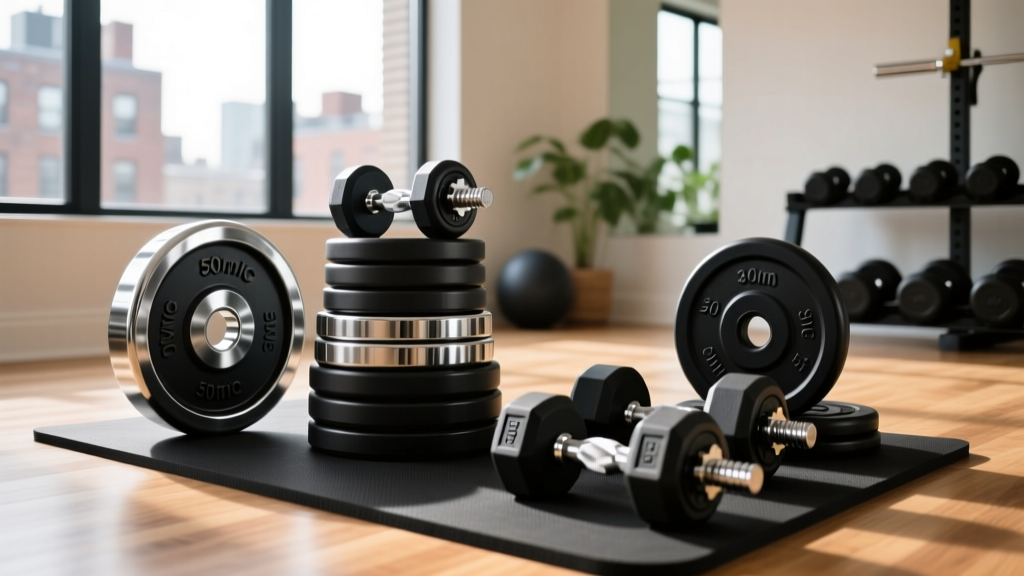
Olympic vs Standard Plates: 3 Day a Week Dumbbell Workout Setup
Discover how to choose between Olympic and standard weight plates to build the ultimate loadable dumbbell setup for a 3 day a week dumbbell workout.

A typical 3 day a week dumbbell workout relies heavily on multi-joint, compound movements like dumbbell Romanian deadlifts, Bulgarian split squats, and heavy floor presses. While dial-adjustable dumbbells are convenient, most commercial sets cap out at 50 to 90 pounds. Once you surpass that threshold, you must transition to loadable dumbbell handles and traditional weight plates. But setting up a home gym requires a foundational hardware choice: do you invest in Standard (1-inch) or Olympic (2-inch) weight plates?
This complete setup and installation walkthrough will guide you through selecting the right handles, sourcing the correct plates, and installing a safe, efficient storage system tailored for a high-frequency, heavy-duty dumbbell training split.
The Core Dilemma: Standard vs. Olympic Plate Dimensions
Before purchasing any gear, you must understand the physical limitations and spatial requirements of both plate types. The choice you make here will dictate the handles you buy, the storage rack you install, and the maximum weight you can lift per hand.
| Feature | Standard (1-Inch Hole) | Olympic (2-Inch Hole) |
|---|---|---|
| Hole Diameter | 1 inch (25.4 mm) | 2 inches (50.8 mm) |
| Handle Sleeve Length | Usually 6 to 8 inches | 10 to 16 inches |
| Max Load per Dumbbell | ~50 to 70 lbs | 100 to 150+ lbs |
| Cost per lb (Cast Iron) | $1.00 to $1.50 | $1.50 to $2.50 |
| Ecosystem Compatibility | Standard bars only | Olympic bars, racks, sleds, plates |
Step 1: Selecting Your Loadable Dumbbell Handles
Your plate choice is entirely dependent on the handles you select. For a rigorous 3 day a week dumbbell workout, durability and grip ergonomics are paramount.
The Standard (1-Inch) Route
Standard handles, such as the Yes4All 1-Inch Standard Threaded Handles (typically $25 to $35 per pair), are budget-friendly and compact. However, they suffer from a notorious failure mode: the sleeve is often spin-welded to the solid steel core. Under the lateral torque of heavy dumbbell pressing or drops, this weld can snap, causing plates to slide off mid-set. Furthermore, the threaded star-nut collars take significant time to screw on and off between sets.
The Olympic (2-Inch) Route
Olympic loadable dumbbell handles are the gold standard for serious home gyms. Models like the Rogue Loadable Dumbbell Handles ($115/pair) or the Titan Fitness Olympic Loadable Handles ($89.99/pair) feature a solid steel shaft with machined bronze bushings. This allows the sleeve to rotate smoothly during cleans or snatches, reducing wrist strain. More importantly, they utilize a secure, non-welded assembly that can safely hold upwards of 120 lbs per hand without structural compromise.
Step 2: Sourcing Plates for Progressive Overload
When programming a 3-day full-body or push/pull/legs dumbbell split, micro-loading is essential. The National Strength and Conditioning Association (NSCA) emphasizes that progressive overload—incrementally increasing the stress placed upon the musculoskeletal system—is the primary driver of hypertrophy and strength gains.
If you are doing dumbbell floor presses and can lift 60 lbs for 8 reps, jumping straight to 70 lbs (a 10 lb increase per hand) might cause you to fail at 4 reps, stalling your progress. This is where fractional plates come in.
- Standard Plates: Finding 1.25 lb or 2.5 lb standard plates is difficult. Most standard sets start at 5 lbs, forcing you to make 10 lb jumps per dumbbell.
- Olympic Plates: The Olympic ecosystem offers a vast array of fractional plates (0.5 lb, 1.25 lb, and 2.5 lb). According to Garage Gym Reviews, investing in a pair of 2.5 lb and 5 lb Olympic fractional plates allows you to make precise 5 lb or 10 lb total jumps per dumbbell, keeping your 3-day split progressing smoothly for months.
Expert Tip: Buy cast iron for your main weight (25s and 45s) to save money, but invest in urethane-coated fractional plates. Urethane prevents rust and reduces the clanking noise when stacking multiple small plates on a dumbbell sleeve.
Step 3: Storage and Rack Installation Walkthrough
Loadable dumbbells and loose plates require a dedicated storage solution to prevent tripping hazards and protect your flooring. Here is the step-by-step installation walkthrough for your weight tree or rack.
- Select the Right Tree: For Olympic plates, purchase a heavy-duty A-frame weight tree with a minimum 500 lb capacity and a base footprint of at least 24x24 inches. For Standard plates, a 5-peg vertical tree with an 18x18 inch base is sufficient.
- Floor Preparation: Place a 3/4-inch thick vulcanized rubber horse stall mat under the weight tree. This prevents the steel base from cracking your concrete garage floor or denting your home gym subfloor when you accidentally drop a 45 lb plate.
- Assemble the Base First: When building the tree, tighten the base bolts only 80% of the way until the vertical pegs are attached. This allows the frame to self-align. Once all pegs are slotted, torque the base bolts to maximum tightness using a socket wrench.
- Organize by Weight and Proximity: Load the heaviest plates (45s and 35s) on the lowest, longest pegs to keep the center of gravity near the floor. Place your 2.5 lb and 5 lb fractional plates on the highest, shortest pegs at eye level for easy access during your workout.
Step 4: Collars, Safety, and Maintenance
Never use a loadable dumbbell without a secure collar. The lateral movement of a 3 day a week dumbbell workout—especially during walking lunges or step-ups—can easily shake loose plates if the collar is inadequate.
The Collar Hierarchy:1. Spring Collars: Cheap and fast, but they slip on smooth Olympic sleeves. Avoid for heavy dumbbell work.
2. Spin-Lock Collars (Standard): Secure, but painfully slow to adjust between supersets.
3. Lock-Jaw / Clamp Collars (Olympic): The absolute best choice. Models like the Rogue HG 2.0 Collars or standard plastic clamp collars lock onto the 2-inch sleeve instantly and will not slide, even if the dumbbell is dropped from chest height.
Maintenance Routine: Once a month, wipe down your dumbbell handles and the inner rings of your cast iron plates with a lightly oiled rag (using 3-in-One oil or mineral oil). This prevents oxidation and ensures the plates slide on and off the sleeves smoothly, saving you time and frustration during your training sessions.
Frequently Asked Questions
Can I use bumper plates on loadable dumbbells?
Yes, but only on Olympic handles. However, standard 45 lb bumper plates have a massive 17.5-inch diameter. If you use them on a dumbbell, the plate will hit the floor before your hand does during exercises like dumbbell snatches or renegade rows. If you want to use bumpers for dumbbells, you must purchase specialized 'dumbbell bumper plates' (usually 10 lbs to 25 lbs) which have a smaller, condensed diameter.
Is a 3 day a week dumbbell workout enough to build muscle?
Absolutely. A 3-day full-body dumbbell split provides ample stimulus for hypertrophy, provided you are utilizing progressive overload and eating in a slight caloric surplus. Loadable dumbbells allow you to push into the heavy 4-6 rep range on compound lifts, which is highly effective for mechanical tension and muscle growth.
Which takes up less space: Standard or Olympic?
Standard plates are generally thinner and have a smaller diameter, making them ideal for tight spaces like apartments or small spare bedrooms. Olympic plates, particularly rubber-grip or urethane varieties, are thicker and require a wider storage footprint. If space is your primary constraint, a Standard 1-inch setup with a compact vertical tree is the most space-efficient route.
More gear to consider
All reviews
Power Rack vs Squat Rack vs Stand for Dumbbell 45 Hyperextension
Power Rack vs Squat Rack vs Stand: Alternate Dumbbell Snatch Guide

Beyond the Dumbbells Holder: Barbell Collar & Clamp Comparison Guide
Incline Dumbbell Press at Home & Barbell Collar Comparison
How to Work Rear Delts with Dumbbells: Loadable Gear Maintenance
