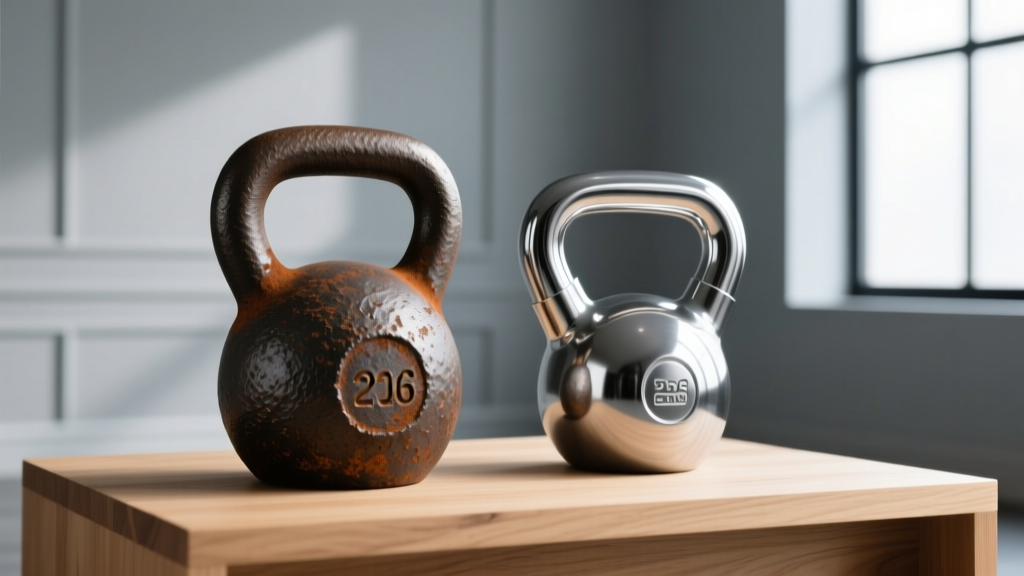
Cast Iron vs Competition Kettlebells: Beyond Dumbbell Piercing
Expert hands-on review of cast iron vs competition kettlebells. Discover handle ergonomics, pricing, and top 2026 picks for your home gym.

In the pursuit of the perfect home gym, enthusiasts often fall down rabbit holes of equipment modification—from custom knurling patterns to niche techniques like dumbbell piercing for specialized grip anchors. However, when it comes to ballistic and grind movements, no amount of DIY modification can fix a fundamentally flawed kettlebell. As we navigate the fitness equipment landscape in 2026, the debate between cast iron and competition kettlebells remains the most critical decision for lifters, coaches, and physical therapists alike.
Having tested over 40 different kettlebell models across both categories over the past decade, our team at FitGearPulse has documented the exact failure modes, ergonomic nuances, and pricing shifts that define today's market. Whether you are training for Hardstyle strength or Girevoy Sport endurance, this hands-on guide will help you invest in the right steel.
The Metallurgy of the Grip: Why Handle Engineering Matters
Before diving into specific brands, we must address the anatomy of the bell. According to biomechanical guidelines published by the National Strength and Conditioning Association (NSCA), the handle-to-bell geometry directly dictates force transfer and wrist safety during cleans and snatches.
- Cast Iron Handles: Typically sand-cast, resulting in a thicker handle (32mm to 35mm) and a smaller 'window' (the space between the handle and the bell body). The horns (the side pillars) are often wider and more rounded.
- Competition Handles: Machined from steel and TIG-welded to a hollow shell. They feature a strict 33mm diameter, a wider, more rectangular window, and flatter horns to allow the bell to rest flush against the forearm in the rack position.
Cast Iron Kettlebells: The Hardstyle Standard
Cast iron bells are the undisputed kings of Hardstyle training (e.g., StrongFirst, RKC). Their solid construction and varying physical dimensions mean that as the weight increases, the bell gets physically larger. This is ideal for heavy, low-rep grinds like Turkish Get-Ups, strict presses, and heavy double front squats.
Top Pick: Kettlebell Kings Cast Iron (Powder Coat)
The Kettlebell Kings Powder Coat line remains our gold standard for 2026. The matte powder coating provides an exceptional grip surface that holds chalk beautifully, unlike cheaper e-coated or painted bells that become slippery the moment you sweat.
- Handle Diameter: 32mm (16kg-24kg), 35mm (28kg+)
- Price Range: ~$1.75 to $2.20 per pound ($134.99 for a 24kg bell)
- Pros: Aggressive grip texture, flat machined base for stability, color-coded bands.
- Cons: Horns can be slightly sharp on the 28kg+ models straight out of the box, requiring a light sanding.
Runner Up: Rogue Kettlebells (E-Coat)
Rogue’s e-coated cast iron bells are virtually indestructible. The electronic coating prevents rust in humid garage gyms better than almost any paint. However, the handle is notoriously smooth, making it a poor choice for high-rep snatches unless you are liberal with magnesium carbonate chalk.
Competition Kettlebells: The Girevoy Sport Precision
Competition kettlebells are engineered for Girevoy Sport (GS) and high-volume ballistic endurance. The defining feature is uniformity: an 8kg competition bell is the exact same physical size as a 48kg bell. This ensures that your motor patterns, rack position, and snatch trajectory never change, regardless of the weight you are lifting. As noted by StrongFirst instructors, the uniform window size is crucial for preventing forearm bruising during high-rep cleans.
Top Pick: Kettlebell Kings Competition Steel
Filled with high-grade steel fragments (not cheap lead or glass beads), these bells produce zero rattle. The 33mm handle is polished to a mirror finish, allowing the bell to glide smoothly through the hand during the drop phase of a snatch.
- Handle Diameter: Strict 33mm across all weights
- Price Range: ~$4.00 to $5.50 per pound ($189.99 for a 24kg bell)
- Pros: Uniform dimensions, zero-rattle core, color-coded bodies, massive window for comfortable racking.
- Cons: The bare steel handle can become slick without chalk; premium pricing.
Budget Alternative: Perform Better First Place Competition
If you are outfitting a commercial gym on a budget, Perform Better offers a solid entry point. At roughly $3.00 per pound, they are affordable, though the weld quality on the handles is slightly inferior to Kettlebell Kings, and they may develop a faint rattle after 10,000+ snatches.
Head-to-Head Comparison Matrix
| Feature | Cast Iron (Hardstyle) | Competition (Sport) |
|---|---|---|
| Core Material | Solid Cast Iron | Hollow Steel Shell + Steel Shot |
| Handle Diameter | 32mm - 35mm (Varies) | 33mm (Uniform) |
| Physical Size | Grows with weight | Identical across all weights |
| Best For | Grinds, Heavy Swings, TGU | Snatches, Jerks, Long Cycle |
| Avg. Cost per Lb | $1.50 - $2.50 | $3.50 - $5.50 |
| Wrist Comfort | Moderate (Thicker horns) | High (Flat, wide window) |
Real-World Failure Modes & Edge Cases
When investing $150+ into a single piece of iron, you need to know how it fails. Here are the edge cases we’ve documented in our long-term testing:
- The 'Cheap Competition' Rattle: Budget competition bells (under $3.00/lb) often use sand or low-grade steel shot that settles over time. By month six of heavy snatches, the bell will sound like a maraca. This shifts the center of gravity slightly, ruining the balance required for precise juggling or GS sport work.
- Powder Coat Chipping: While powder coat is superior for grip, dropping cast iron bells on concrete repeatedly will chip the coating near the base. This exposes raw iron to humidity, leading to localized rust spots that require wire-brushing and touch-up paint.
- Handle Seam Burrs: In cheaper sand-cast bells, the mold seam runs directly down the center of the handle. If the manufacturer skips the grinding phase, this burr will tear your palms to shreds during high-rep swings. Always run your fingers along the inner curve of the handle before purchasing.
Expert Verdict: Which Should You Buy in 2026?
Your choice should be dictated entirely by your training methodology, not just your budget.
Buy Cast Iron If: You train Hardstyle, focus on heavy double kettlebell work, prioritize Turkish Get-Ups, and want maximum durability for outdoor or garage gym environments. The Kettlebell Kings Powder Coat is the undisputed champion here, offering the perfect balance of aggressive grip and structural integrity.
Buy Competition If: You are training for Girevoy Sport, prioritize high-rep one-arm snatches and jerks, or are a physical therapist who needs consistent biomechanical positioning for patients across varying weights. The Kettlebell Kings Competition Steel justifies its premium price tag with flawless welds and a perfectly balanced, rattle-free core.
While the fitness community will always debate niche modifications—from knurling depth to dumbbell piercing techniques—the truth is that a premium, purpose-built kettlebell requires no alteration. Choose the right metallurgy for your training style, respect the geometry of the handle, and let the iron do the work.
More gear to consider
All reviews
Cast Iron vs Competition Kettlebells vs Back Routine with Dumbbells

Budget Dumbbell Racks to Clear Space for Dead Bugs With Dumbbells
EZ Curl Bar vs Straight Bar: Man Full Body Dumbbell Workout PDF Care

Rubber Hex vs Urethane: Mastering the Dumbbell Exercise for Rear Delts

Cast Iron vs Competition Kettlebells: Sumo Squat with Dumbbells 2026
