
What Do Dumbbell Deadlifts Work? Cast Iron vs Competition Kettlebell Value Guide
Discover what dumbbell deadlifts work and why upgrading to kettlebells is smarter. Compare cast iron vs competition KBs with our 2026 budget breakdown.

If you have ever searched what do dumbbell deadlifts work, you likely already know the answer: they are a fantastic, accessible way to target your posterior chain. According to biomechanics databases like ExRx, the dumbbell deadlift primarily engages the erector spinae, gluteus maximus, hamstrings, and traps. However, as your strength progresses, dumbbells reveal severe limitations for heavy hinging. Grip fatigue, awkward stances caused by bulky dumbbell heads, and a lack of ballistic potential (like swings) create a hard ceiling for your home gym.
This is where the kettlebell becomes the undisputed king of the home gym hinge. But when you decide to upgrade, you are immediately hit with a critical purchasing dilemma: Cast Iron vs. Competition Kettlebells. In 2026, the price gap between these two styles has widened due to steel manufacturing costs, making a strict budget breakdown essential. Below, we analyze the true value, metallurgy, and long-term ROI of both styles to help you build the ultimate posterior-chain arsenal.
The Biomechanical Ceiling: Why Dumbbells Fall Short
Before diving into the budget matrix, we must address why you are upgrading. A 100 lb dumbbell deadlift works the exact same muscles as a 100 lb kettlebell deadlift. However, the application of force differs wildly:
- Stance Interference: Heavy hex dumbbells force you into a wide, sumo-style stance, altering the biomechanics of a traditional hinge.
- Grip Limitations: Thick, knurled dumbbell handles often fail before your glutes and hamstrings do.
- Ballistic Crossover: You cannot safely or effectively perform high-rep kettlebell swings or cleans with dumbbells. The kettlebell’s offset center of mass and smooth handle are mandatory for explosive hip extension.
Cast Iron vs. Competition: The 2026 Value Matrix
To understand where your money is going, you must look past the sticker price and evaluate the cost-per-pound, dimensional consistency, and material longevity. Here is how the two primary kettlebell categories stack up in the current market.
| Feature | Standard Cast Iron | Competition (Steel) |
|---|---|---|
| Material | Gray Cast Iron (porous) | Single-Cast Solid Steel |
| Avg. Price Per Pound (2026) | $1.60 - $2.50 / lb | $3.80 - $5.20 / lb |
| Dimensional Consistency | Grows in size with weight | Uniform (280x210mm) across all weights |
| Handle Diameter | Varies (30mm - 38mm+) | Strict 33mm standard |
| Best Coating Option | E-Coat (Electrophoretic) | Bare Steel with Color-Coded Bands |
| Resale Value Retention | Low (40-50%) | High (75-85%) |
Deep Dive: Cast Iron Kettlebells (The Budget Workhorse)
Cast iron kettlebells are poured into sand molds, making them cheaper to produce. They are the go-to choice for beginners, general fitness enthusiasts, and those building a garage gym on a strict budget. However, not all cast iron is created equal, and choosing the wrong coating will ruin your investment within a year.
The Coating Trap: Powder Coat vs. E-Coat
If you are buying cast iron in 2026, you must scrutinize the finish. Budget brands like Yes4All or CAP Barbell often use powder coating or vinyl. Powder coat sits on the surface of the porous iron; once it chips from dropping the bell on concrete, moisture enters the iron, causing sub-surface rust that flakes the coating off in sheets.
⚠️ FitGearPulse Warning: Always opt for E-Coat (Electrophoretic deposition) or high-quality enamel. E-coating uses an electrical current to pull paint particles into the microscopic pores of the cast iron. The Rogue E-Coat Kettlebells (roughly $75 for a 24kg bell) represent the gold standard here, offering rust resistance that outlasts powder coat by a decade.The Heavy Bell Failure Mode
Because cast iron bells grow in physical size as the weight increases, a 32kg (70lb) or 40kg (88lb) cast iron bell features a massively widened base and flared 'horns' (the sides of the handle). This design flaw forces your wrists into extreme ulnar deviation during cleans and rack positions, leading to bruised forearms and compromised form. Cast iron is highly valuable up to 24kg; beyond that, the value proposition plummets.
Deep Dive: Competition Kettlebells (The Premium Investment)
Competition kettlebells are milled from solid steel and adhere to strict International Kettlebell Sport Federation (IKSF) dimensions. Whether you are holding an 8kg or a 48kg bell, the physical size (280mm height, 210mm width) and handle diameter (33mm) remain exactly the same. The weight difference is achieved by hollowing out the core and filling it with air or lead/steel shot.
Why the Premium Price Tag is Justified
'Muscle memory relies on spatial consistency. If your 16kg clean requires a different rack angle than your 24kg clean because the horn width changed, you are leaking power and inviting wrist injury.' — Adapted from StrongFirst instructional standards.
Brands like Kettlebell Kings and Rogue Fitness dominate the competition space. A 24kg Competition bell will cost between $135 and $160. While this is nearly double the price of cast iron, the ROI manifests in three ways:
- Technical Consistency: Your swing, clean, and snatch mechanics never need to adjust to a new handle thickness or bell profile.
- Drop Durability: Solid steel will not crack or shatter if dropped from overhead onto a rubber mat, whereas brittle cast iron can fracture along the mold seam under extreme impact.
- Secondary Market Liquidity: Competition bells hold their value incredibly well. A used Kettlebell Kings competition bell routinely sells on secondary markets for 80% of its retail price.
Step-by-Step Budget Allocation Framework
How should you actually spend your money? Rather than buying a random assortment of weights, use this tiered framework to maximize your budget based on your current strength level.
Tier 1: The 'Posterior Primer' Budget ($150 - $200)
Best for: Beginners transitioning from dumbbell deadlifts to kettlebell swings.
- Buy: 16kg (35lb) and 24kg (53lb) E-Coat Cast Iron bells.
- Strategy: Skip the cheap vinyl-coated 8kg and 12kg bells. Most adults can hinge 16kg on day one. Put your limited funds into high-quality e-coat finishes for the weights you will actually use for heavy swings and goblet squats.
Tier 2: The 'Hybrid Athlete' Sweet Spot ($400 - $550)
Best for: Intermediate lifters focusing on kettlebell sport, heavy swings, and complex flows.
- Buy: 16kg and 24kg Competition Steel bells + 32kg Cast Iron bell.
- Strategy: Use the competition bells for high-skill movements (snatches, cleans, jerks) where the 33mm handle and uniform horns protect your wrists. Use the cast iron 32kg strictly for heavy, low-rep deadlifts and farmer carries where dimensional consistency doesn't matter, saving you $60+.
Tier 3: The 'Purist' Investment ($800+)
Best for: Advanced practitioners, coaches, and dedicated home gym owners.
- Buy: Full set of Competition Steel (12kg, 16kg, 20kg, 24kg, 32kg).
- Strategy: Treat this as a lifetime purchase. The uniform color-coding (Yellow for 16kg, Green for 24kg, Red for 32kg) allows for instant weight identification during high-fatigue interval sets.
Expert Verdict: Which Style Wins the Value War?
If your primary goal is simply to answer the question of what do dumbbell deadlifts work by finding a slightly better tool for heavy, low-rep glute and hamstring hinges, Cast Iron (E-Coated) is the undisputed budget winner. It provides the necessary resistance for posterior chain overload at roughly $1.80 per pound.
However, if your training involves ballistic movements, complex flows, or high-rep kettlebell sport conditioning, Competition Kettlebells offer a vastly superior long-term value. The prevention of wrist impingement, the preservation of muscle memory through uniform dimensions, and the near-indestructible nature of solid steel make the 2x upfront cost entirely justifiable. Stop limiting your hinge potential with dumbbells, and invest in the steel that matches your ambition.
More gear to consider
All reviews
EZ vs Straight Bar Care: Longevity & Dumbbell Curl Technique Form
Barbell Buying Guide: Weight, Knurling & Pec Deck with Dumbbells
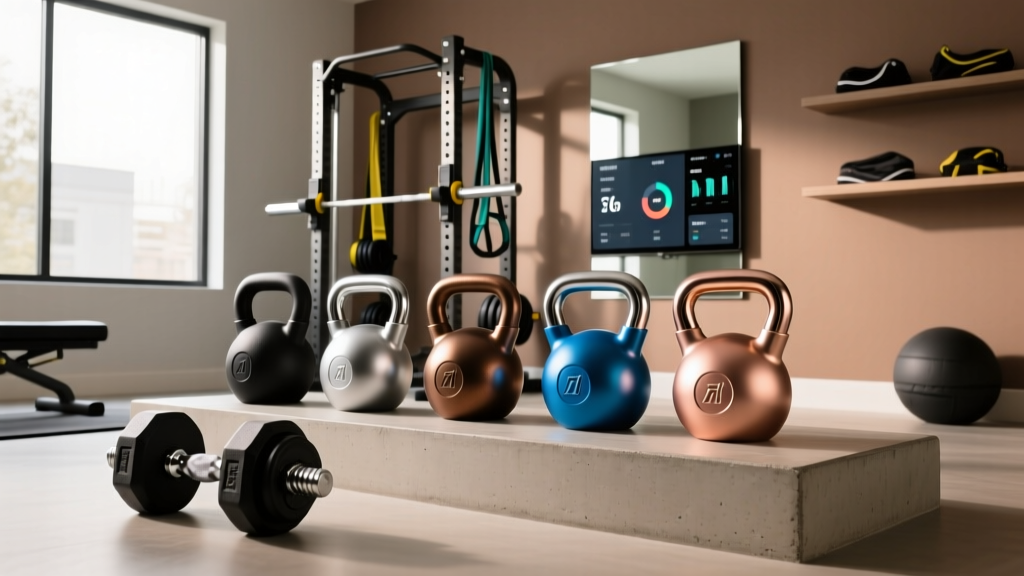
2026 Kettlebell Trends: Evolving Your Muscle Building Dumbbell Workout
2026 Market Trends: Dumbbell Racks for Heavy Chest Fly Dumbbells

Beyond Burpees with Dumbbells: Olympic Barbell Guide
