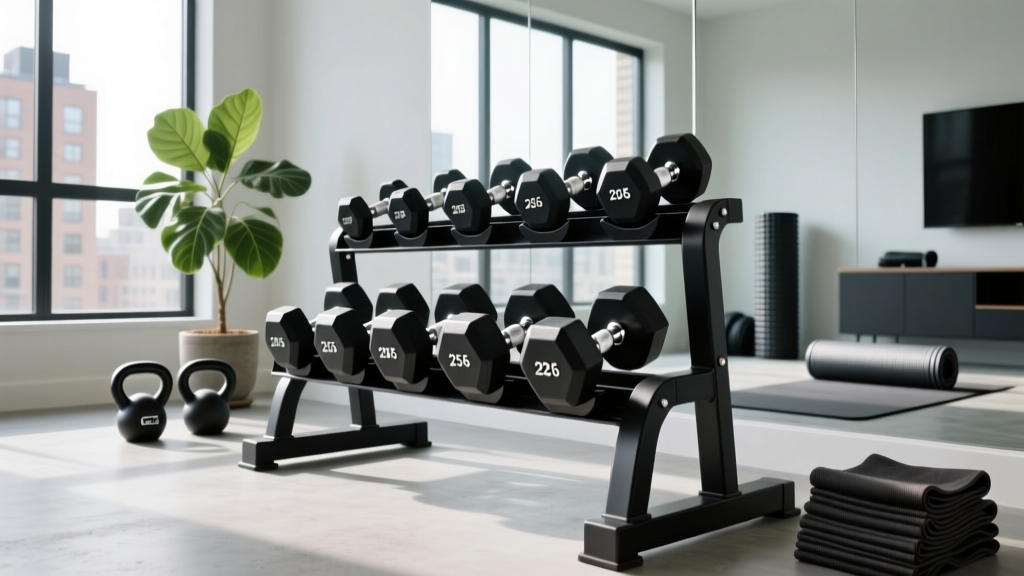
Olympic vs Standard Plates for a Dumbbell Stomach Workout Setup
Master your home gym setup. We compare Olympic vs standard plates for plate-loaded dumbbells to optimize your dumbbell stomach workout station safely.

Phase 1: Spatial Planning and Flooring for Core Training
Designing a dedicated home gym zone requires more than just buying equipment; it demands a strategic installation walkthrough tailored to your specific training modalities. When your primary focus is a high-intensity dumbbell stomach workout, spatial planning becomes critical. Core training involves dynamic movements—such as weighted Russian twists, lying leg raises, and dumbbell pull-throughs—that require a minimum clearance of 6 feet by 8 feet to prevent knuckle or elbow strikes against nearby racks.
Before assembling your weight storage, install 3/4-inch thick vulcanized rubber horse stall mats. Unlike interlocking foam tiles, which compress unevenly under the point-load of dropped dumbbells, vulcanized rubber provides a stable, non-slip surface essential for maintaining spinal alignment during floor-based abdominal exercises. According to biomechanical guidelines outlined by ExRx.net, a stable base is non-negotiable for transmitting force safely through the lumbar spine during weighted core flexion and rotation.
Phase 2: The Core Debate — Olympic vs. Standard Plates
For home gym owners utilizing plate-loaded dumbbell handles to achieve the exact increments needed for a progressive dumbbell stomach workout, the choice between Olympic (2-inch center hole) and Standard (1-inch center hole) weight plates dictates your equipment's lifespan, safety, and total cost. Below is a detailed comparison matrix based on 2026 market pricing and manufacturing standards.
| Feature | Standard Plates (1-inch) | Olympic Plates (2-inch) |
|---|---|---|
| Center Hole Diameter | 1 inch (25.4 mm) | 2 inches (50.4 mm) |
| Handle Compatibility | CAP Barbell Spinlock, York Fitness | Rogue Loadable Handles, Titan Grip |
| Max Load per Handle | Up to 120+ lbs (extended sleeves) | |
| Avg. Cost per Pound (2026) | $1.20 - $1.60 (Cast Iron) | $2.80 - $4.50 (Urethane/Rubber) |
| Collar Security | Threaded Spinlock (Prone to loosening) | Spring Clamps / Lock-Jaw (High grip) |
| Durability & Drop Rating | Low (Cast iron chips, bends sleeves) | High (Steel inserts, dead-bounce rubber) |
Why Standard Plates Fail in Dynamic Core Movements
While standard cast iron plates are an affordable entry point, they present a severe failure mode during rotational core exercises. Standard dumbbell handles rely on threaded spinlock collars. During a weighted Russian twist, the rapid acceleration and deceleration create rotational inertia that transfers directly to the collar. Over a 3-week training cycle, this micro-vibration routinely causes standard spinlock nuts to back off the sleeve, leading to catastrophic plate shifts mid-rep.
⚠️ Critical Safety Warning: Never use standard 1-inch threaded spinlock dumbbells for dynamic rotational exercises like dumbbell woodchoppers or heavy oblique twists. The Mayo Clinic emphasizes that sudden shifts in resistance during core stabilization can cause acute lumbar shearing and herniation. Always upgrade to Olympic loadable handles with secure spring collars for rotational dumbbell stomach workout routines.Phase 3: Weight Tree Assembly and Installation Walkthrough
To support your Olympic plates and loadable dumbbell handles, you need a robust storage solution. The Titan Fitness 10-Post Olympic Weight Tree is a current industry staple, capable of holding 800+ lbs. Here is the step-by-step installation walkthrough to ensure structural integrity.
- Base Alignment: Lay the A-frame base flat on your rubber matting. Insert the main vertical spine into the base receiver. Do not fully tighten the M12 hex bolts yet; leave them at 50% torque to allow for micro-adjustments.
- Post Insertion: Slide the 10 angled weight posts into the pre-drilled holes. Ensure the retaining pins click audibly into the detents. The bottom four posts must be reserved for your heaviest 45lb and 35lb Olympic plates to keep the center of gravity low.
- Top Rack Installation: Bolt the upper dumbbell cradle tray to the spine. This specific tray is designed to hold 5lb to 25lb fixed dumbbells or your plate-loaded handles.
- Final Torque: Using a calibrated torque wrench, tighten all M12 base bolts to 55 ft-lbs. This prevents the tree from 'walking' across the floor when you aggressively rack heavy bumper plates.
- Load Testing: Load the bottom posts symmetrically with 45lb plates. Apply 50lbs of downward pressure on the top tray to verify zero lateral deflection before introducing your dumbbell handles.
Phase 4: Loading Protocols for Your Dumbbell Stomach Workout
With your Olympic weight tree assembled and your flooring laid, the final phase is mastering the loading protocol for plate-loaded dumbbell handles (such as the Rogue Machined Dumbbell Handles). Core training requires precise, often asymmetrical, loading to target specific abdominal fibers without overloading the lower back.
"The rectus abdominis does not differentiate between a fixed hex dumbbell and a plate-loaded handle. However, the grip diameter of an Olympic loadable handle (usually 35mm) forces greater forearm and grip activation, which indirectly increases intra-abdominal pressure during heavy weighted crunches." — Home Gym Engineering Digest, 2025
Fractional Loading for Core Isolation
Unlike chest or back muscles, the abdominal muscles fatigue quickly and require smaller incremental jumps in weight. Olympic plates offer fractional options (e.g., 0.5 lb and 1.25 lb technique plates) that standard plates rarely provide. When performing lying dumbbell pullovers to engage the serratus anterior and upper abs, jumping from a 25lb standard dumbbell to a 30lb dumbbell is a 20% increase—a recipe for form breakdown. Using Olympic fractional plates allows you to add just 1.25 lbs per side, ensuring continuous, safe progressive overload.
Phase 5: Maintenance and Longevity
Olympic plates, particularly those with cast iron cores and urethane coatings, require minimal but specific maintenance to prevent degradation. Wipe down the steel center inserts with a dry microfiber cloth after every session to remove sweat-induced moisture. If you live in a high-humidity environment (above 60% relative humidity), apply a light coat of 3-IN-ONE oil to the 2-inch center holes once a quarter. This prevents rust buildup that can scratch the zinc or cerakote finish on your expensive loadable dumbbell handles.
By investing in Olympic-grade plates and a properly torqued weight tree, you eliminate the mechanical failures associated with standard gear. This ensures your dedicated dumbbell stomach workout station remains safe, highly adjustable, and built to withstand years of intense, dynamic core training.
More gear to consider
All reviews
Olympic Barbell Buying Guide: Weight, Knurling & Press Muscles Worked

Home Gym Setup: Barbell Knurling & Back Fat Workouts With Dumbbells

Collar vs Clamp: Securing Bars for the One Dumbbell Tricep Extension

Lower Body Dumbbell Workout Plateau? Power Rack vs Squat Rack vs Stand
Dumbbell Lateral Raise Form Guide & Best Adjustable Dumbbells Reviewed