
Olympic vs Standard Plates: Troubleshooting & Bowflex 560 Dumbbells
Troubleshoot common Olympic vs standard weight plate mistakes. Learn compatibility fixes, barbell bending limits, and when Bowflex 560 dumbbells save space.

Building a home gym in 2026 often starts with a deceptively simple question: should you buy standard or Olympic weight plates? While both serve the fundamental purpose of adding resistance, mixing them up or misunderstanding their structural limits leads to costly mistakes, bent barbells, and frustrating workout interruptions. Furthermore, as home gym footprints shrink and lifters prioritize versatility, many are realizing that traditional plate-loaded systems aren't always the answer—leading to a surge in space-saving alternatives like the Bowflex 560 dumbbells.
This troubleshooting guide breaks down the exact mechanical differences between 1-inch standard and 2-inch Olympic plates, identifies the most common compatibility mistakes lifters make, and provides a practical framework for deciding when to abandon plates altogether for adjustable dumbbell systems.
The Core Conflict: 1-Inch Standard vs. 2-Inch Olympic
Before troubleshooting compatibility issues, you must understand the precise engineering differences between the two primary plate types. According to BarBend's comprehensive guide on weight plate specifications, the distinction goes far beyond the center hole diameter.
Standard Plates (1-Inch / 25.4mm)
- Center Hole: Exactly 1 inch (25.4mm).
- Barbell Sleeve: Typically 12 inches long, 1 inch in diameter.
- Material: Cast iron, or vinyl shells filled with cement/sand.
- Max Load Capacity: Standard 1-inch steel bars generally begin to yield (bend permanently) between 200 and 250 lbs.
Olympic Plates (2-Inch / 50.6mm)
- Center Hole: Nominally 2 inches, but precisely 50.6mm to allow for smooth rotation on Olympic barbell sleeves.
- Barbell Sleeve: Typically 16.5 inches long, featuring rotating sleeves with needle or bushing bearings.
- Material: High-density cast iron, calibrated steel, or vulcanized rubber bumpers.
- Max Load Capacity: A quality Olympic barbell can withstand 1,000 to 1,500 lbs before failing.
Top 3 Compatibility Mistakes (And How to Fix Them)
When auditing home gyms, we consistently see the same three equipment mismatches. Here is how to troubleshoot them.
Mistake 1: The 'Adapter Sleeve' Trap
The Problem: You bought a premium Olympic barbell but inherited a set of standard 1-inch cast iron plates. You purchase cheap plastic or aluminum 1-inch-to-2-inch adapter sleeves to make them fit.
The Fix: Adapters introduce a 'dead zone' of movement. Because the adapter grips the barbell via friction or set screws, heavy loads cause the adapter to slip, leading to uneven weight distribution and torn barbell knurling. Solution: Sell the standard plates on the secondary market and reinvest the cash into Olympic plates. The structural integrity of your lifting setup is not worth the $40 you saved on adapters.
Mistake 2: Overloading Standard Bars
The Problem: Lifters load 300+ lbs onto a standard 1-inch barbell for deadlifts or squats.
The Fix: Standard bars lack the tensile strength (usually rated around 30,000 to 45,000 PSI) to handle heavy axial loads. When a standard bar bends, it ruins the sleeve threading, making it impossible to secure the spin-lock collars. If you are lifting over 225 lbs consistently, you must upgrade to an Olympic barbell and plate system.
Mistake 3: Ignoring Sleeve Clearance Math
The Problem: Buying thick vinyl-cement standard plates and running out of barbell sleeve space before reaching your target weight.
The Fix: Do the math before you buy. A standard barbell sleeve is 12 inches long. A standard 10lb vinyl plate is often 1.5 inches thick. You can only fit eight plates per side (160 lbs total plus the bar). Conversely, an Olympic sleeve is 16.5 inches long, accommodating up to five 45lb cast-iron plates per side (450+ lbs). Always check the plate thickness spec, not just the weight.
Space & Progression Troubleshooting: When Plates Fail You
While Olympic plates are the undisputed king of heavy barbell lifting, they introduce two massive headaches for the modern home gym owner: spatial footprint and micro-loading limitations.
A standard 300lb Olympic plate set (two 45s, two 35s, two 25s, two 10s, four 5s) requires a dedicated weight tree and occupies roughly 4 to 6 square feet of floor space. Furthermore, progressing on isolation movements (like lateral raises or bicep curls) with physical plates usually forces a 5lb or 10lb jump per hand—a massive 20-30% increase in load that often leads to joint strain or stalled progress.
The Bowflex 560 Dumbbells Alternative
When troubleshooting a cramped apartment gym or a physical therapy setup where micro-loading is non-negotiable, many lifters are abandoning light plate-loaded dumbbells entirely in favor of the Bowflex SelectTech adjustable dumbbell lineup, specifically the Bowflex 560 dumbbells.
Here is why the Bowflex 560 dumbbells solve the exact failure modes of light plate sets:
- True Micro-Loading: The Bowflex 560 dumbbells offer 2.5 lb increments from 5 lbs up to 25 lbs. This is virtually impossible to replicate with standard plates without buying specialized, expensive fractional micro-plates that easily get lost.
- Footprint Reduction: A single pair of Bowflex 560 dumbbells replaces up to 15 sets of traditional hex dumbbells or a massive rack of plate-loaded handles, condensing 600 lbs of total liftable weight into less than 1 square foot of floor space.
- Plate Rattle Elimination: Traditional plate-loaded dumbbell handles rely on spring clips or star-lock nuts. During dynamic movements like walking lunges, the plates clank and loosen. The internal dial mechanism of the Bowflex 560 completely eliminates this mechanical failure mode.
Equipment Matrix: Standard Plates vs. Olympic Plates vs. Bowflex 560
Use this decision matrix to troubleshoot which equipment type fits your current lifting phase and spatial constraints.
| Feature | Standard Plates (1-inch) | Olympic Plates (2-inch) | Bowflex 560 Dumbbells |
|---|---|---|---|
| Best Use Case | Budget starter gyms, light resistance | Heavy compound lifts, powerlifting, drop-sets | Isolation, rehab, micro-loading, small spaces |
| Weight Increments | Typically 5 lb or 10 lb jumps | Fractional plates available but costly | 2.5 lb increments (5-25 lbs); 5 lb (30-60 lbs) |
| Space Required | High (requires tree/rack) | Very High (large diameter plates) | Minimal (under 1 sq ft with cradle) |
| 2026 Avg Cost (300lb equivalent) | $150 - $200 | $450 - $600+ | ~$449 per pair |
| Drop Tolerance | Low (cracks vinyl, chips iron) | High (if using rubber bumpers) | None (internal gears will shatter) |
Real-World Failure Modes: What Breaks First?
When troubleshooting gym equipment, knowing how it fails helps you prevent it. Here are the most common breakdowns for each category.
Standard Plate Failures
The most common failure mode for budget standard plates is the vinyl shell rupture. Cement-filled plates are sensitive to humidity and temperature fluctuations. If left in an unclimate-controlled garage, the internal moisture expands, cracking the plastic shell and leaking concrete dust onto your floor. Furthermore, the 1-inch center holes often warp, making them difficult to slide onto the barbell sleeves.
Olympic Bumper Plate Failures
While Olympic iron plates are virtually indestructible, Olympic bumper plates have a specific failure mode: hub separation and edge fraying. According to the care guidelines outlined in the Rogue Fitness Echo Bumper specifications, dropping bumpers on rough, unfinished concrete will act like sandpaper on the rubber edge, causing it to flake and tear away from the steel center hub. Troubleshooting tip: Always use horse-stall mats or a dedicated lifting platform when dropping Olympic bumpers.
Adjustable Dumbbell Failures
The Bowflex 560 dumbbells are engineering marvels, but they possess one critical vulnerability: impact shock. The internal selector dials and retaining brackets are made of high-impact polymers. If you drop a Bowflex 560 dumbbell from the top of a chest press, the kinetic energy can snap the internal locking pins, rendering the weight-selection dial useless. Treat them like precision instruments, not traditional cast iron.
"The biggest mistake I see in home gym troubleshooting is lifters treating adjustable dumbbells like hex dumbbells. You must return the Bowflex 560 to its cradle to adjust the weight, and you must set it down gently. If you need to do heavy drop-sets where you toss the weights to the floor, stick to Olympic plates and iron dumbbells." — Home Gym Equipment Technician
FAQ: Quick Fixes for Plate & Dumbbell Dilemmas
Can I use standard plates on a dumbbell handle?
Yes, but only if you purchase a 1-inch standard dumbbell handle. However, standard dumbbell handles usually only have 7-inch sleeves, meaning you can only fit about 25-30 lbs of standard plates per hand before you run out of room for the collar. For heavy dumbbell work, Olympic plate-loaded handles or adjustable systems are required.
Are Olympic plates always exactly 45 lbs?
No. In the US, a standard Olympic plate is 45 lbs (20.4 kg). However, if you purchase calibrated steel plates or international kilogram plates, the red plates are 25 kg (55.1 lbs). Always check the unit of measurement when buying used Olympic plates to avoid messing up your progressive overload math.
Why choose the Bowflex 560 over the 552 or 1090?
The Bowflex 560 dumbbells occupy the 'Goldilocks' zone for most lifters. The 552 maxes out at 52.5 lbs, which is often too light for heavy unilateral rows or goblet squats. The 1090 goes up to 90 lbs but is massively bulky and difficult to maneuver for smaller isolation movements. The 560's 60 lb ceiling, combined with its 2.5 lb micro-loading feature at the lower end, makes it the most versatile troubleshooting tool for intermediate lifters plateauing on lighter weights.
More gear to consider
All reviews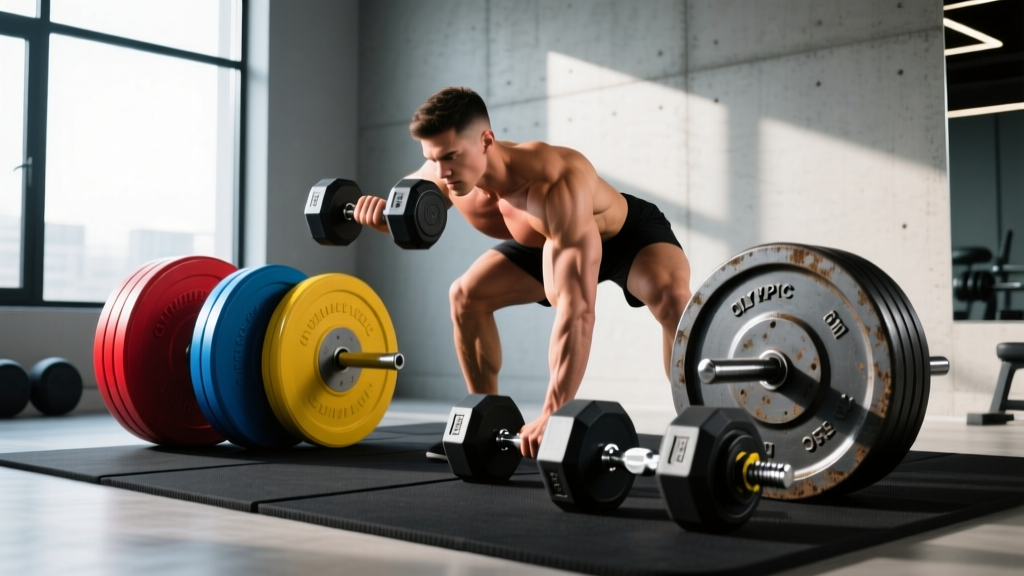
Bumper vs Iron 2026 & Reverse Grip Dumbbell Press Muscles Worked

Setup: Skull Crusher Exercise with Dumbbells & Barbell Collars

Power vs Squat Rack vs Stand & One Arm Dumbbell Row Muscles Worked

Cast Iron vs Competition Kettlebells & Hex Dumbbells Rack Care

Space-Saving Dumbbell Racks for the Single Dumbbell Raise & More
