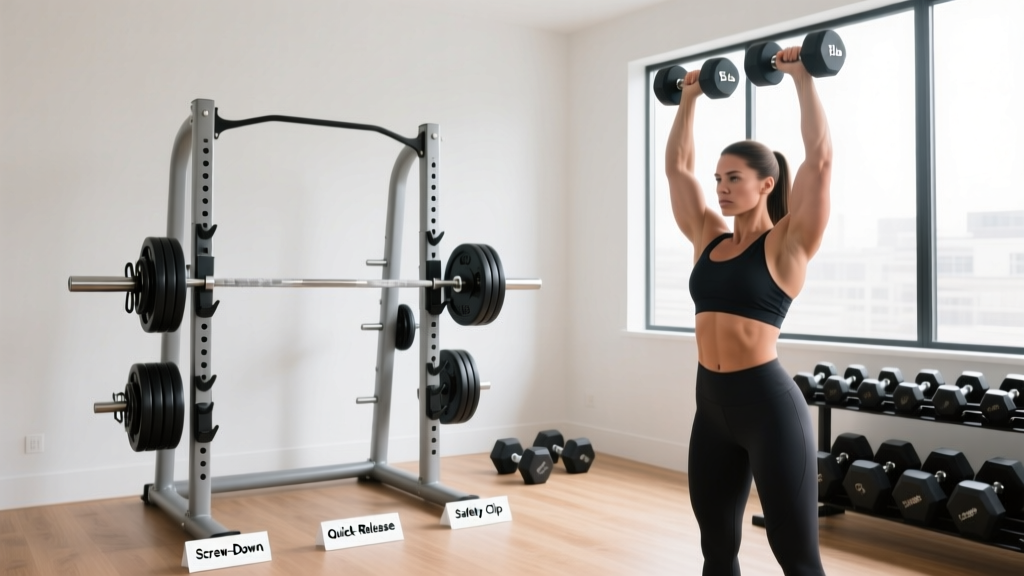
Olympic vs Standard Plates & Lat Exercises with Dumbbells at Home
Learn the differences between Olympic and standard weight plates, and master effective lat exercises with dumbbells at home for a stronger, wider back.

The Home Gym Dilemma: Building Your Plate-Loaded Arsenal
Setting up a home gym in 2026 requires navigating a maze of equipment specifications. While many beginners default to expensive adjustable dumbbells like the Nuobell 80s or PowerBlock Pro series, a highly cost-effective and durable alternative is purchasing plate-loaded dumbbell handles and weight plates. However, this choice immediately forces you to confront the most fundamental divide in weightlifting equipment: Olympic vs. Standard weight plates.
Your decision here dictates not only the longevity of your equipment but also the biomechanics of your workouts. Once you understand how to select the right iron, you can unlock a massive, V-taper back without ever stepping foot in a commercial gym. This beginner-friendly, step-by-step guide will walk you through the exact specifications of weight plates, how they affect your dumbbell handles, and how to execute the most effective lat exercises with dumbbells at home.
Step 1: Decoding Weight Plate Types (Olympic vs. Standard)
Before you can row heavy iron, you need to know what fits on your bar. The terms 'Standard' and 'Olympic' do not refer to the quality of the iron, but rather to the diameter of the center hole and the corresponding barbell sleeve.
| Feature | Standard Plates | Olympic Plates |
|---|---|---|
| Hole Diameter | 1.03 inches (approx. 25mm) | 2.00 inches (approx. 50.4mm) |
| Plate Material | Cast iron, cement-filled PVC, or rubber | Cast iron, steel, or virgin rubber bumpers |
| Max Load Capacity | Typically 200-300 lbs (bar bends beyond this) | 800-1,500+ lbs (industry standard for heavy lifting) |
| Cost Per Pound | $1.00 - $1.50 / lb | $1.50 - $3.50 / lb |
| Best For | Light home setups, beginners, budget builds | Serious home gyms, power racks, heavy progressive overload |
Step 2: Choosing the Right Dumbbell Handles
Your plate choice directly dictates your dumbbell handle purchase. According to Rogue Fitness Equipment Standards, the 50mm Olympic sleeve is the global standard for a reason: it prevents barbell bending and accommodates heavy loading. But how does this translate to dumbbells?
The Standard Route (1-Inch Sleeves)
If you buy standard cast iron plates, you will need 1-inch spin-lock dumbbell handles (e.g., Yes4All 14-inch handles, approx. $25/pair).
- Pros: Very affordable; compact sleeve diameter keeps the weight close to your hand, making balancing the dumbbell easier for isolation movements.
- Cons: The threaded star-nut collars can vibrate loose during dynamic movements. The sleeves are short, capping your max weight around 70-80 lbs per hand depending on plate thickness.
The Olympic Route (2-Inch Sleeves)
If you invest in Olympic plates, you will need Olympic dumbbell handles (e.g., Titan Fitness 20-inch Olympic DB handles, approx. $120/pair).
- Pros: Virtually indestructible; allows for massive weight loads (150+ lbs per hand); compatible with high-quality lock-jaw collars that never slip.
- Cons: The 2-inch sleeve diameter pushes the weight plates further away from your grip. This alters the center of mass, requiring greater grip strength and stabilization during unilateral rows.
Step 3: Biomechanics of the Latissimus Dorsi
To effectively target the lats, we must understand their primary functions. According to the ExRx.net Latissimus Dorsi Directory, the latissimus dorsi is responsible for shoulder extension (pulling the arm down and back from an overhead position) and shoulder adduction (pulling the arm down toward the midline of the body from an outstretched position).
Because home gyms typically lack cable pulldown machines, we must use dumbbells to replicate these exact movement patterns. Below are the premier lat exercises with dumbbells at home, tailored for plate-loaded setups.
Step 4: Top Lat Exercises with Dumbbells at Home
1. The Single-Arm Dumbbell Row (Shoulder Adduction & Extension)
This is the cornerstone of home back training. It allows for a deep stretch and heavy loading.
- Setup: Place your left knee and left hand on a flat bench. Keep your spine neutral, parallel to the floor. Grab the dumbbell with your right hand using a neutral grip (palm facing your torso).
- The Pull: Drive your right elbow up toward the ceiling, pulling the dumbbell toward your hip pocket, not your armpit. This specific trajectory ensures the latissimus dorsi does the work rather than the rear deltoids or biceps.
- The Eccentric: Lower the weight slowly over 2-3 seconds, allowing your scapula to protract (stretch forward) at the bottom.
- Prescription: 4 sets of 8-12 reps per arm. Leave 1-2 reps in reserve (RIR).
2. The Dumbbell Pullover (Shoulder Extension)
The pullover is one of the few free-weight exercises that isolates the lats through shoulder extension, mimicking a straight-arm cable pulldown.
- Setup: Lie perpendicular across a flat bench, supporting only your upper back and shoulders. Keep your hips slightly dropped to engage your core and maintain a stretch in the lats.
- The Grip: Hold a single dumbbell by the inner plate (diamond grip) or use a specialized triangle handle attachment if using Olympic plates.
- The Movement: With a slight bend in your elbows, lower the dumbbell backward over your head until you feel a deep stretch in your armpits/lats.
- The Pull: Pull the dumbbell back over your chest using only your lats, stopping when the dumbbell is directly over your face to maintain constant tension.
- Prescription: 3 sets of 12-15 reps. Focus on the stretch, not maximal weight.
3. Chest-Supported Incline Dumbbell Row
By removing the lower back from the equation, this exercise forces strict lat isolation and prevents momentum cheating.
- Setup: Set an adjustable bench to a 30-45 degree incline. Lie face down with your chest firmly planted against the pad.
- Execution: Let the dumbbells hang straight down. Initiate the row by depressing your shoulder blades (pulling them down away from your ears), then drive the elbows back.
- Prescription: 3 sets of 10-15 reps. Pause for 1 second at the top of every rep.
Step 5: Structuring Your Home Lat Workout
The American Council on Exercise (ACE) Exercise Library emphasizes the importance of varying angles and rep ranges for complete muscular development. Use this structured routine 1-2 times per week.
| Exercise | Sets | Reps | Rest | Focus |
|---|---|---|---|---|
| Single-Arm DB Row | 4 | 8-10 | 90 sec | Heavy Mechanical Tension |
| Chest-Supported Incline Row | 3 | 12-15 | 60 sec | Strict Isolation / Squeeze |
| DB Pullover | 3 | 12-15 | 60 sec | Deep Stretch / Shoulder Extension |
Common Beginner Mistakes & Troubleshooting
- Pulling to the Chest Instead of the Hip: During rows, pulling the dumbbell toward your chest shifts the load to the rhomboids and rear delts. Always aim for the hip pocket to engage the lower lats.
- Ego Lifting with Standard Plates: Because standard handles have shorter sleeves, beginners often try to jam too many 10lb plates onto the bar, causing the collars to fail. Upgrade to 25lb or 45lb cast iron standard plates to save sleeve space.
- Ignoring the Eccentric: The latissimus dorsi responds exceptionally well to stretch-mediated hypertrophy. Do not let gravity drop the weight; control the 2-3 second negative phase on every single rep.
Final Verdict: Which Path Should You Take?
If your budget is under $150 and you only plan to lift up to 50 lbs per hand, Standard cast iron plates with 14-inch spin-lock handles will suffice for basic lat exercises with dumbbells at home. However, if you are serious about progressive overload, plan to use a power rack, and want equipment that will last a lifetime, invest in Olympic plates and Olympic dumbbell handles. The 2-inch sleeve diameter ensures your equipment will never bend, buckle, or limit your back gains as you grow stronger.
More gear to consider
All reviews
Rubber Hex vs Urethane: Maintenance When You Lunge with Dumbbells

Cast Iron vs Competition Kettlebells & Butterfly Dumbbell Workout

Space-Saving Flat Bench with Dumbbells: Loadable Plate Guide

Barbell Collar Comparison: Beyond the Glute Bridge with Dumbbell
Collar & Clamp Types: Securing Your Dumbbells Together Chest Press