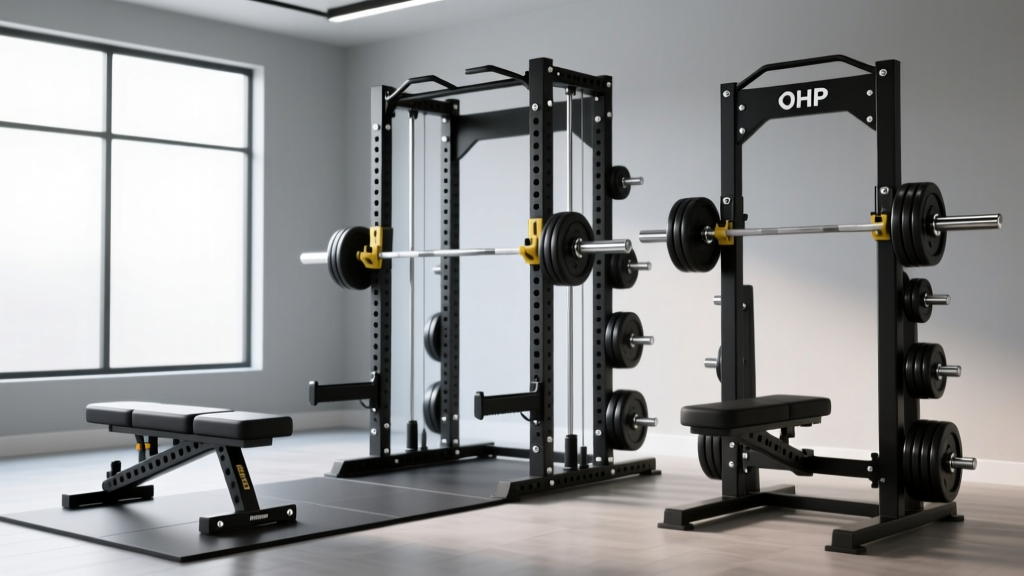
Olympic vs Standard: Back Exercises with Dumbbells and Barbells
Learn how Olympic vs standard weight plates affect your back exercises with dumbbells and barbells. Step-by-step beginner guide to choosing the right gear.

Walking into the free weights aisle or browsing online fitness retailers in 2026 can be overwhelming for a beginner. You know you need to build a stronger, thicker posterior chain, but you are immediately hit with a critical equipment fork in the road: Olympic vs standard weight plates. While this distinction might seem like a minor technicality, it fundamentally dictates the safety, biomechanics, and progression of your back exercises with dumbbells and barbells.
This step-by-step guide breaks down exactly how plate sizing impacts your pulling movements, from barbell Pendlay rows to heavy one-arm dumbbell rows, and provides a concrete framework for outfitting your home gym.
💡 The 10-Second Primer:Standard Plates feature a 1-inch (25.4mm) center hole and pair with entry-level, lightweight bars and spin-lock dumbbell handles.
Olympic Plates feature a 2-inch (50.8mm) center hole, adhering to international competition standards, and pair with heavy-duty barbells and loadable Olympic dumbbell handles.
The Biomechanical Impact on Back Training
Why does a hole size matter for back day? The answer lies in starting heights, sleeve rotation, and load security. When performing barbell rows and other pulling movements, your lumbar spine is under immense shear force. The equipment you use must support proper hinging mechanics without forcing you into compromised positions.
The Pendlay Row Clearance Problem
The Pendlay row requires you to pull the barbell from a dead stop on the floor to your lower chest. This movement demands a specific starting height to maintain a neutral spine.
- The Olympic Advantage: Governing bodies like the International Weightlifting Federation (IWF) mandate that Olympic plates weighing 10kg (22lbs) and above must have a diameter of exactly 450mm (17.7 inches). When loaded on a barbell, the bar sits exactly 8.85 inches off the floor. According to the National Strength and Conditioning Association (NSCA), this clearance allows most lifters to hinge at the hips with a flat back, engaging the lats and rhomboids safely.
- The Standard Plate Failure: Standard plates have no governing size regulations. A 25-pound standard cast-iron plate often measures only 11 to 12 inches in diameter. If you use these for floor pulls, the barbell sits barely 5.5 inches off the ground. To reach the bar, you must round your lower back, shifting the tension away from your upper back and directly onto your lumbar discs.
Loadable Dumbbell Rows and Collar Security
Heavy one-arm dumbbell rows are a staple for lat isolation. As you progress past 50-pound dumbbells, fixed-weight options become expensive, leading many beginners to buy loadable dumbbell handles.
⚠️ Safety Warning: Spin-Lock CollarsStandard 1-inch dumbbell handles typically use threaded 'spin-lock' collars. During heavy, explosive dumbbell rows, the repetitive torque and vibration can cause these threaded collars to slowly unthread mid-set. If a collar fails during a 90-pound row, the plates will slide off the handle, potentially causing severe foot or floor damage. Olympic loadable handles (like the Rogue Adjustable Dumbbell Handles) use 2-inch sleeves that accommodate high-tension spring collars or aluminum clamps, eliminating vibration-loosening.
Comparison Matrix: Olympic vs Standard for Back Day
| Feature | Olympic (2-Inch) | Standard (1-Inch) |
|---|---|---|
| Center Hole | 50.8mm (2 inches) | 25.4mm (1 inch) |
| Plate Diameter (Heavy) | 450mm (17.7") - IWF Standard | Varies (Often 11"-14") |
| Barbell Sleeve Rotation | Bushings/Bearings (Reduces wrist torque during rows) | Fixed or poor rotation (High wrist torque) |
| Dumbbell Loading | Handles accept up to 150+ lbs safely | Handles max out around 50-60 lbs safely |
| Collar Type | Spring clamps, aluminum locks | Threaded spin-locks, star-locks |
Step-by-Step: Building Your Back Day Arsenal in 2026
If you are setting up a home gym specifically to target your back, follow this sequential purchasing framework to ensure your gear scales with your strength.
Step 1: Invest in an Olympic Barbell First
Do not buy standard plates if you plan on barbell rowing or deadlifting long-term. A standard barbell maxes out at around 200-300 lbs before bending permanently. Furthermore, standard bars lack rotating sleeves. When you pull a heavy barbell row, your wrists naturally want to rotate; if the barbell sleeves are fixed, that rotational force transfers directly to your wrist joints, leading to tendonitis. Purchase a multi-purpose Olympic bar with bronze bushings (e.g., the Rogue Ohio Bar or Titan Fitness Cerakote Olympic Bar) to allow smooth sleeve rotation.
Step 2: Choose the Right Olympic Plate Material
For back exercises, the type of Olympic plate matters based on your flooring and noise tolerance.
- Cast Iron Deep-Dish Plates: Best for traditional gyms with rubber matting. They are highly durable and allow you to load maximum weight on shorter dumbbell handles. Expect to pay around $1.50 to $2.00 per pound in the current 2026 market.
- Urethane Bumper Plates: Ideal for home gyms. They are dead-quiet when dropped after a heavy set of deadlifts or rack pulls and won't damage concrete subfloors. Check out the Rogue Fitness Echo Bumper Plates for industry-leading durability, typically priced around $320 for a 230lb set.
Step 3: Upgrade to Olympic Loadable Dumbbell Handles
Once your barbell back routine is established, you will need unilateral work to fix muscle imbalances. Instead of buying a $600 set of fixed rubber hex dumbbells, purchase a pair of Olympic loadable dumbbell handles. Models like the Titan Fitness 16-Inch Olympic Dumbbell Handles (approx. $99/pair) allow you to slide your existing Olympic plates onto a 2-inch sleeve. This gives you the ability to perform 100lb+ one-arm dumbbell rows safely, utilizing secure spring collars.
The Beginner's Decision Framework
Still on the fence? Use this quick diagnostic to make your final choice:
✅ Choose Standard (1-Inch) IF: You are on an extreme budget (under $150 total), you only plan to do light isolation work, you live in a temporary space, and you will strictly be performing chest presses, bicep curls, and light goblet squats where floor clearance and heavy loading are irrelevant. ✅ Choose Olympic (2-Inch) IF: You are serious about back exercises with dumbbells and barbells. If your routine includes Pendlay rows, barbell deadlifts, heavy one-arm rows, or rack pulls, the 450mm diameter clearance and secure collar systems of Olympic gear are non-negotiable for safety and proper biomechanics.Frequently Asked Questions
Can I use standard plates on an Olympic barbell?
No. Standard plates have a 1-inch hole, while Olympic barbell sleeves are 2 inches thick. You cannot physically fit a standard plate onto an Olympic bar. However, you can buy 'Olympic to Standard' sleeve adapters (usually $20-$30 a pair) if you inherit a set of standard plates and want to use them temporarily on your Olympic setup for lighter accessory work.
Are bumper plates better for barbell rows?
Bumper plates are excellent for Pendlay rows and deadlifts because their uniform 450mm diameter ensures the bar is always at the correct starting height, regardless of whether you are lifting 95 lbs or 225 lbs. Cast iron plates require you to use smaller diameter plates (like 25s or 10s) for lighter weights, which forces you to pull from a deficit or use lifting blocks to maintain proper spinal alignment.
How much weight can a standard dumbbell handle hold?
Most standard 1-inch threaded dumbbell handles are 14 inches long. Once you account for the grip area and the threaded collars, you only have about 3 inches of sleeve space per side. This limits you to roughly three 10-pound standard plates per side, maxing out around 35-40 lbs per dumbbell. For heavy back training, this is vastly insufficient, reinforcing the need for Olympic loadable handles.
Final Thoughts on Equipping Your Back Day
When programming back exercises with dumbbells and barbells, your muscles do not know the difference between a 1-inch and a 2-inch hole in a piece of iron. However, your central nervous system, your spinal erectors, and your connective tissues absolutely feel the difference in biomechanical setup. By investing in Olympic-spec plates and bars from the start, you guarantee proper floor clearance for pulling movements, eliminate the wrist torque associated with fixed-sleeve bars, and secure your heavy dumbbell rows with modern clamping technology. Build your foundation correctly, and the strength will follow.
More gear to consider
All reviews
2026 Market Analysis: MiniBeast Dumbbells vs Rubber Hex Trends

Dumbbell Hammer Curl Form: Rubber Hex vs Urethane Test
Adjustable Dumbbell Setup for the Perfect Darebee Dumbbell Workout

Bumper vs Iron Plate Care: Surviving Dumbbell Lateral Pulls & Drops

Perfecting the Dead Bug with Dumbbells: Top Neoprene Picks 2026