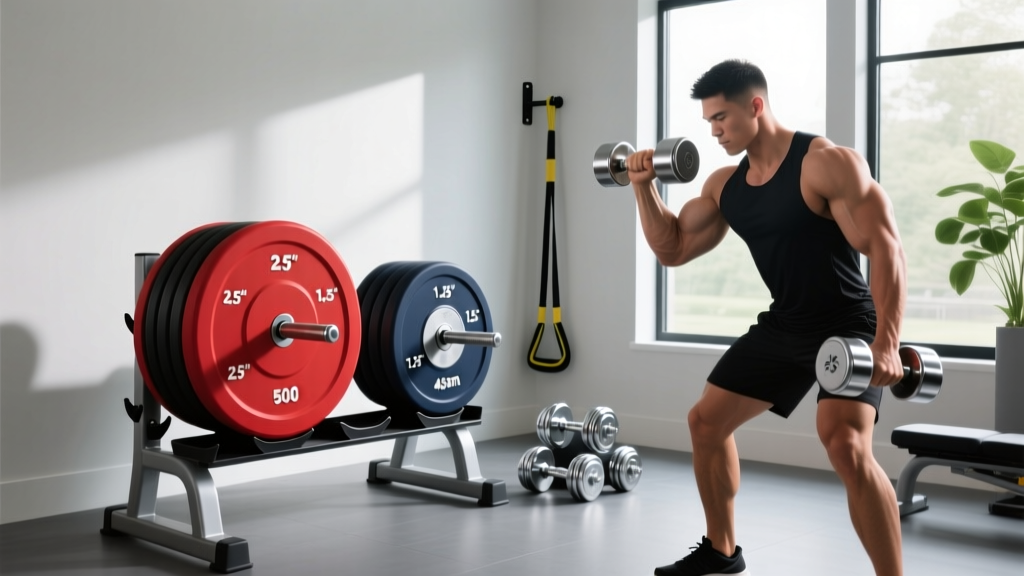
Home Gym Setup: Olympic vs Standard Plates & Hammer Bicep Curls
Master your home gym setup with our guide to Olympic vs standard weight plates, storage installation, and optimizing gear for dumbbell hammer bicep curls.

The Foundation of Free Weights: 1-Inch Standard vs. 2-Inch Olympic
Building a functional home gym in 2026 requires more than just buying iron; it demands a strategic approach to equipment compatibility, spatial planning, and biomechanical efficiency. The most critical fork in the road for any free-weight setup is choosing between standard (1-inch center hole) and Olympic (2-inch or 50mm center hole) weight plates. This decision dictates not only your storage footprint and barbell compatibility but also your ability to perform isolated movements correctly, such as dumbbell hammer bicep curls, without equipment interference.
Standard plates, typically featuring a 25.4mm center hole, are often cast iron or vinyl-encased cement. They are budget-friendly and ideal for light-duty adjustable dumbbell sets. Olympic plates, engineered for high-capacity barbells and heavy-duty loadable dumbbell handles, offer superior weight distribution, thinner profiles (in machined steel or high-density urethane), and seamless sleeve rotation. Understanding the physical installation and practical application of these two plate ecosystems is essential for a safe, long-lasting home gym.
Specification Matrix: Standard vs. Olympic Ecosystems
| Feature | Standard Plates (1-Inch) | Olympic Plates (2-Inch / 50mm) |
|---|---|---|
| Center Hole Diameter | 25.4mm (1 inch) | 50.8mm (2 inches) |
| Typical Dumbbell Handle | 14" to 20" Solid Iron (Spin-lock) | Loadable Handles (e.g., 10.5" sleeves) |
| Max Load per Dumbbell | ~60-80 lbs (limited by sleeve length) | 150+ lbs (high-capacity sleeves) |
| Material Options | Cast Iron, Vinyl/Cement, Rubber | Calibrated Steel, Urethane, Crumb Rubber |
| Avg. Cost Per Pound (2026) | $1.20 - $1.60 / lb | $2.50 - $4.50 / lb |
Complete Installation Walkthrough: Storage and Racking
Whether you opt for standard or Olympic plates, improper storage installation is a leading cause of home gym accidents and equipment degradation. A 6-peg heavy-duty weight tree or a wall-mounted plate rack must be installed with load distribution and structural integrity in mind.
Step-by-Step Weight Tree Assembly & Anchoring
- Base Footprint & Matting: Position your weight tree over a 3/4-inch thick vulcanized rubber stall mat. This protects your concrete or wood subfloor from micro-fractures caused by dropped plates and dampens acoustic vibration.
- Peg Spacing Verification: Ensure your tree features a minimum of 10-inch vertical spacing between pegs. Olympic bumper plates (especially 45lb/20kg plates) have a standardized 450mm diameter and require this clearance to prevent rubber degradation from constant friction.
- Center of Gravity Loading: Always install and load the heaviest plates (45lb and 35lb) on the bottom-most pegs. Loading heavy plates on the top pegs raises the center of gravity, creating a severe tipping hazard when pulling plates off the rack.
- Concrete Anchoring (Optional but Recommended): For trees with a footprint smaller than 24x24 inches, drill 3/8-inch wedge anchors into your concrete slab. Torque the anchor nuts to 25 ft-lbs to secure the base plate, eliminating lateral sway during heavy plate removal.
Biomechanical Application: Optimizing for Dumbbell Hammer Bicep Curls
The true test of your plate and handle ecosystem is how it performs during strict isolation movements. The dumbbell hammer bicep curl is a premier exercise for targeting the brachioradialis and brachialis muscles, requiring a strict neutral grip (palms facing each other). According to the ACE Fitness Exercise Library, maintaining a rigid, neutral wrist alignment is critical for maximizing forearm flexor engagement and preventing medial epicondylitis (golfer's elbow).
The Sleeve Length and Plate Thickness Problem
When setting up standard 1-inch dumbbell handles for heavy hammer curls, lifters frequently encounter a mechanical failure mode: plate thickness. Standard vinyl or cement-filled plates are incredibly bulky. A standard 25-pound plate can be up to 11 inches in diameter and 2.5 inches thick. On a standard 14-inch dumbbell handle, the loadable sleeve space is only about 6.5 inches. This means you can barely fit one 25-pound plate and a star-lock nut on each side, capping your weight at roughly 60 pounds per hand.
Furthermore, the bulky star-lock nuts used on standard handles often press aggressively into the medial side of the thigh during the eccentric (lowering) phase of the hammer curl. To avoid this pain, lifters subconsciously flare their wrists outward into ulnar deviation, completely removing the tension from the brachioradialis and shifting it to vulnerable wrist ligaments.
The Olympic Loadable Handle Solution
To perform heavy dumbbell hammer bicep curls with perfect biomechanics, transitioning to Olympic loadable dumbbell handles is mandatory. Handles like the Rogue Loadable Dumbbell Handles feature a 2-inch grip and a 10.5-inch loadable sleeve. By pairing these with machined steel or thin-profile Rogue Urethane Olympic Plates, you can stack up to 120 pounds per hand while maintaining a sleek, compact dumbbell profile.
Because Olympic handles utilize low-profile snap collars or precision-machined end caps rather than threaded star nuts, the medial end of the dumbbell remains flat and smooth. This allows the dumbbell to graze the thigh cleanly during the descent of the hammer curl, preserving the 180-degree neutral wrist alignment and ensuring maximum hypertrophic stimulus to the forearm and outer bicep.
2026 Sourcing & Cost Breakdown Framework
When budgeting your free-weight zone, consider the long-term cost-per-pound and the spatial efficiency of your plates. Standard cast iron remains the most economical choice for beginners, but its limitations in dumbbell sleeve capacity make it a poor long-term investment for intermediate lifters focusing on heavy isolation work.
- Standard Cast Iron (1-inch): Expect to pay $1.20 to $1.60 per pound. Ideal for light adjustable sets and budget-friendly home setups, but limited by handle compatibility.
- Olympic Crumb Rubber / Bumpers: Priced around $2.50 to $3.00 per pound. Excellent for drop-safe environments, but the 450mm diameter limits the number of plates you can fit on a dumbbell sleeve.
- Olympic Urethane / Machined Steel: Priced at $3.50 to $5.00+ per pound. The gold standard for loadable dumbbell handles, offering the thinnest profile for maximum weight stacking during exercises like hammer curls and chest presses.
Final Setup Checklist
Before loading your first set, verify that your storage rack is bolted or heavily weighted at the base, your plate collars are matched to your handle type (spring clips for Olympic, spin-locks for standard), and your handle sleeves are long enough to accommodate the plate thickness required for your target working sets. A meticulously planned installation ensures that when you step up to perform your dumbbell hammer bicep curls, your focus remains entirely on muscle contraction, not equipment limitation.
More gear to consider
All reviews
5 Day Dumbbell Split Upgrade: Power Rack vs Squat Rack vs Stand
Bumper Plate vs Iron Plate: Specs, Costs & Dumbbell Push Ups

Best Cheap Dumbbell Set with Rack: 2026 Neoprene Home Guide

EZ vs Straight Bar Care: Upgrading From a Five Below Dumbbell

Power Rack vs Squat Rack vs Stand: 10 Pounds Dumbbells Mistakes
