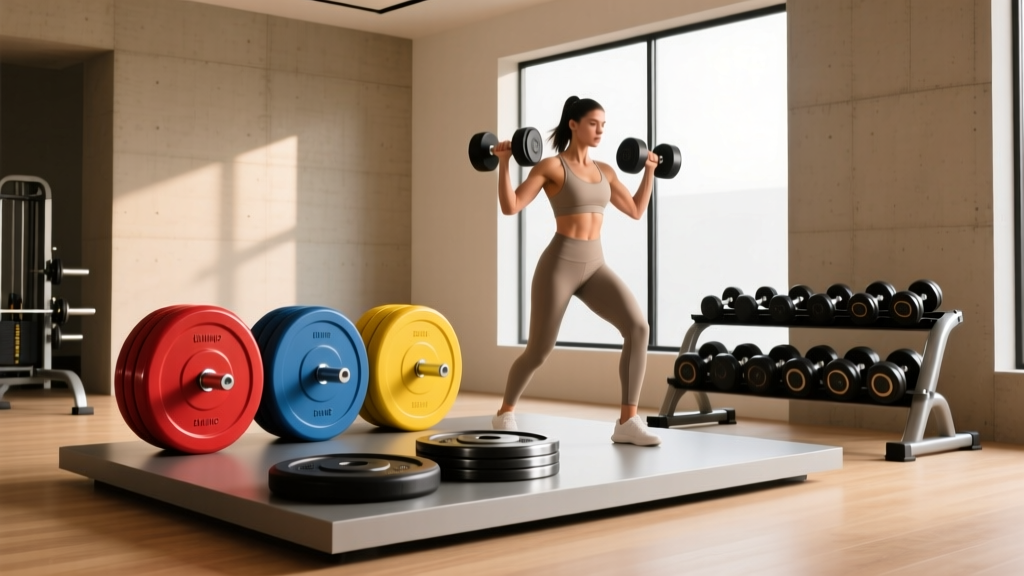
Beyond the Dumbbell Exercise Poster: Barbell Knurling Mistakes
Transitioning from a dumbbell exercise poster to Olympic barbells? Avoid common buying mistakes regarding barbell weight, shaft diameter, and knurling.

The Biomechanical Shift: Why Your Dumbbell Exercise Poster Falls Short
Many home gym owners begin their fitness journey with a pair of adjustable dumbbells and a laminated dumbbell exercise poster mounted on the wall. While that poster is an excellent visual aid for mastering isolated movements like lateral raises, goblet squats, or chest flies, it completely fails to prepare you for the biomechanical and equipment realities of Olympic barbell training. When lifters decide to upgrade to a barbell, they often apply the same simplistic logic used for buying dumbbells—focusing solely on total weight and plate compatibility. This leads to catastrophic purchasing mistakes regarding barbell whip, shaft diameter, and knurling aggressiveness.
An Olympic barbell is not just a long dumbbell; it is a precision-engineered torsion spring. The interaction between your skin, the knurling pattern, and the bar's tensile strength dictates your performance and safety. In this troubleshooting guide, we break down the most common mistakes lifters make when buying an Olympic barbell and how to fix them before you waste hundreds of dollars on the wrong equipment.
Mistake 1: Misunderstanding Knurling Aggressiveness (And Ruining Your Shins)
The most frequent complaint we see in home gym forums is a barbell that either shreds the lifter's hands during high-repetition work or slips out of their grip during heavy deadlifts. This happens because buyers do not understand the three primary knurling profiles: Hill, Mountain, and Volcano. If you are transitioning from the smooth, rubber-coated handles of adjustable dumbbells, an aggressive barbell will feel like a cheese grater.
The Knurling Troubleshooting Matrix
| Knurl Profile | Visual Shape | Best Use Case | Example Model & Price (2026) |
|---|---|---|---|
| Hill | Smooth, rounded peaks | High-rep WODs, beginners, light pressing | Rep Fitness Excalibur Bar (~$329) |
| Volcano | Deep valleys with a flat/rimmed top | Multi-purpose, powerbuilding, daily training | Rogue Ohio Bar (~$295) |
| Mountain | Sharp, aggressive, pointed peaks | Heavy 1RM deadlifts, specialized powerlifting | Kabuki Strength New Gen Power Bar (~$375) |
Mistake 2: Ignoring Shaft Diameter and Tensile Strength
When following a standard dumbbell exercise poster, the handle thickness is uniform—usually around 30mm to 35mm. Olympic barbells, however, vary strictly between 28mm and 29mm. This single millimeter of difference drastically alters grip fatigue and the bar's 'whip' (elastic deformation under load).
Shaft Diameter Breakdown
- 28mm (Weightlifting Bars): Designed for the snatch and clean & jerk. The thinner shaft allows for a secure hook grip and provides maximum whip, which aids in turning the bar over during Olympic lifts. However, it will feel unstable during heavy, low-rep bench presses.
- 28.5mm (Multi-Purpose Bars): The gold standard for home gyms. It offers a compromise between the whip needed for cleans and the rigidity required for squatting and pressing.
- 29mm (Powerlifting Bars): Maximizes stiffness. When squatting 400+ lbs, a 29mm shaft prevents the bar from bouncing off your back, providing a stable platform. It is highly unforgiving on the wrists during front squats or cleans.
The Tensile Strength Trap: Many budget buyers purchase bars with 165,000 PSI tensile strength to save money. According to equipment stress tests documented in BarBend's comprehensive barbell engineering guides, anything below 190,000 PSI is prone to permanent deformation (bending) if dropped during heavy deadlifts or squats. Always verify the manufacturer's stated PSI; a reliable multi-purpose bar should sit between 190,000 and 205,000 PSI.
Mistake 3: The Center Knurl and Ring Mark Conundrum
Dumbbells require symmetrical, isolated gripping. Barbells require you to align your hands with specific ring marks etched into the knurling. A massive troubleshooting pain point for new barbell owners is buying a bar with the wrong ring spacing or an overly aggressive center knurl.
IPF vs. IWF Ring Marks
According to the technical rulebooks published by the International Powerlifting Federation (IPF) and USA Weightlifting (USAW), the ring marks serve entirely different purposes:
- IWF Marks (910mm apart): Placed wider to guide hand placement for the snatch and clean. If you are strictly doing Olympic weightlifting, you need these marks.
- IPF Marks (810mm apart): Placed closer together to dictate the maximum legal grip width for the bench press.
- Dual Marks: Many premium multi-purpose bars (like the Eleiko Olympic Weightlifting Bar, retailing around $1,150) feature both sets of rings, making them ideal for hybrid athletes.
The Center Knurl Issue: Traditional powerlifting bars feature an aggressive center knurl to grip the back of a t-shirt during heavy low-bar squats. If you plan on doing front squats, thrusters, or power cleans, this center knurl will severely scrape your neck and collarbone. Troubleshooting fix: If your current bar has an abrasive center knurl that is ruining your front rack position, use a fine-grit sanding block or a wire wheel attachment on a Dremel tool to gently dull the center 4 inches of the knurl. Do not sand the outer grip zones.
4-Step Troubleshooting Framework for Your Next Barbell Purchase
Before adding a barbell to your cart, run it through this diagnostic checklist to ensure it matches your actual training style, rather than the limited movements shown on your wall posters.
The FitGearPulse Barbell Diagnostic Checklist
- Define Your Primary Lift: If it is the bench press and squat, demand a 29mm shaft and volcano/mountain knurl. If it is the snatch, demand a 28mm shaft with needle bearings.
- Check the Bushing vs. Bearing Ratio: Bronze bushings are mandatory for slow, heavy powerlifting movements (they prevent excessive spin). Needle bearings are mandatory for Olympic lifts (they allow rapid sleeve rotation). A bar with only bushings will tear your wrists during a heavy clean.
- Verify the Warranty: A lifetime warranty that explicitly covers 'dropping' is a hallmark of high tensile steel (190k+ PSI). If the warranty voids upon dropping, the bar is likely made of lower-grade steel prone to bending.
- Assess Your Space and Storage: Olympic bars are 7.2 feet long and weigh 20kg (44lbs). Ensure your rack width accommodates a standard 7-foot bar, and that your storage solution supports the 2-inch sleeve diameter.
Frequently Asked Questions
Can I use an Olympic barbell for the exercises on my dumbbell exercise poster?
Some exercises translate well, such as goblet squats (which can be swapped for barbell back squats) or dumbbell rows (swapped for Pendlay rows). However, unilateral movements and isolation exercises printed on most posters—like lateral raises or tricep kickbacks—are biomechanically unsuited for a 7-foot, 44-pound Olympic barbell. You should retain a set of dumbbells for accessory work.
Why does my new barbell feel 'slippery' even though it has knurling?
Many manufacturers ship barbells coated in a light layer of machine oil or anti-rust protectant. If your grip is slipping, the troubleshooting fix is simple: scrub the shaft with a stiff nylon brush and a mild degreaser or dish soap, then dry it completely and apply a very light coat of 3-in-One oil or mineral oil to prevent oxidation without sacrificing grip.
Is a 15kg (33lb) women's Olympic bar worth buying for a home gym?
A 15kg bar features a 25mm shaft diameter, which is excellent for lifters with smaller hands or those focusing strictly on high-speed Olympic weightlifting. However, for general strength training, the 25mm shaft can whip excessively under heavy squat loads, making a standard 20kg (28.5mm) multi-purpose bar a more versatile investment for most home gyms.
Final Thoughts on Barbell Selection
Upgrading from dumbbells to a barbell is a milestone in any lifter's journey. While your trusty dumbbell exercise poster will always have a place for accessory isolation work, your barbell purchase requires a deep understanding of metallurgy, knurling geometry, and rotational mechanics. By avoiding the common pitfalls of ignoring shaft diameter, misinterpreting knurling profiles, and misunderstanding ring marks, you will secure a piece of equipment that safely supports your strength gains for decades.
More gear to consider
All reviews
Dumbbell Lateral Lunges vs Kettlebells: A Cast Iron Budget Guide
Power Rack vs Squat Rack: Proper Way to Do Dumbbell Curls Safely

Barbell Collar Guide & Chest and Triceps Workout with Dumbbells

Beyond Lifting Dumbbell Routines: EZ Curl Bar vs Straight Bar

Loadable Dumbbell Care for a Flawless 20 Minute Upper Body Dumbbell Workout