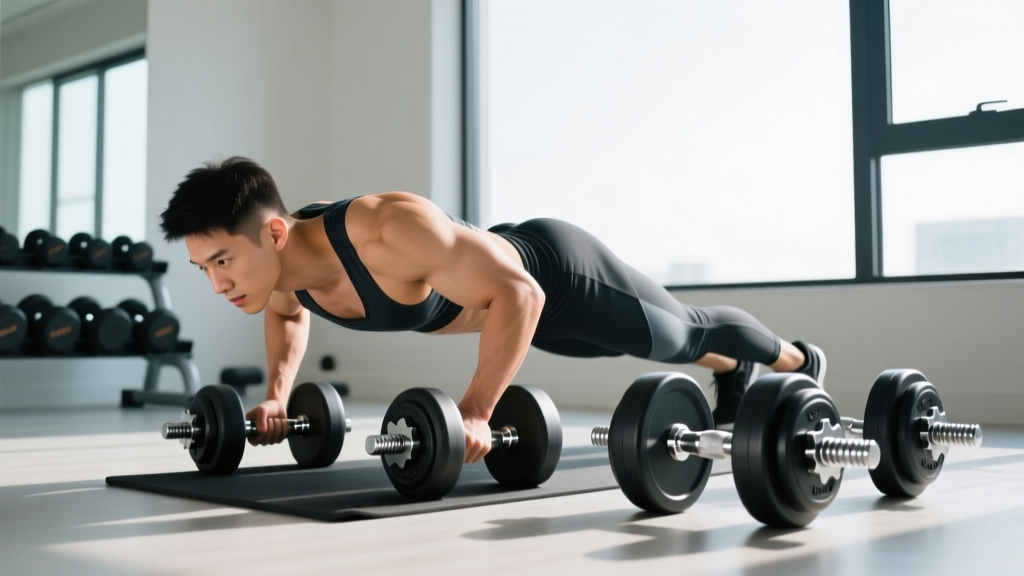
Olympic Barbell Buying Guide: Weight, Knurling & Matrix Dumbbells
Master your home gym setup with our beginner-friendly Olympic barbell buying guide covering weight, knurling, and how to pair it with Matrix dumbbells.

Building a home gym in 2026 requires more than just throwing money at the first piece of iron you see. For beginners, the foundation of any serious strength training setup rests on two critical pillars: a high-quality Olympic barbell for heavy bilateral compound movements, and a reliable set of dumbbells for unilateral isolation and hypertrophy. While the barbell is the undisputed king of maximal strength, understanding the nuanced specifications of barbell weight, shaft dimensions, and knurling patterns is essential to avoid buyer's remorse. Furthermore, pairing your barbell with premium tools like Matrix dumbbells ensures a balanced, joint-friendly, and comprehensive training ecosystem.
This step-by-step guide will walk you through the exact specifications you need to look for, decoding the engineering jargon so you can make an informed, expert-level purchase.
Step 1: Demystifying Olympic Barbell Weights and Dimensions
Before you look at brands or prices, you must understand the physical dimensions of an Olympic barbell. The term "Olympic" refers to the 2-inch (50mm) diameter of the rotating sleeves where the weight plates load, but the shaft (the part you actually grip) varies significantly.
The 20kg (44 lb) Standard vs. 15kg (33 lb) Technique Bars
The standard men's Olympic barbell weighs exactly 20 kilograms (44 pounds) and measures 2.2 meters (7.2 feet) in length. This is the default choice for 90% of home gym owners. However, beginners, younger athletes, or those focusing strictly on Olympic weightlifting technique often benefit from a 15kg (33 lb) women's standard bar. The 15kg bar features a smaller shaft diameter (25mm compared to the standard 28mm or 29mm), making it significantly easier to grip for individuals with smaller hands, particularly when utilizing the hook grip for snatches and cleans.
📏 Measurement Rule of Thumb:- 28mm Shaft: Ideal for Olympic weightlifting and general fitness. Offers optimal "whip" (elastic deformation) during explosive lifts.
- 29mm Shaft: Standard for powerlifting. Stiffer, more rigid, and easier to squeeze during heavy deadlifts and bench presses.
- 28.5mm Shaft: The "multi-purpose" sweet spot. If you only plan to buy one barbell for a mix of squats, presses, and occasional cleans, choose a 28.5mm shaft.
Step 2: The Knurling Matrix — Depth, Pattern, and Placement
Knurling is the cross-hatched pattern machined into the steel shaft of the barbell. It is arguably the most critical factor in how a bar "feels" in your hands. According to comprehensive testing by BarBend's barbell knurling guide, the depth and shape of the knurl dictate whether a bar will securely lock into your palms during a heavy deadlift or tear your calluses open during a high-rep WOD.
Understanding Knurl Profiles
Not all knurling is created equal. Manufacturers use different cutting tools to create distinct profiles:
- Mountain / Hill Knurl: Shallow and smooth. Common on cheap, entry-level barbells. It provides minimal grip and is generally discouraged for serious lifters.
- Volcano Knurl: The gold standard for modern multi-purpose bars (popularized by Rogue Fitness). The machine cuts a sharp point but then "dulls" the very tip, leaving a crater-like rim. It provides immense surface area for grip without acting like a cheese grater on your skin.
- Aggressive / Sharp Knurl: Deep, pointed, and unforgiving. Found on dedicated powerlifting bars (like the Texas Power Bar). It bites into the skin to prevent slipping during maximal 1-rep max attempts but will cause bleeding during high-rep sets.
| Knurl Type | Tactile Feel | Best Use Case | Beginner Friendly? |
|---|---|---|---|
| Volcano | Grippy, textured, non-tearing | General strength, CrossFit, Hypertrophy | Yes (Highly Recommended) |
| Aggressive | Sharp, biting, abrasive | Powerlifting (Squat, Bench, Deadlift) | No (Too harsh for high volume) |
| Mountain | Smooth, mild, slippery | Light technique work, budget bars | Yes (But limits long-term growth) |
The Center Knurl Debate
Powerlifting bars feature a "center knurl"—a patch of knurling in the exact middle of the shaft designed to grip the back of your t-shirt during heavy back squats. Multi-purpose and weightlifting bars omit this. Beginner Advice: If you plan on doing front squats, cleans, or high-rep conditioning, avoid the center knurl. It will scrape your collarbones and neck raw during front-rack positions.
Step 3: Tensile Strength and Real-World Failure Modes
Tensile strength, measured in PSI (pounds per square inch), dictates how much weight the bar can hold before it permanently bends (yields) or snaps. Do not confuse tensile strength with yield strength, though they are closely related in barbell marketing.
⚠️ Edge Case Warning: A barbell with a tensile strength below 165,000 PSI is highly susceptible to permanent deformation if dropped from overhead or from the top of a deadlift. Always look for a minimum of 190,000 PSI for a durable home gym barbell.
For a beginner buying their first bar, a 190k PSI multi-purpose bar (like the Rogue Ohio Bar or Titan Fitness Olympic Bar) offers the perfect balance of whip for dynamic movements and rigidity for heavy squats. Bars rated at 215k+ PSI are exceptionally stiff and expensive, usually reserved for elite powerlifters moving 600+ pounds.
Step 4: Bridging the Gap with Matrix Dumbbells
While your Olympic barbell is the king of bilateral compound movements, a complete 2026 home gym requires unilateral isolation tools. Relying solely on a barbell often leads to muscular asymmetries, joint overuse injuries, and stalled hypertrophy in stabilizer muscles. This is where Matrix dumbbells enter the equation to complete your free weight arsenal.
Matrix Fitness is renowned in the commercial gym industry for its ergonomic engineering and durability. Integrating Matrix dumbbells into your routine provides specific benefits that a barbell simply cannot replicate:
- Unilateral Hypertrophy: Exercises like Matrix dumbbell Bulgarian split squats and single-arm incline presses force each side of the body to work independently, correcting left-to-right strength imbalances that barbells mask.
- Joint Health and Range of Motion: Dumbbells allow your wrists, elbows, and shoulders to rotate naturally. During a bench press, a barbell locks your wrists into a fixed pronated position, which can cause impingement over time. Matrix hex dumbbells allow for a neutral or semi-neutral grip, drastically reducing joint shear force.
- Drop-Set Capability: When pushing for muscular failure on isolation movements like lateral raises or bicep curls, the ability to instantly drop a set of Matrix adjustable or rack dumbbells is vastly safer than trying to bail out of a barbell lift.
Whether you opt for the commercial-grade Matrix Magnum Urethane dumbbells (which resist cracking and protect your flooring) or their space-saving adjustable models, pairing them with a 20kg Olympic barbell creates a synergistic training environment capable of supporting everything from 1-rep max deadlifts to high-rep metabolic conditioning.
Step 5: Your 2026 Home Gym Budget Blueprint
Understanding what to buy is only half the battle; knowing what it should cost prevents you from being overcharged. Here is a realistic pricing framework for a beginner-to-intermediate free weight foundation in 2026:
- The Barbell (190k PSI, Volcano Knurl, 28.5mm): Expect to pay between $250 and $350. Avoid $99 Amazon specials; the bushings will fail, and the shaft will bend within six months.
- Bumper Plates (Fractional to 45lb pairs): A basic 230lb set of virgin rubber or urethane bumper plates will cost between $350 and $500 (roughly $1.50 to $2.20 per pound).
- Matrix Dumbbell Integration: A 5-to-50lb pair of high-quality adjustable dumbbells (comparable to Matrix commercial specs) will run $400 to $650. If buying fixed commercial urethane hex dumbbells, budget approximately $3.50 to $4.50 per pound.
Frequently Asked Questions
Do I need a barbell with ceramic or hard chrome coating?
Coating dictates maintenance. Bare steel and black oxide require frequent oiling to prevent rust. Hard chrome is durable but can chip over time. For a zero-maintenance beginner setup in 2026, look for electroless nickel or cerakote shafts, which offer immense corrosion resistance while preserving the tactile feel of the knurling.
Can I use my Olympic barbell for dumbbell exercises?
No. The 2-inch sleeves of an Olympic barbell are designed for large iron or rubber plates. Attempting to mimic dumbbell movements with a 7-foot barbell is biomechanically inefficient and dangerous. This is exactly why investing in dedicated Matrix dumbbells is a non-negotiable step for a well-rounded physique.
What is the difference between bushings and bearings in the barbell sleeves?
Bearings (needle or ball) allow the sleeves to spin rapidly, which is necessary for Olympic weightlifting (snatches and cleans) to reduce wrist torque. Bushings (bronze or composite) provide a slower, more controlled spin, which is vastly superior for powerlifting and general strength training. Beginners should default to bronze bushings for a more stable, cost-effective barbell.
More gear to consider
All reviews
EZ Curl Bar vs Straight Bar Budget Guide & Seated Reverse Dumbbell Fly

Olympic vs Standard Plates and Glute Exercises with Dumbbells
EZ Curl vs Straight Bar Care & Dumbbell Upright Storage
Beyond Water Exercises With Dumbbells: Olympic vs Standard Plates

Bumper vs Iron Plate Value and the Standing Dumbbell Shoulder Press