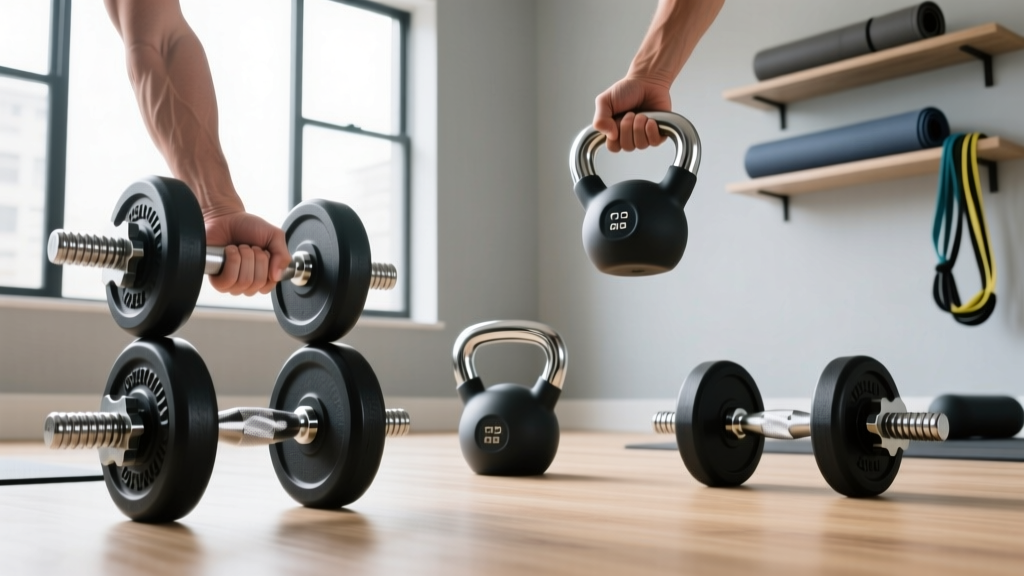
Dumbbell and Kettlebell Workout Upgrade: Barbell Weight & Knurling
Ready to level up your dumbbell and kettlebell workout? This beginner step-by-step guide covers Olympic barbell weight, knurling, and shaft specs.

Why Transition from a Dumbbell and Kettlebell Workout to Barbells?
If you have been building your foundation with a dumbbell and kettlebell workout routine, you have already developed excellent joint stability, core strength, and unilateral balance. However, as you progress, you will inevitably hit a ceiling. Dumbbells max out in weight increments, and heavy kettlebell swings can tax your grip before your posterior chain truly fails. This is the exact moment an Olympic barbell becomes your most valuable investment.
Transitioning to barbell training allows for micro-loading (adding just 2.5 lbs per side), vastly superior progressive overload, and higher central nervous system adaptation. But walking into the barbell market can be overwhelming. Unlike the simple rubber hex dumbbells you are used to, Olympic barbells are precision-engineered tools defined by tensile strength, knurling patterns, and shaft diameters.
This step-by-step beginner’s guide will decode Olympic barbell weight standards and knurling types, ensuring you buy the exact right bar to upgrade your home gym in 2026.
💡 Expert Insight: The Rack RequirementBefore purchasing a 7-foot Olympic barbell, remember that your current dumbbell and kettlebell workout setup might not support it. You will need a squat rack or power rack to safely perform barbell back squats and bench presses. If space is tight, look into folding wall-mounted squat stands (like the PR-1100 series) which cost around $250-$350 and fold flat against the wall when not in use.
Step 1: Choosing the Right Olympic Barbell Weight and Class
Unlike adjustable dumbbells that span from 5 to 50 lbs in a single unit, Olympic barbells are categorized by strict International Weightlifting Federation (IWF) and International Powerlifting Federation (IPF) standards. Choosing the right weight class is critical for beginner safety and proper grip mechanics.
The Men’s Olympic Bar (20kg / 44 lbs)
The standard men’s bar weighs exactly 20 kilograms (44.09 lbs) and measures 2.2 meters (roughly 7 feet 2 inches) in length. The shaft diameter is typically 28mm to 29mm. This is the most versatile bar for general strength training, powerlifting, and Olympic lifting. As of early 2026, a high-quality entry-level 20kg bar with solid bushings and a good warranty costs between $245 and $295.
The Women’s Olympic Bar (15kg / 33 lbs)
The women’s bar weighs 15 kilograms (33.07 lbs) and is slightly shorter at 2.01 meters (6 feet 7 inches). Crucially, the shaft diameter is reduced to 25mm. For beginners with smaller hands, or those transitioning from lighter kettlebell handles, a 25mm shaft significantly reduces grip fatigue and prevents thumb strain during hook grips. Prices generally range from $225 to $265.
The Technique / Junior Bar (10kg / 22 lbs)
Weighing 10kg and featuring a 25mm shaft, this bar is ideal for youth athletes or absolute beginners rehabilitating injuries. It allows you to practice the biomechanics of a barbell deadlift or overhead press without the immediate 44lb jump of a standard men's bar.
Step 2: Decoding Knurling Patterns (The Grip Factor)
Knurling is the cross-hatched pattern machined into the steel shaft of the barbell. It is the single most important factor in how the bar feels in your hands. If you are used to the smooth, powder-coated handles of neoprene dumbbells or the thick, smooth horns of cast-iron kettlebells, aggressive barbell knurling will be a shock to your system.
According to equipment testing by Garage Gym Reviews, knurling is generally classified into three distinct geometric shapes:
- Volcano Knurling: The gold standard for multi-purpose bars. The machine cuts a sharp peak but then slightly blunts the very tip, creating a 'volcano' rim. It provides immense grip without tearing your calluses. (Example: Rogue Ohio Bar).
- Mountain Knurling: Sharp, aggressive, and pointy. This is designed for heavy powerlifting deadlifts where the bar must not slip. It will chew up your hands if used for high-rep hypertrophy work. (Example: Eleiko IPF Powerlifting Bar).
- Hill Knurling: Shallow and smooth. Often found on cheap, big-box-store barbells. Avoid these, as the lack of grip will force you to over-squeeze, prematurely fatiguing your forearms during heavy rows or squats.
To Center Knurl or Not to Center Knurl?
Many Olympic bars feature a small patch of knurling in the exact dead-center of the shaft.
- Keep it if: You plan on doing heavy back squats or front squats. The center knurl bites into the fabric of your t-shirt, preventing the bar from sliding down your back.
- Skip it if: You primarily do deadlifts, bench presses, and Olympic cleans. A center knurl will scrape your chest and neck during cleans and is entirely unnecessary for benching.
Step 3: Shaft Diameter, Tensile Strength, and Spin
When upgrading your dumbbell and kettlebell workout to a barbell-focused regimen, the internal engineering of the bar dictates its lifespan and performance.
Tensile Strength (Measured in PSI)
Tensile strength measures the maximum stress the steel can withstand before permanently bending or snapping. According to Barbend's 2026 barbell testing standards, you should never purchase a barbell with a tensile strength below 165,000 PSI. For a bar that will survive heavy deadlift drops and heavy squats for a decade, look for a minimum of 190,000 PSI. Premium bars push past 215,000 PSI.
Bushings vs. Bearings (The Spin)
Inside the sleeves of the barbell are the mechanisms that allow the sleeves to spin independently of the shaft.
- Bronze/Composite Bushings: Provide a slow, controlled spin. This is ideal for powerlifting and general strength training (squats, bench, deadlifts). It keeps the bar stable in your hands.
- Needle Bearings: Provide a rapid, frictionless spin. This is mandatory for Olympic weightlifting (snatches, clean and jerks) where the bar must rotate quickly as you flip your wrists under the load. For a general beginner, bearings are overkill and can actually make bench pressing feel slightly unstable.
Comparison Matrix: Top Beginner-Friendly Barbells for 2026
Below is a structured comparison of three highly rated, multi-purpose Olympic barbells that perfectly bridge the gap from basic free weights to serious barbell training.
| Feature | Rogue Ohio Bar (20kg) | REP Fitness Excalibur | Rogue Bella Bar (15kg) |
|---|---|---|---|
| Weight / Class | 20kg (44 lbs) / Men's | 20kg (44 lbs) / Men's | 15kg (33 lbs) / Women's |
| Shaft Diameter | 28.5mm | 28.0mm | 25.0mm |
| Knurl Type | Volcano (Multi-purpose) | Volcano (Aggressive) | Volcano (Light) |
| Tensile Strength | 190,000 PSI | 190,000 PSI | 190,000 PSI |
| Center Knurl | No | Yes | No |
| Approx. Price (2026) | $295.00 | $249.00 | $235.00 |
Step 4: Mapping Your Dumbbell and Kettlebell Exercises to the Barbell
Once your barbell arrives, you need to translate your existing routine. The biomechanics change slightly when moving from independent free weights to a fixed, bilateral barbell. Here is your transition cheat sheet:
1. Goblet Squats ➡️ Barbell Back Squats
The Shift: Kettlebell goblet squats are heavily quad-dominant and limited by your upper back strength holding the bell. The barbell back squat shifts the load directly onto your skeletal structure (the traps and rear delts), allowing you to lift 30% to 50% more weight and heavily recruit the glutes and hamstrings. Beginner Tip: Start with just the empty 45lb bar to learn the hip-hinge depth before adding plates.
2. Dumbbell Romanian Deadlifts (RDLs) ➡️ Barbell RDLs
The Shift: Dumbbells allow you to keep the weight close to your center of gravity by brushing your thighs. With a barbell, the 7-foot shaft forces you to manage a wider grip. Keep the bar dragging against your shins and thighs on the descent to protect your lumbar spine.
3. Kettlebell Floor Press ➡️ Barbell Bench Press
The Shift: The kettlebell floor press is a great tricep builder, but the limited range of motion stalls chest hypertrophy. The barbell bench press provides a full stretch at the bottom. According to Rogue Fitness engineering specs, a multi-purpose bar like the Ohio Bar has a 'whip' (elastic deformation) that actually aids in the initial push-off the chest during heavy benching.
"The transition from unilateral dumbbell work to bilateral barbell work exposes hidden asymmetries. If your barbell bench press veers to the right, it means your left tricep or pec is lagging—a weakness that your previous dumbbell and kettlebell workout was silently compensating for."
Step 5: Maintenance and Care for Your New Barbell
Unlike rubber-coated dumbbells or enamel kettlebells, bare steel or black-oxide Olympic barbells require active maintenance to prevent oxidation (rust), especially if your home gym is in a garage with fluctuating humidity.
- Weekly: Wipe down the shaft with a microfiber cloth after every session to remove sweat and chalk salts, which are highly corrosive.
- Monthly: Use a stiff nylon brush (never wire, which strips the protective coating) to clean chalk out of the knurling valleys. Apply 3-4 drops of 3-in-One oil or mineral oil to the shaft and rub it in with a rag.
- Annually: Remove the sleeves (if your bar has snap-rings or end-caps that allow it) and apply white lithium grease to the bronze bushings to maintain a smooth, squeak-free spin.
Final Thoughts on Your Upgrade
Leaving the comfort of your familiar dumbbell and kettlebell workout routine is a major milestone in your fitness journey. By understanding the nuances of barbell weight classes, choosing a volcano knurl for versatile grip, and ensuring a minimum of 190k PSI tensile strength, you are setting yourself up for years of uninterrupted progressive overload. Invest in a quality 20kg or 15kg multi-purpose bar, secure it on a sturdy rack, and watch your strength numbers climb far beyond what adjustable dumbbells could ever allow.
More gear to consider
All reviews
Barbell Collars vs. Holahatha Dumbbell Locks: A Safety Comparison

Kettlebell Guide & Overhead Extensions Dumbbells: Budget 2026

Bumper vs Iron Plates: Is Cable Hammer Curl Better Than Dumbbell?
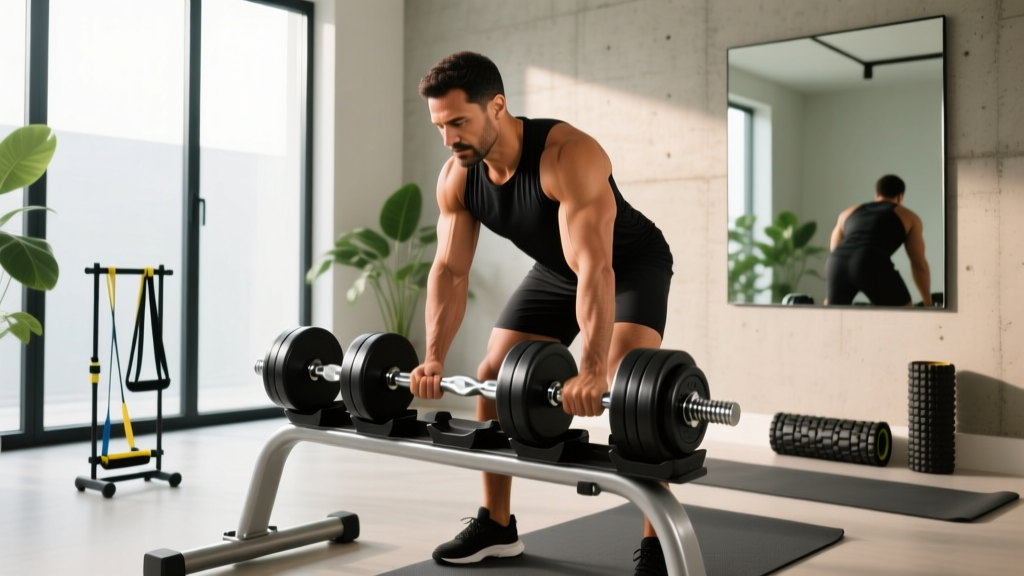
What Do Dumbbell Presses Work? 2026 Adjustable Dumbbell Setup & Review

The Best Dumbbell Step Up Substitute: 2026 Loadable Dumbbell Trends
