Olympic Barbell Buying Guide & Tricep Workout Routine with Dumbbells
Master your home gym with our beginner Olympic barbell buying guide on weight and knurling, plus a complete tricep workout routine with dumbbells.

The Foundation: Choosing Your First Olympic Barbell
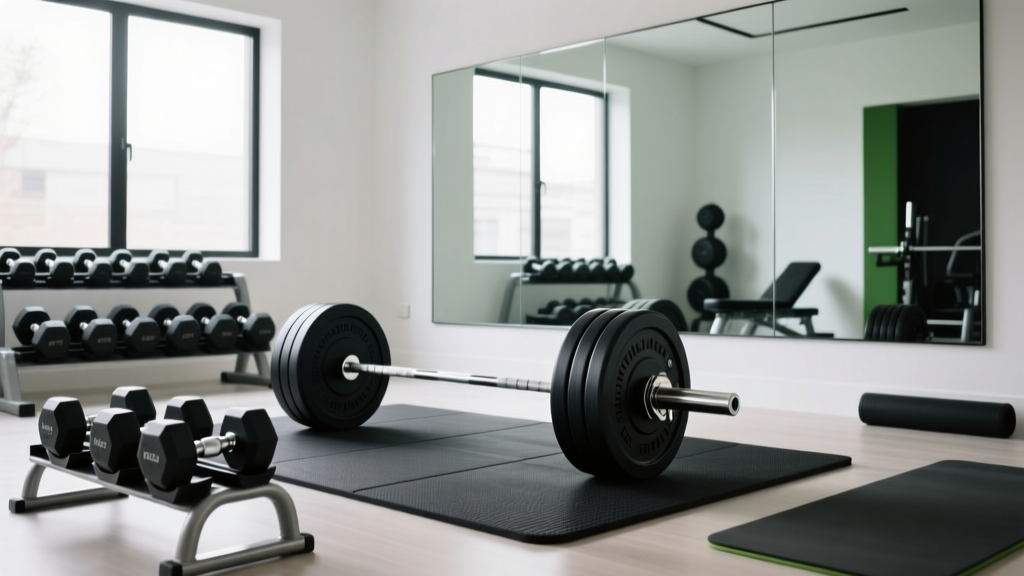
Building a functional home gym in 2026 requires smart, targeted investments. The barbell is the undisputed king of compound upper-body movements like the bench press and overhead press. However, to fully develop your pressing muscles and protect your joints, you must pair heavy barbell work with targeted isolation. This guide bridges the gap between selecting the right Olympic barbell—focusing specifically on weight specifications and knurling patterns—and executing a highly effective tricep workout routine with dumbbells to complete your upper-body arsenal.
Beginner Callout: Don't buy a "standard" 1-inch barbell. Always invest in an Olympic barbell with 2-inch rotating sleeves. They are safer, more durable, and compatible with modern bumper plates and power racks.Step 1: Understanding Barbell Weight and Shaft Diameter
When shopping for an Olympic barbell, weight and shaft diameter dictate how the bar feels in your hands and how it performs under load. According to the National Strength and Conditioning Association (NSCA), proper equipment sizing is critical for grip safety and biomechanical efficiency.
- Men's Olympic Bar: Weighs exactly 20kg (44 lbs). The shaft diameter is typically 28mm to 28.5mm. This is the standard for most home gyms and commercial power racks.
- Women's Olympic Bar: Weighs 15kg (33 lbs) with a shorter overall length and a 25mm shaft diameter. The thinner shaft is ideal for lifters with smaller hands, improving grip security during heavy pressing.
- Multi-Purpose Bars: Usually 20kg with a 28.5mm shaft. These offer a balance between the rigidity needed for benching and the slight "whip" desired for Olympic lifts.
Step 2: Decoding Knurling Patterns
Knurling is the diamond-patterned machining cut into the steel shaft to provide grip. For beginners, choosing the right knurl is the difference between a secure bench press and torn calluses. Here is how the three main patterns compare:
| Knurl Type | Description & Feel | Best Used For | Example Model |
|---|---|---|---|
| Hill | Shallow cuts with rounded, flattened peaks. Feels smooth and lacks bite. | High-rep fitness, beginners. Avoid for heavy 1RM benching. | Most budget Amazon bars |
| Mountain | Deep cuts with sharp, pointed peaks. Highly aggressive and abrasive. | Heavy deadlifts. Will tear hands during high-volume pressing. | Texas Deadlift Bar |
| Volcano | Deep valleys with the sharp peak shaved off, leaving a gripping rim. | The ultimate hybrid. Grips hard for benching without shredding skin. | Rogue Ohio Bar |
Expert Insight: For a beginner building a versatile rack, a volcano knurl is mandatory. It provides the tactile feedback needed to lock your wrists in during a heavy bench press, while remaining forgiving enough for high-rep dumbbell and barbell accessory work.
The Accessory Engine: Why Dumbbells for Triceps?
While the barbell bench press heavily recruits the triceps brachii for lockout, it is primarily a chest and front-deltoid builder. To maximize arm growth and pressing strength, you need isolation. Research highlighted by the American Council on Exercise (ACE) demonstrates that triceps activation is maximized when utilizing varied angles and independent limb movements.
Dumbbells offer three distinct advantages for tricep development:
- Unilateral Balance: Prevents your dominant arm from taking over the lockout phase of a press.
- Joint Freedom: Allows your wrists and elbows to rotate naturally, reducing the medial elbow pain often caused by fixed-path barbells.
- Targeted Head Activation: The triceps consist of three heads (long, lateral, medial). Dumbbells allow you to manipulate arm angles to hit all three.
Step-by-Step Tricep Workout Routine with Dumbbells
Perform this routine 1-2 times per week, ideally 48 hours after your heavy barbell pressing days. Use a weight that leaves 2 reps in reserve (RIR) by the final set.
Warm-up: 5 minutes of light cardio followed by 2 sets of 15 band pushdowns to drive blood into the elbow joints before loading them with dumbbells.1. Neutral-Grip Dumbbell Skull Crushers
Target: Lateral and Medial Heads
Protocol: 3 Sets x 10-12 Reps
Execution: Lie on a flat bench holding two dumbbells with a neutral grip (palms facing each other). Lower the weights by bending only at the elbow until the dumbbells are parallel to your ears. Crucial Cue: Do not flare your elbows out; keep them stacked directly over your shoulders to maintain constant tension on the triceps.
2. Seated Overhead Dumbbell Extension
Target: Long Head (The largest portion of the tricep)
Protocol: 3 Sets x 12-15 Reps
Execution: Sit on a bench with back support. Cup the inner plate of a single heavy dumbbell with both hands. Press it overhead, then slowly lower it behind your head. The long head crosses the shoulder joint, meaning it is only fully stretched and activated when the arm is raised overhead. Pause for 1 second at the bottom stretch.
3. Dumbbell Floor Press
Target: Lateral Head & Lockout Strength
Protocol: 3 Sets x 8-10 Reps
Execution: Lie on the floor with knees bent. Press the dumbbells up, focusing entirely on the top 50% of the range of motion. Squeeze the triceps violently at the top. Lower until your triceps gently touch the floor, pause to eliminate momentum, and press again. This directly translates to the lockout phase of your Olympic barbell bench press.
4. Cross-Body Dumbbell Kickbacks
Target: Lateral Head (Peak Contraction)
Protocol: 2 Sets x 15 Reps (Per Arm)
Execution: Hinge at the hips. Instead of kicking straight back, bring the dumbbell across your body slightly and extend backward at a 45-degree angle. This aligns the resistance profile with the natural fiber orientation of the lateral head.
How to Program Barbell Pressing and Dumbbell Tricep Work
To integrate your new Olympic barbell and this tricep workout routine with dumbbells, utilize a Heavy/Light Undulating Periodization model:
- Day 1 (Heavy Compound): Olympic Barbell Bench Press (5 sets of 5 reps). Focus on central nervous system adaptation and raw strength. Skip direct tricep isolation to allow for recovery.
- Day 2 (Hypertrophy & Accessory): Incline Dumbbell Press (3x10) followed immediately by the Step-by-Step Tricep Workout Routine with Dumbbells outlined above.
"The triceps make up roughly two-thirds of your upper arm mass. If your barbell bench press has stalled at the top of the movement, the weak link is almost always the lateral head of the tricep. Heavy floor presses and overhead extensions are the fastest way to break through that plateau."
Frequently Asked Questions
Do I need a center knurl on my Olympic barbell?
For modern home gyms focused on aesthetics, powerlifting, and general fitness, no. Center knurling was designed for Olympic weightlifters to grip the bar on their back during front squats. For bench pressing and high-rep accessory work, a center knurl will only scrape your neck and collarbone. Look for bars with a smooth center ring.
What weight dumbbells should I buy for this tricep routine?
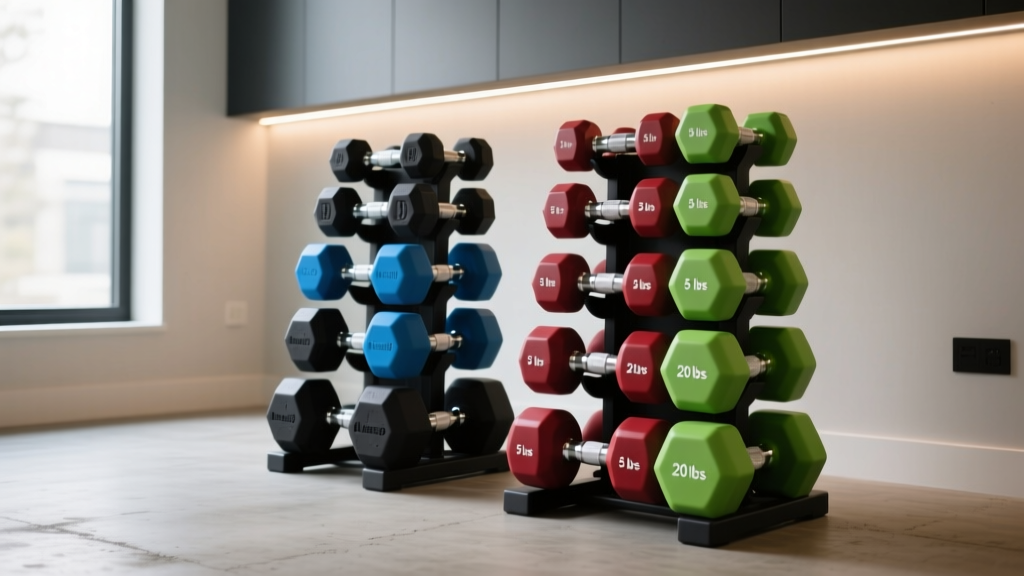
Because the triceps are a smaller muscle group, you will need lighter weights than you use for chest presses. Beginners should invest in a pair of 15 lb and 25 lb hex dumbbells (rubber-coated to protect your floors during skull crushers) and a pair of 35 lb dumbbells for the floor press.
How often should I oil my Olympic barbell?
If you purchase a bare steel or black oxide bar with aggressive volcano knurling, you must wipe it down with a nylon brush after every workout and apply a light coat of 3-in-One oil or mineral oil once a month to prevent rust. Stainless steel and hard chrome bars require significantly less maintenance.
More gear to consider
All reviews
Optimizing Your Upper Chest Dumbbell Station: Storage & Layout
Barbell Collars vs Clamps: Securing the Incline Bench Dumbbell Row
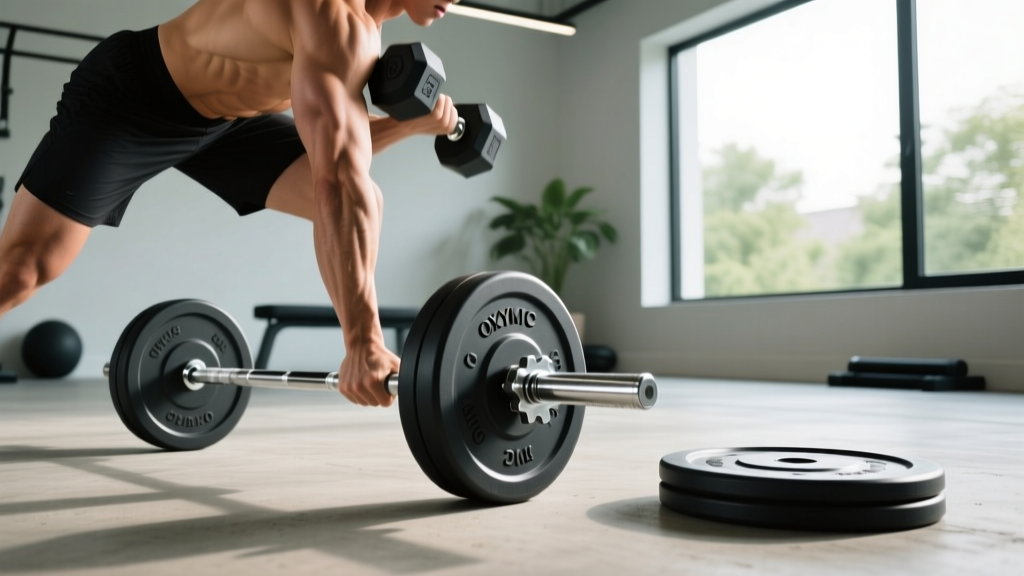
Single Arm Dumbbell Clean: Olympic vs Standard Plate Loading Errors

Sam's Club Dumbbells: Rubber Hex vs Urethane Space Guide
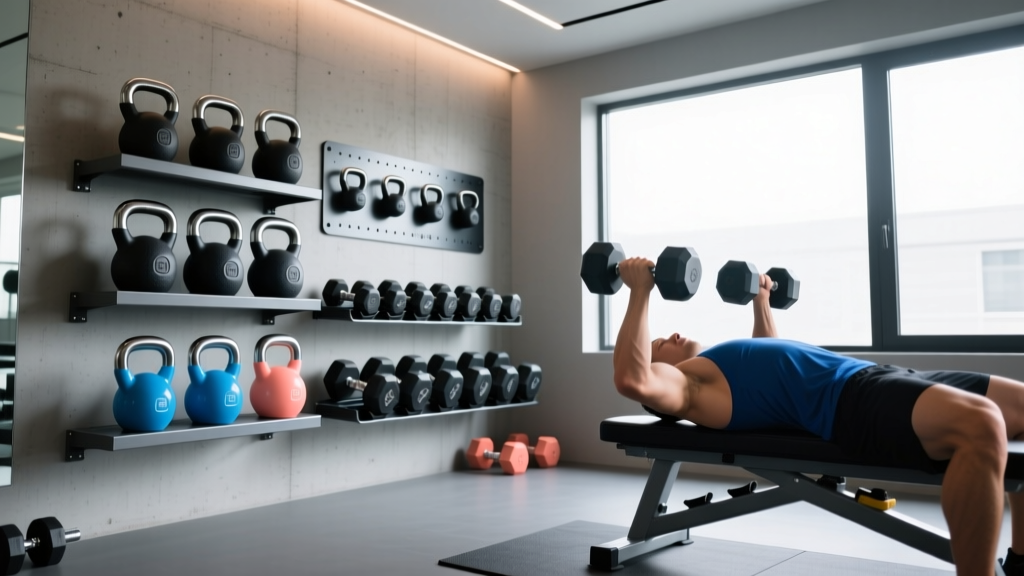
Compact Gym Layouts: Kettlebells & Good Chest Workouts at Home With Dumbbells