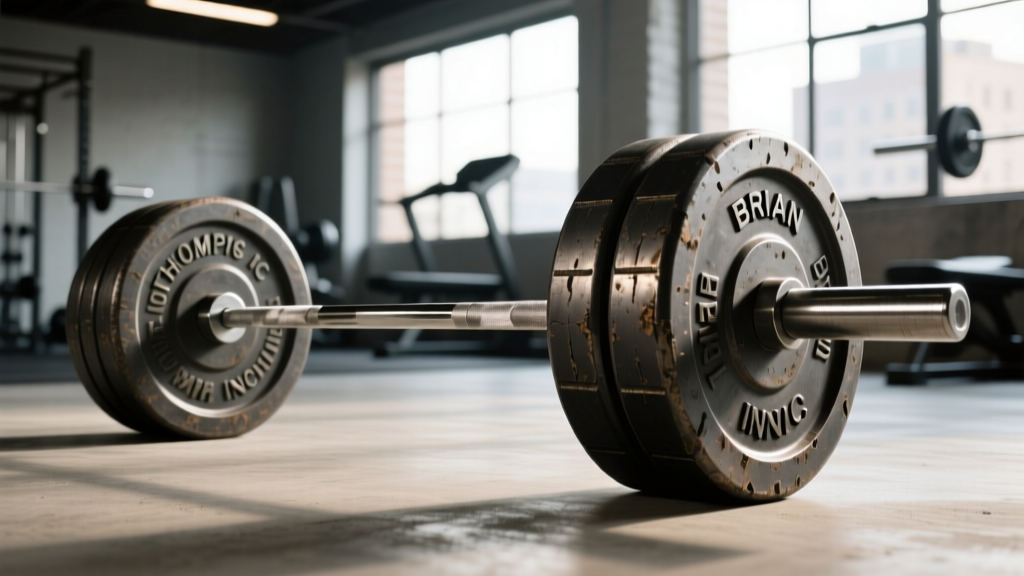
Olympic Barbell Buying Guide: Thomas Inch Dumbbell & Brian Shaw
Compare elite Olympic barbells for powerlifting and strongman training. Dive into knurling patterns, tensile strength, and grip mechanics.

The Evolution of Grip: From the Thomas Inch Dumbbell to Brian Shaw
When evaluating extreme grip demands and the biomechanics of holding massive loads, strength historians often look back to the legendary Thomas Inch dumbbell. Weighing 172 pounds with a brutal 2.38-inch smooth handle, the 'Inch' challenged the crush grip of strongmen for decades. Fast forward to the modern era, and you see World's Strongest Man champions like Brian Shaw pulling 500+ kg in the Hummer Tire Deadlift. While Shaw relies on specialized thick-handled implements for event training, his foundational powerlifting and raw strength phases demand a standard 28mm or 29mm Olympic barbell with elite-level knurling. This contrast highlights a critical truth for your home or commercial gym: the interface between your skin and the steel is just as important as the plates on the ends.
In this 2026 Olympic barbell buying guide, we are breaking down the exact weight tolerances, tensile strengths, and knurling patterns of the market's top power bars. Whether you are chasing a 600-pound deadlift or building a rack for heavy strongman accessory work, understanding barbell whip, stiffness, and friction is non-negotiable.
Decoding Barbell Weight, Tolerances, and Tensile Strength
Not all 20kg (44lb) Olympic barbells are created equal. The difference between a $150 big-box store bar and a $400+ elite power bar lies in the manufacturing tolerances and the steel's tensile strength, measured in Pounds per Square Inch (PSI).
Data Highlight: The PSI ThresholdAny barbell with a tensile strength below 165,000 PSI will permanently bend (take a 'set') if dropped with heavy loads or used for intense rack pulls. For heavy powerlifting and strongman deadlifts, you need a minimum of 190,000 PSI, with elite bars pushing 205,000 to 215,000 PSI to ensure zero permanent deformation.
Furthermore, weight tolerance separates the men from the boys. Cheap bars advertise '20kg' but may actually weigh 19.2kg or 20.8kg—a massive issue if you are competing in IPF-sanctioned meets where gear is weighed and scrutinized. Elite manufacturers machine their shafts and sleeves to a tolerance of +/- 10 grams.
Head-to-Head Comparison: Elite Power Bars
Let's put the top contenders head-to-head. We've selected three industry-standard power bars that dominate commercial racks and elite home gyms in 2026.
| Feature | Rogue Ohio Power Bar (Stainless) | Texas Power Bar | Kabuki Strength New Gen Power Bar |
|---|---|---|---|
| Price (Approx.) | $395.00 | $345.00 | $430.00 |
| Shaft Diameter | 29mm | 28.5mm | 29mm |
| Tensile Strength | 205,000 PSI | 200,000+ PSI | 200,000+ PSI |
| Knurl Pattern | Volcano | Aggressive Mountain | Aggressive Volcano |
| Center Knurl | Yes (Passive) | Yes (Aggressive) | Yes (Moderate) |
| Bushing/Bearing | Composite Bushings | Composite Bushings | Composite Bushings |
Rogue Ohio Power Bar: The Gold Standard
The Rogue Ohio Power Bar remains the benchmark. The stainless steel shaft requires zero maintenance and resists rust even in humid, unclimate-controlled garages. Its 29mm shaft diameter provides maximum stiffness, virtually eliminating the 'whip' that can throw off a heavy squat or cause a deadlift to bounce unpredictably off the floor. The volcano knurling is aggressive enough to bite through a layer of chalk, but refined enough not to tear your calluses during high-volume accessory work.
Texas Power Bar: The Old-School Chalk Eater
The Texas Power Bar is legendary for its mountain-style knurling. Unlike volcano knurling, which features a small divot in the peak of each diamond, mountain knurling leaves the peak sharp. This creates an incredibly aggressive grip that feels like 40-grit sandpaper. If you train with heavy chalk and pull sumo or conventional deadlifts north of 500 lbs, this bar will not slip. However, it is notoriously unforgiving on the hands during high-rep rows or cleans.
Kabuki Strength: The Premium Tactile Experience
Kabuki's New Generation Power Bar features some of the tightest machining tolerances on the market. The knurling is cut with proprietary CNC bits that create a highly defined, aggressive volcano pattern. It bites instantly but feels slightly more 'premium' and less jagged than the Texas Power Bar. The end caps and sleeve construction are also visually striking, though you pay a $35+ premium over the Rogue option for the aesthetics and specialized knurl tooling.
Knurling Deep Dive: Volcano vs. Mountain vs. Hill
According to Barbend's comprehensive knurling guide, understanding the geometry of the knurl is critical for matching a bar to your specific training style.
- Volcano Knurling: The diamond shape is pointed, but the very tip is shaved off or dipped, creating a 'rim' of sharp edges around a micro-crater. This rim bites into the skin's ridges without puncturing the epidermis. It is the undisputed king of modern powerlifting.
- Mountain Knurling: The diamond is left fully intact with a sharp, jagged peak. It relies on puncturing the top layer of skin and chalk for friction. Excellent for max-effort single lifts, but causes excessive skin tearing during volume blocks.
- Hill Knurling: The peaks are rounded off entirely. This is found on Olympic weightlifting bars and cheap commercial gym bars. It is useless for heavy deadlifts, as the bar will roll out of your fingers once the load exceeds your crush grip threshold.
Coatings and Oxidation: The Hidden Cost of Maintenance
The steel inside the bar dictates its strength, but the exterior coating dictates its lifespan and feel. Knurling cuts through the surface of the steel, meaning the knurled shaft itself is highly susceptible to oxidation (rust) if left unprotected.
- Bare Steel: Offers the best tactile feel but requires weekly brushing and oiling. Not recommended for humid environments.
- Black Zinc / Bright Zinc: Provides a baseline layer of rust protection. However, zinc wears off the knurling peaks within 6 to 12 months of heavy use, leaving the raw steel exposed to sweat and humidity.
- Cerakote: A ceramic-polymer coating originally designed for firearms. It offers elite corrosion resistance and comes in various colors. The downside? It slightly fills in the knurling valleys, marginally reducing the aggression of the grip compared to bare or stainless steel.
- Stainless Steel: The undisputed champion of modern power bars. Stainless steel shafts resist rust inherently without needing a topical coating. This means the knurling remains exactly as sharp as the day it was cut from the CNC lathe, requiring only occasional brushing to remove chalk and dead skin.
For a premium home gym or commercial facility in 2026, spending the extra $40-$60 for a stainless steel shaft is mathematically sound when factoring in the lifespan of the equipment and the elimination of maintenance hours.
Real-World Edge Cases: Center Knurling and Sleeve Spin
One often-overlooked aspect of barbell selection is the center knurl. In IPF powerlifting, a center knurl is mandatory to help the bar 'stick' to the back of your t-shirt or bare skin during low-bar squats. However, if you also use your power bar for Olympic lifts (like power cleans or thrusters), an aggressive center knurl will shred your clavicles and chest. The Rogue Ohio Power Bar solves this with a passive, shallow center knurl that provides just enough friction for squats without destroying your skin during front-rack positions.
Another edge case is sleeve spin. Power bars use bushings (typically composite or bronze) rather than needle bearings. Bushings provide a slower, more controlled sleeve rotation. If a deadlift bar spins too fast, the rotational inertia can actually twist the bar out of your grip at the top of the lockout. Composite bushings offer the perfect balance of durability and controlled friction for heavy, slow pulls.
Final Verdict: Which Bar Belongs in Your Rack?
Buying Decision Framework
Choose the Rogue Ohio Power Bar (Stainless) if you want a zero-maintenance, do-it-all power bar with perfect stiffness and modern volcano knurling. It is the safest investment for 90% of serious lifters.
Choose the Texas Power Bar if you are a heavy deadlifter who trains exclusively with chalk, prefers a slightly thinner 28.5mm shaft, and prioritizes maximum grip friction over hand preservation.
Choose the Kabuki Strength Bar if budget is not a constraint, you appreciate premium CNC machining, and you want the most aggressive, tactile volcano knurl available on the 2026 market.
Whether you are studying the historical grip feats of the Thomas Inch dumbbell or analyzing the training logs of Brian Shaw, the lesson remains the same: grip is the limiting factor in human strength. Don't let a poorly machined, low-PSI barbell be the reason your lift fails before your muscles do. Invest in a high-tensile, properly knurled Olympic barbell, and your rack will serve you for a lifetime.
More gear to consider
All reviews
Dumbbell Front Squat Ergonomics: 2026 Rack Market Trends
Ergonomic Dumbbells Storage: Rack Solutions & Care Guide
Dumbbell Shoulder Press Alternative: Cast Iron vs Competition Kettlebells

Beyond Upper Body Dumbbell Exercises: Collar Setup Walkthrough

Rubber Hex vs Urethane: Dumbbell Select Weight Maintenance Guide
