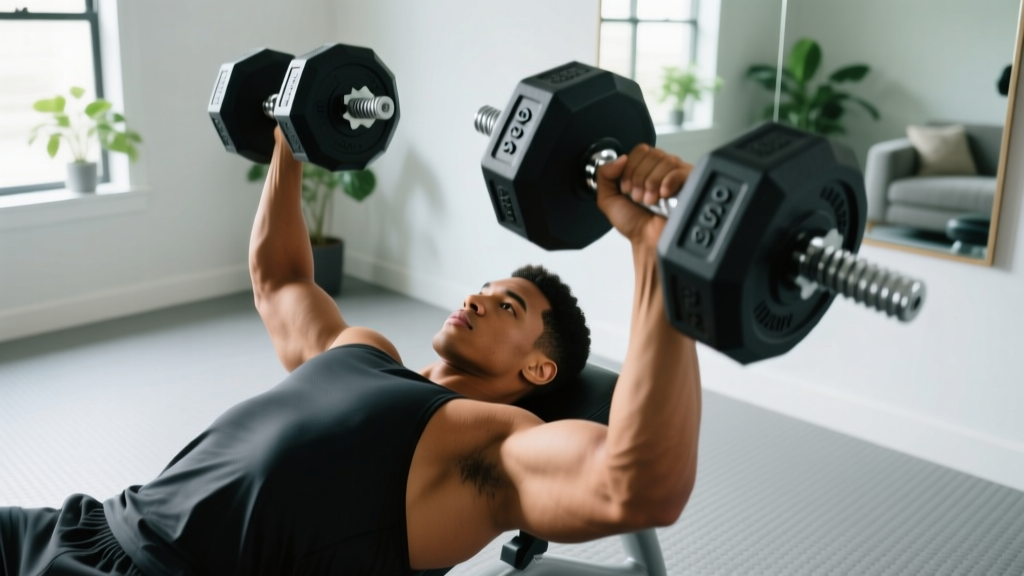
Dumbbell Lat Raise: Beginner's Step-by-Step Form Guide
Learn perfect form for the dumbbell lat raise with our step-by-step guide. Plus, find out why neoprene coated dumbbells are the best choice for home gyms.

Mastering the Dumbbell Lat Raise for Home Workouts
When building wider, capped shoulders, few exercises are as effective—and as frequently botched—as the dumbbell lat raise. While colloquially searched as the "lat raise," anatomists and strength coaches know this movement as the lateral raise, targeting the lateral head of the deltoid. For beginners building a home gym, mastering this isolation movement requires two things: impeccable biomechanical form and the right equipment. Specifically, neoprene coated dumbbells offer distinct advantages for home use that bare metal or cheap vinyl simply cannot match.
In this comprehensive guide, we will break down the exact material science of neoprene dumbbells, compare them to other coatings, and provide a step-by-step masterclass on executing the lateral raise safely and effectively in 2026.
Why Neoprene Dumbbells are Ideal for Home Lateral Raises
Neoprene (scientifically known as polychloroprene) is a synthetic rubber that has become the gold standard for entry-level and intermediate home gym equipment. When performing a dumbbell lat raise, grip security is paramount. As your heart rate elevates and your palms sweat, a slick metal dumbbell can shift in your hand, altering your center of gravity and forcing your rotator cuff to overcompensate.
Expert Insight: Neoprene provides a slightly "tacky" texture that increases friction against the skin without being abrasive. This micro-grip is crucial for lateral raises, where the moment arm is long and even a millimeter of dumbbell slippage can strain the wrist or anterior deltoid.Equipment Comparison: Neoprene vs. Rubber vs. Urethane
Not all dumbbell coatings are created equal. Below is a data-driven comparison of the three most common home gym dumbbell materials as of early 2026.
| Feature | Neoprene Coated | Recycled Rubber | Virgin Urethane |
|---|---|---|---|
| Average Cost per lb (2026) | $1.60 - $2.20 | $1.20 - $1.80 | $3.50 - $5.00+ |
| Grip Texture | Tacky, sweat-resistant | Smooth, can be slippery | Smooth, premium feel |
| Odor Profile | Odorless after 24 hours | Strong off-gassing (weeks) | Odorless |
| Floor Protection | Excellent (Hex shape) | Good (Often round) | Excellent (Precision molded) |
| Best For | Home gyms, beginners | Garage gyms, drop-sets | Commercial gyms, heavy lifters |
For a beginner focusing on controlled isolation movements like the lateral raise, neoprene hits the perfect sweet spot of affordability, grip security, and indoor air quality (lack of toxic off-gassing). Top models like the CAP Barbell Neoprene Coated Hex Dumbbells or Amazon Basics Neoprene Dumbbells typically cost around $38 to $45 for a pair of 10-pound weights, making them highly accessible.
Step-by-Step Guide to the Perfect Dumbbell Lat Raise
According to biomechanics data published by ExRx.net, the lateral raise primarily targets the lateral deltoid, with the supraspinatus assisting in the first 15 degrees of abduction. To maximize hypertrophy and protect the shoulder joint, follow these exact steps.
Step 1: The Stance and Setup
- Foot Placement: Stand with your feet shoulder-width apart. Keep a slight, soft bend in your knees to prevent lower back arching.
- Core Bracing: Squeeze your glutes and brace your core as if preparing for a light punch to the stomach. This stabilizes the pelvis.
- Starting Position: Hold a pair of neoprene dumbbells at your sides. Your palms should face your thighs. Maintain a slight bend in your elbows (about 10 to 20 degrees). Locking your elbows out shifts stress to the joint; bending them too much turns the exercise into a front raise.
Step 2: The Scapular Plane (The Secret to Joint Health)
Most beginners raise the dumbbells directly out to their sides (the frontal plane). Physical therapists strongly advise against this. Instead, you should lift in the scapular plane (also known as scaption). This means bringing the dumbbells up and slightly forward—about 30 degrees in front of your torso. This aligns the movement with the natural resting angle of your scapula, drastically reducing the risk of subacromial impingement, a common shoulder injury detailed in Physio-pedia's clinical guidelines.
Step 3: The Concentric Phase (The Lift)
- Exhale and raise the dumbbells out to the sides, leading with your elbows, not your hands.
- Imagine you are pushing the dumbbells toward the walls on either side of you, rather than just lifting them up.
- Stop when your upper arms are parallel to the floor (shoulder height). Going higher shifts the load entirely onto your upper trapezius muscles, defeating the purpose of the exercise.
Step 4: The Eccentric Phase (The Lowering)
Muscle damage and subsequent growth occur heavily during the eccentric (lowering) phase. Do not let gravity drop the weights. Take a full 2 to 3 seconds to lower the dumbbells back to the starting position, maintaining that slight elbow bend and core tension throughout.
Critical Form Mistakes and How to Fix Them
Even with the best grip provided by neoprene dumbbells, poor motor patterns will ruin your progress. Watch out for these common failure modes:
Mistake #1: "Pouring the Pitcher"
The Error: Internally rotating the shoulder (thumbs pointing down at the top of the movement) was once taught as a way to isolate the lateral deltoid. Modern sports science has debunked this. It severely narrows the subacromial space, grinding the rotator cuff tendons.
The Fix: Keep a neutral grip (palms facing the floor) or a slightly "thumb-up" position at the top of the movement.
Mistake #2: Trap Shrugging (Ego Lifting)
The Error: Using dumbbells that are too heavy forces the upper traps to initiate the lift. You will see lifters shrugging their shoulders up to their ears before the arms even reach a 45-degree angle.
The Fix: Drop the weight by 30%. Focus on depressing your shoulder blades (pulling them down into your back pockets) before initiating the raise. The American Council on Exercise (ACE) recommends prioritizing strict tempo over absolute load for all deltoid isolation work.
Beginner Programming Recommendations
To integrate the dumbbell lat raise into your home workout routine, use the following parameters to stimulate hypertrophy without overtaxing the delicate shoulder joint:
- Frequency: 2 times per week (e.g., Push/Pull/Legs or Upper/Lower splits).
- Sets: 3 working sets per session.
- Repetitions: 12 to 15 reps. (The lateral deltoid responds exceptionally well to higher rep ranges and metabolic stress).
- Rest Periods: 60 to 90 seconds between sets.
- Progressive Overload: Once you can complete 3 sets of 15 reps with strict form and a 3-second eccentric, move up to the next neoprene dumbbell weight increment (usually a 2.5 lb or 5 lb jump per hand).
Frequently Asked Questions
Can I do lateral raises every day?
No. The shoulder joint requires recovery time. Training the lateral deltoids every day leads to tendinopathy and overuse injuries. Stick to 2-3 times a week with at least 48 hours of rest between sessions.
Why do my forearms burn before my shoulders?
This is a grip fatigue issue. The long lever arm of the lateral raise makes the dumbbell feel heavier than it is. This is exactly why neoprene coated dumbbells are recommended for home use; their tacky surface reduces the crushing grip force required to hold the weight, allowing your shoulders to reach true muscular failure before your hands give out.
Should I use cables or dumbbells?
Both are excellent. Dumbbells are more accessible for home gyms and challenge your stabilizing muscles. However, cables provide constant tension throughout the entire range of motion. If you only have access to free weights at home, dumbbells paired with strict eccentric control will yield phenomenal results.
"The key to shoulder development isn't moving the heaviest weight from point A to point B; it's moving a moderate weight with absolute precision, eliminating momentum, and forcing the target muscle to do 100% of the work."
By pairing high-quality, grip-enhancing neoprene dumbbells with biomechanically sound scapular-plane execution, you will build resilient, capped shoulders safely in your home gym.
More gear to consider
All reviews
EZ Curl Bar vs Straight Bar: Market Data & Front Delt Dumbbell Raise
Good Tricep Workouts With Dumbbells: Neoprene Home Guide
How to Do Shoulder Dumbbell Flyes with Neoprene Weights

Troubleshooting Neoprene Dumbbells: Beyond Your Dumbbell Workouts PDF
Dumbbell Rack Storage: Layouts & Dumbbell Swings Muscles Worked
