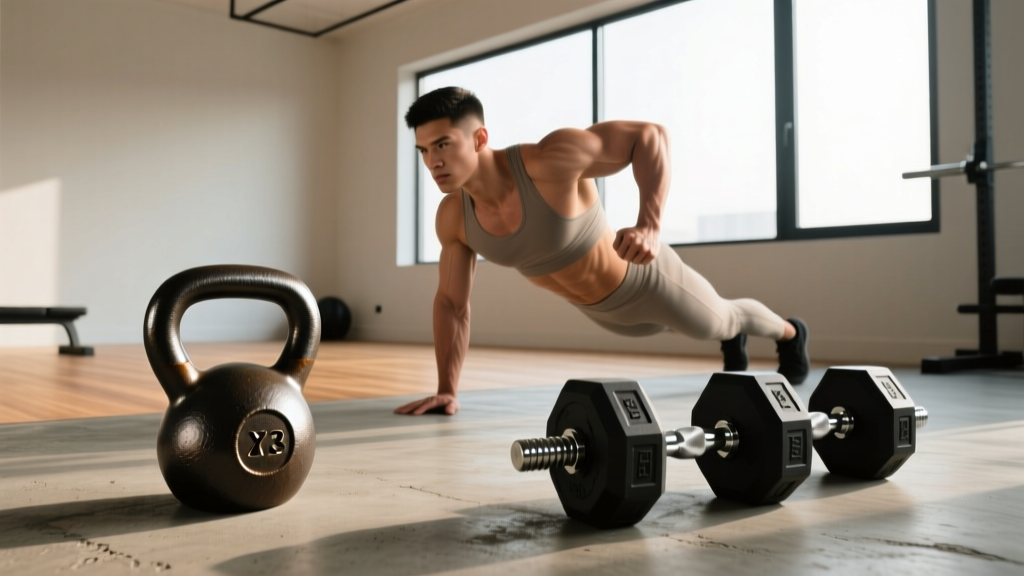
Dumbbell Chest Press Benefits: A Beginner's Neoprene Guide
Discover the top dumbbell chest press benefits and learn how to execute the move perfectly at home using beginner-friendly neoprene coated dumbbells.

Building Your Home Chest Workout: The Neoprene Advantage
Starting a home fitness journey in 2026 is more accessible than ever, but choosing the right equipment can be overwhelming. You do not need a massive power rack or an expensive Olympic barbell setup to build a strong, well-defined chest. For beginners, the humble dumbbell is the ultimate tool for upper body development. Specifically, neoprene coated dumbbells have become the gold standard for home gyms, offering a perfect blend of safety, comfort, and floor protection.
In this comprehensive, step-by-step guide, we will explore the essential gear you need, break down the primary dumbbell chest press benefits, and teach you how to execute the movement with flawless biomechanics. Whether you are working out on a dedicated weight bench or simply using your living room floor, this guide will set you up for long-term success.
Why Choose Neoprene Coated Dumbbells for Home Use?
When outfitting a home gym, the coating on your free weights matters just as much as the iron inside. Neoprene is a synthetic rubber that provides a soft, matte, and slightly textured finish. Brands like CAP Barbell and Yes4All dominate the beginner market, offering hexagonal-shaped neoprene dumbbells that prevent rolling on hardwood or laminate floors.
Unlike bare cast iron, which can rust and chip your flooring, or cheap vinyl coatings that crack and leak sand, neoprene is highly durable for light-to-medium home use. Furthermore, the tactile grip of neoprene reduces hand fatigue, allowing you to focus on muscle contraction rather than simply holding onto the weight.
Material Comparison: Neoprene vs. The Alternatives
| Coating Type | Avg. Cost per lb (2026) | Floor Safe? | Odor Profile | Best Use Case |
|---|---|---|---|---|
| Neoprene | $1.50 - $2.50 | Yes (Excellent) | None | Home beginners, floor presses, light/medium lifts |
| Virgin Rubber | $2.00 - $3.50 | Yes (Good) | Strong initially | Garage gyms, heavier commercial-style lifting |
| Urethane | $3.50 - $6.00+ | Yes (Superior) | None | High-end home gyms, commercial facilities |
| Bare Cast Iron | $1.00 - $1.50 | No (Requires mats) | Metallic/Dusty | Traditionalists, outdoor lifting |
Note: For a beginner purchasing their first set of fixed-weight dumbbells (e.g., a 15 lb and 20 lb pair), neoprene offers the highest return on investment without the off-gassing odors associated with cheap recycled rubber.
Unlocking the Dumbbell Chest Press Benefits
Why choose dumbbells over a barbell or a chest press machine? When evaluating the dumbbell chest press benefits, exercise scientists and strength coaches consistently point to three major advantages, particularly for those just starting their fitness journey.
1. Unilateral Stabilization and Core Engagement
Because your left and right arms are working independently, your body must recruit smaller stabilizer muscles in the rotator cuff and your core to keep the weights balanced. According to the American Council on Exercise (ACE), this unilateral demand forces the nervous system to develop better mind-muscle connections and joint stability, which translates to better overall functional strength in daily life.
2. Joint-Friendly Biomechanics
A barbell locks your wrists and elbows into a fixed path. If your natural anatomy does not perfectly align with that path, it can lead to shoulder impingement or wrist pain. Dumbbells allow you to rotate your wrists slightly inward (a semi-pronated grip) or adjust your elbow tuck to match your unique skeletal structure. As noted by the biomechanics database ExRx.net, this freedom of movement significantly reduces shear stress on the acromioclavicular (AC) joint.
3. Correcting Muscular Imbalances
Most beginners have a dominant side. On a barbell bench press, your strong arm will subtly compensate for your weak arm, masking the imbalance. Dumbbells expose these weaknesses immediately, allowing you to address them early in your training career before they lead to postural issues or injury.
Step-by-Step Guide: The Perfect Dumbbell Floor Press
Not every beginner has space for an adjustable weight bench. The Dumbbell Floor Press is an exceptional variation that limits the range of motion just enough to protect the shoulders while heavily targeting the pectorals and triceps. Here is how to execute it using your hex neoprene dumbbells.
💡 Pro Tip: Scapular RetractionBefore you even lift the weights, pinch your shoulder blades together and down into the floor. Imagine trying to hold a pencil between your shoulder blades. This creates a stable base and pushes your chest upward, ensuring the pectorals take the load rather than the front deltoids.
- The Setup: Lie flat on your back on a yoga mat or carpeted floor. Bend your knees and plant your feet flat on the ground, about hip-width apart. Hold a neoprene dumbbell in each hand with a neutral or pronated grip.
- The Starting Position: Press the weights up so they are directly over your chest. Your arms should be straight but not hyperextended at the elbows. Keep your wrists stacked directly over your elbows.
- The Eccentric (Lowering) Phase: Slowly lower the weights by bending your elbows. Crucial: Keep your elbows tucked at roughly a 45-degree angle to your torso. Do not let them flare out to 90 degrees. Lower the weights until your triceps gently touch the floor.
- The Pause: Rest on the floor for exactly one second. This eliminates the stretch reflex and forces your chest muscles to generate pure starting strength.
- The Concentric (Pressing) Phase: Drive the weights back up explosively, squeezing your chest muscles together at the top. Do not clang the dumbbells together; stop an inch apart to maintain constant tension on the pecs.
Flaring your elbows out perfectly perpendicular to your body (forming a 'T' shape) places immense, dangerous stress on the supraspinatus tendon in your rotator cuff. The Mayo Clinic emphasizes that maintaining proper joint alignment and avoiding extreme ranges of motion under load is critical for preventing shoulder injuries in novice lifters. Always maintain that 45-degree arrow shape.
Programming Your First Chest Routine
To build muscle and strength, you need a structured approach. For a beginner using fixed neoprene dumbbells, we recommend the following protocol:
- Frequency: 2 times per week (e.g., Monday and Thursday) to allow for 48-72 hours of central nervous system and muscular recovery.
- Volume: 3 working sets per session.
- Rep Range: 8 to 12 repetitions. This is the classic hypertrophy (muscle-building) range.
- Rest Periods: 90 to 120 seconds between sets.
- Progressive Overload: Once you can comfortably complete 3 sets of 12 reps with perfect form, it is time to purchase the next weight increment up (usually a 5 lb jump per hand).
Understanding RIR (Reps in Reserve)
Beginners often do not know how hard to push. Use the RIR scale. An RIR of 2 means you finish your set feeling like you could have only completed exactly two more reps with good form. If you finish a set of 10 and feel you could have done 5 more, the weight is too light. If you fail at rep 6, the weight is too heavy. Aim for an RIR of 1-2 on your final set.
Maintenance and Care for Neoprene Dumbbells
While neoprene is incredibly resilient, it does require basic care to ensure it lasts for years in your home gym.
- Cleaning: Wipe down the handles and heads with a damp microfiber cloth and a mild dish soap solution after sweaty sessions. Never use bleach or harsh chemical degreasers, as these will break down the synthetic rubber matrix and cause the coating to peel.
- UV Protection: Do not store your neoprene dumbbells in direct sunlight. Prolonged UV exposure degrades neoprene, causing it to fade, dry out, and eventually crack. Keep them on an indoor rack or in a shaded corner.
- Storage: Invest in a simple A-frame or tiered wooden dumbbell rack. Dropping hex dumbbells repeatedly on their edges can eventually compress the neoprene over time, altering their flat base and causing them to wobble when set on the floor.
Frequently Asked Questions
Can I build a big chest using only neoprene dumbbells?
Absolutely. Muscle tissue does not know what type of equipment you are using; it only understands mechanical tension. As long as you are progressively overloading the muscle by moving to heavier dumbbells as you get stronger, you will stimulate growth. Neoprene dumbbells are widely available in weights up to 50 or 60 lbs per hand, which is more than enough for intermediate lifters to build significant mass.
Why do my neoprene dumbbells feel slippery when I sweat?
While neoprene offers a great dry grip, it can become slick with heavy perspiration. If you suffer from hyperhidrosis or sweat heavily during workouts, keep a small towel nearby to wipe the handles between sets, or consider wearing a pair of lightweight, chalk-compatible lifting gloves.
Is the floor press as effective as a bench press?
The floor press reduces the range of motion by stopping the elbows at the floor, which shifts slightly more emphasis onto the triceps and the upper/mid chest, while taking the bottom portion of the stretch off the pecs. It is highly effective for building lockout strength and is generally safer for the shoulders, making it an excellent primary movement for home-gym beginners.
More gear to consider
All reviews
Barbell Clamp Guide: Why a Dumbbell Drawing is Easy for Workout Logs

Power Rack vs Squat Rack for Dumbbell Bench Press vs Bench Press

V Shape Back Workout with Dumbbells vs Kettlebells: 2026 Value Guide

Power Rack vs Squat Rack: Incline Dumbbell Curl Muscles Worked Guide

York Dumbbell Review: Rubber Hex vs Urethane Weights