Power Rack vs Squat Rack vs Squat Stand: MX100 Dumbbell Guide
Compare power racks, squat racks, and squat stands for your home gym. Learn how to integrate MX100 dumbbells with the right rack footprint and storage.

Power Rack vs Squat Rack vs Squat Stand: The Core Architecture
Building a comprehensive home gym in 2026 requires more than just buying the heaviest barbell you can find; it demands a strategic approach to spatial geometry, safety, and equipment integration. When outfitting your space with premium, heavy-duty adjustable sets like the MX100 dumbbells, your choice of racking becomes the central nervous system of your training area. The debate between a power rack, a squat rack (often called a half rack), and a squat stand is ultimately a question of footprint, budget, and accessory compatibility.
According to the National Strength and Conditioning Association (NSCA), proper equipment spacing and spotter mechanisms are critical for reducing injury risk during unsupervised lifting. In this in-depth buying guide, we break down the structural differences, pricing tiers, and real-world failure modes of each racking style, with a specific lens on how they accommodate the unique dimensions and storage needs of the MX100 dumbbell series.
The Golden Rule of Home Gym Racking: Never sacrifice safety for square footage. A rack that cannot safely catch a failed repetition or store your heavy dumbbells without tipping is a liability, not an asset.1. Power Racks (Full Cages): The Gold Standard
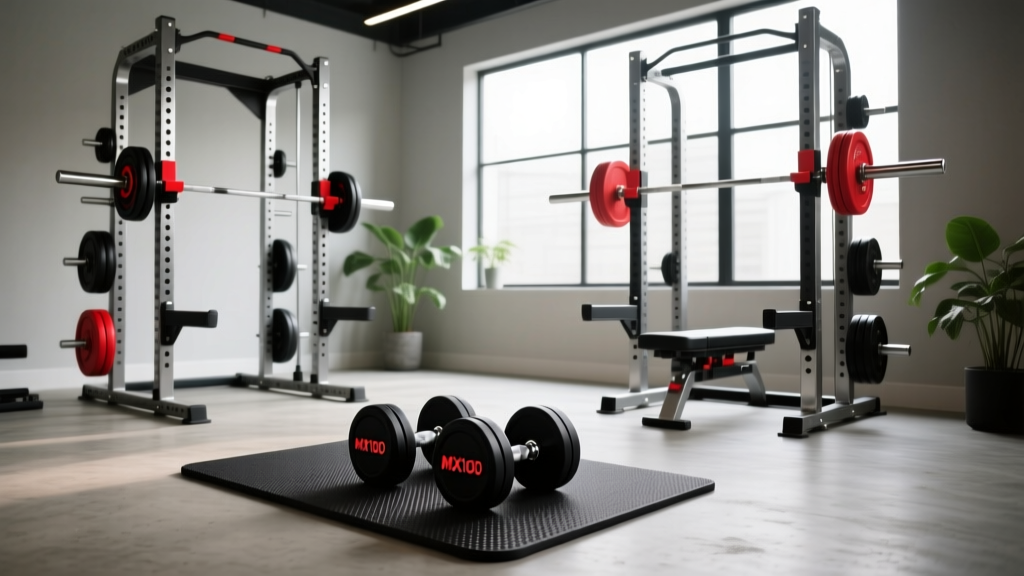
A power rack, or full cage, consists of four to six vertical uprights connected by crossmembers at the top and bottom. This enclosed design provides unparalleled safety and versatility.
Key Specifications & Pricing (2026)
- Upright Profile: Typically 3x3 inch, 11-gauge steel.
- Hole Spacing: Westside spacing (1-inch holes in the bench press zone, 2-inch holes elsewhere) for micro-adjustments.
- Weight Capacity: 1,000 to 1,500 lbs static load.
- Average Cost: $1,800 to $3,500+ depending on attachment bundles and steel thickness.
The MX100 Dumbbell Integration Factor
When pressing the MX100 dumbbells at their maximum 100 lb setting, the physical width of the adjustable dial or cradle mechanism often adds 2 to 3 inches to the lateral footprint compared to traditional fixed hex dumbbells. If you are utilizing a standard 43-inch interior power rack, performing a flat dumbbell bench press will result in the dumbbell heads colliding with the uprights before you reach full extension. For MX100 owners, we mandate a minimum interior width of 49 to 53 inches. Furthermore, full cages allow for internal storage solutions, such as vertical dumbbell tier racks that bolt directly to the rear uprights, keeping your heavy MX100s off the floor and out of the barbell's path.
2. Squat Racks (Half Racks): The Space-Saving Compromise
Squat racks, commonly referred to as half racks, feature two main front uprights supported by a rearward-extending base. This base usually doubles as weight plate storage, which acts as a crucial counterbalance to prevent the rack from tipping forward during heavy barbell rack pulls or kipping pull-ups.
Pros and Cons of the Half Rack
| Feature | Advantage | Disadvantage |
|---|---|---|
| Footprint | Saves 15-20 sq ft compared to full cages. | Rear storage base can be a tripping hazard. |
| Spotter Arms | Extended arms catch bars safely outside the rack. | Requires 3+ feet of clearance in front of the rack. |
| DB Clearance | Open front allows unlimited lateral DB movement. | Lacks overhead stabilization for heavy band work. |
For the MX100 dumbbell user, the half rack is often the sweet spot. Because there is no front-to-front crossmember at the top, you can easily slide an adjustable bench in and out without navigating a low ceiling or top pull-up bar. However, you must invest in specialized weight horns or saddle attachments to store the MX100s, as leaving 100 lb dumbbells on the floor creates a severe trip hazard in the limited footprint of a half rack zone.
3. Squat Stands: The Minimalist Approach
Squat stands are exactly what they sound like: two independent uprights designed solely to hold a barbell. They lack the crossmembers, pull-up bars, and extensive attachment ecosystems of their larger counterparts.
When to Buy Squat Stands
- Severe Spatial Constraints: You are building a gym in a small apartment or shared garage where the equipment must be pushed against a wall when not in use.
- Strict Budget Limits: Quality stands range from $350 to $600, freeing up capital for premium barbells and the MX100 dumbbell set.
- Olympic Lifting Focus: You need an entirely open floor space for snatches and cleans without the risk of clipping a rack frame.
The MX100 Dumbbell Storage Matrix
Integrating heavy adjustable dumbbells into your rack ecosystem requires specific attachment planning. The MX100 dumbbells, with their wide cradle footprint, cannot simply be tossed onto standard 2-inch barbell weight horns. Below is a compatibility guide for storing and utilizing the MX100s across different rack types.
| Rack Type | Ideal MX100 Storage Solution | Estimated Attachment Cost | DB Press Clearance |
|---|---|---|---|
| Power Rack (53' Interior) | Bolt-on 3-Tier Vertical Saddle Rack | $180 - $250 | Excellent (No upright interference) |
| Half Rack | Rear-Base Dumbbell Tray or Weight Horn Saddles | $120 - $180 | Superior (Completely open front) |
| Squat Stands | Freestanding Floor Rack (Required) | $150 - $200 | Superior (Completely open front) |
Biomechanics and Bench Positioning
When transitioning from barbell to dumbbell work inside a rack, bench positioning is paramount. The Mayo Clinic's Strength Training Guidelines emphasize the importance of maintaining natural joint alignment and unrestricted range of motion during resistance exercises. If you are using a power rack and the MX100 dumbbells, you must pull the adjustable bench slightly forward, so your head is positioned just past the front uprights. This prevents the dumbbells from striking the crossmembers during deep incline presses.
Conversely, if you are using squat stands, you have total freedom to angle the bench for unilateral movements, such as single-arm dumbbell rows or split squats, without worrying about clipping a steel frame. However, you lose the ability to use the rack's safety straps to catch the dumbbells if your grip fails during a heavy set of floor presses or bench presses.
Final Verdict: Which Should You Choose?
Your decision ultimately hinges on three variables: your available square footage, your budget, and your commitment to accessory work with the MX100 dumbbells.
- Choose the Power Rack if: You have a dedicated 8x8 foot space, a budget over $2,000, and want the safest environment for heavy solo lifting, complete with integrated vertical storage for your MX100s.
- Choose the Squat Rack if: You need to save 15 square feet of floor space, prioritize Olympic lifting or functional fitness, and want an open front for unrestricted dumbbell pressing.
- Choose the Squat Stands if: You are on a strict sub-$800 budget, have a multi-purpose garage, and are willing to purchase a separate freestanding tier rack to safely house your MX100 dumbbells.
By matching your racking architecture to the specific spatial demands of heavy adjustable dumbbells, you ensure that your home gym remains a safe, efficient, and enjoyable environment for years to come.
More gear to consider
All reviews
Best Bum Exercises with Dumbbells: 2026 Adjustable Reviews
Barbell Collar Types & Close Grip Dumbbell Press Muscles Worked
Strength Training With Dumbbells: 2026 Neoprene Coated Showdown

Barbell Buying Guide: Weight, Knurling & Proper RDL Dumbbell Form

Power Rack vs Squat Rack vs Stand: Triceps Workout Using Dumbbells