
Safe Lower Back Exercise Dumbbell Home Setup Guide
Master your home gym with our complete setup and installation walkthrough for neoprene dumbbells, optimizing safety for lower back exercises.

The Biomechanics of Hinging: Why Your Setup Dictates Safety
Designing a home gym for posterior chain development requires far more than simply purchasing a set of weights. When your primary focus is a targeted lower back exercise dumbbell routine, the physical setup of your space and the specific material properties of your equipment dictate both safety and performance. Neoprene-coated dumbbells are a staple in home gyms due to their noise-dampening qualities and floor-friendly exteriors, but their unique grip dimensions and storage requirements demand a deliberate installation approach.
According to Harvard Health Publishing, maintaining the natural lumbar curve during hinging movements is paramount to preventing disc herniation and muscle strains. If your home gym setup forces you to bend over and pick heavy weights up from the floor, you are compromising your spine before the set even begins. This comprehensive walkthrough will guide you through the exact floor preparation, hardware installation, and biomechanical setup required to build a safe, highly effective neoprene dumbbell zone in 2026.
⚠️ Critical Warning: Neoprene Grip Thickness
Standard cast iron dumbbells typically feature a 1.1-inch (28mm) handle. Neoprene-coated dumbbells, however, often have a thicker grip profile ranging from 1.3 to 1.5 inches (33-38mm) due to the molded synthetic rubber coating. During heavy lower back hinge movements, this increased diameter will tax your grip strength significantly, often causing forearm fatigue before your erector spinae reach true muscular failure. Plan your weight increments accordingly.
Phase 1: Floor Preparation and Mat Installation
While neoprene is softer than bare iron or urethane, dropping a 30-pound dumbbell from waist height onto hardwood or laminate flooring will still cause catastrophic damage to both the floor and the dumbbell's internal casting. Proper floor installation is your first line of defense.
- Material Selection: Avoid cheap, interlocking EVA foam puzzle mats. They compress too much under load, creating an unstable base for single-leg Romanian Deadlifts (RDLs). Opt for 3/4-inch thick vulcanized rubber horse stall mats or high-density home gym tiles.
- Dimensions: Clear a minimum 6x6 foot area. This allows for a full hip-hinge range of motion without your knuckles striking walls or furniture.
- Installation: Lay the rubber mats directly against a flat wall to prevent shifting. If your floor is concrete, use double-sided carpet tape on the perimeter to lock the mats in place, ensuring zero lateral slide when you are bracing your feet for heavy good mornings.
Phase 2: Wall Rack Installation for Spinal Safety
The most common cause of home-gym lower back injuries occurs during the pickup and put-down phases of a dumbbell exercise. Bending over a floor-level A-frame stand to grab 40-pound neoprene dumbbells places massive shear force on the lumbar spine. Installing a wall-mounted rack at waist height is a non-negotiable upgrade for any serious lower back exercise dumbbell routine.
Step-by-Step Rack Mounting Guide
- Select the Right Rack: Choose a 3-tier steel wall rack with a minimum 2-inch front lip. Because neoprene dumbbells have a slightly compressible, rounded outer edge, standard shallow-lip racks can allow the bells to roll forward and fall.
- Locate the Studs: Use a magnetic stud finder to locate the wooden wall studs, which are typically spaced 16 inches on-center. Do not rely on drywall anchors; a loaded rack can easily exceed 150 lbs of dynamic pull-force.
- Determine Mounting Height: Measure 36 to 40 inches from the floor to the center of the middle tier. This specific height allows you to brace your core, hinge slightly at the hips with a neutral spine, and grip the dumbbells without rounding your lower back.
- Drill and Secure: Pre-drill holes using a 7/32-inch wood bit through the drywall and into the center of the studs. Secure the rack using 3/8-inch x 2.5-inch structural lag screws with steel washers. Tighten with a socket wrench until flush, being careful not to overtighten and crush the drywall.
Phase 3: Selecting Your Neoprene Arsenal
As of early 2026, the market for neoprene dumbbells has stabilized, with premium sets averaging between $1.40 and $1.90 per pound. Because grip fatigue is a limiting factor in lower back exercises, you need precise weight jumps to ensure progressive overload without sacrificing form.
| Dumbbell Pair | Typical Neoprene Color | Estimated 2026 Cost | Best Application |
|---|---|---|---|
| 10 lbs (x2) | Pink / Light Blue | $25 - $30 | Warm-ups, Single-Leg RDLs |
| 15 lbs (x2) | Green / Yellow | $35 - $42 | High-Rep Good Mornings |
| 20 lbs (x2) | Blue / Orange | $45 - $55 | Standard Dumbbell RDLs |
| 25 lbs (x2) | Red / Purple | $58 - $68 | Heavy Bent-Over Rows |
| 30 lbs (x2) | Grey / Black | $70 - $85 | Advanced Hinge Progressions |
Phase 4: Biomechanical Movement Setup
With your floor matted and your wall rack securely installed at waist height, you are ready to execute the movements. The National Strength and Conditioning Association (NSCA) emphasizes that the hip hinge is a foundational movement pattern that requires strict spinal rigidity. Here is how to set up the two most effective lower back exercises using your neoprene equipment.
1. The Neoprene Dumbbell Romanian Deadlift (RDL)
- The Pickup: Stand facing your wall rack. Hinge at the hips, keeping your spine neutral, and grasp the 20 lb or 25 lb neoprene dumbbells. Stand up by driving your hips forward, not by extending your lower back.
- Stance & Grip: Stand on your rubber mat with feet hip-width apart. Rotate the dumbbells so they rest against your outer thighs. The thicker neoprene grip requires a firm, chalk-assisted hold to prevent the bells from sliding forward.
- The Descent: Push your hips backward as if closing a car door with your glutes. Keep the dumbbells dragging lightly against your thighs. Stop when your torso is roughly parallel to the floor, or when you feel a deep stretch in your hamstrings.
- The Ascent: Drive your hips forward to return to the starting position. Squeeze the glutes at the top; do not hyperextend the lumbar spine.
2. The Dumbbell Good Morning
This exercise isolates the erector spinae but requires immense caution. Use lighter neoprene weights (10-15 lbs).
- Hold one dumbbell vertically against your chest, or hold two dumbbells resting on your shoulders (if mobility permits).
- Brace your core as if preparing for a punch.
- Hinge at the hips, maintaining a perfectly straight line from your tailbone to your skull.
- Return to the top by pulling your hips forward. The neoprene coating provides a comfortable, non-slip surface against the collarbone or shoulders compared to knurled iron.
Phase 5: Neoprene Maintenance and Longevity
Neoprene is a synthetic rubber that is highly durable against impacts but surprisingly vulnerable to the acidic pH of human sweat and harsh chemical cleaners. Over time, improper maintenance will cause the coating to become sticky, peel, or degrade, compromising your grip during heavy lower back exercises.
Expert Maintenance Tip: Never use bleach, ammonia, or alcohol-based wipes on neoprene dumbbells. These solvents break down the rubber polymers. Instead, wipe down the handles and bells after every session with a microfiber cloth dampened with warm water and a single drop of mild dish soap. Dry immediately with a towel to prevent moisture from seeping into the microscopic pores of the coating.
By investing the time to properly install a waist-high storage rack, lay down high-density rubber matting, and respect the unique grip dimensions of neoprene-coated iron, you transform a standard spare room into a biomechanically safe training facility. Your lower back will thank you for the meticulous setup every time you approach the rack.
More gear to consider
All reviews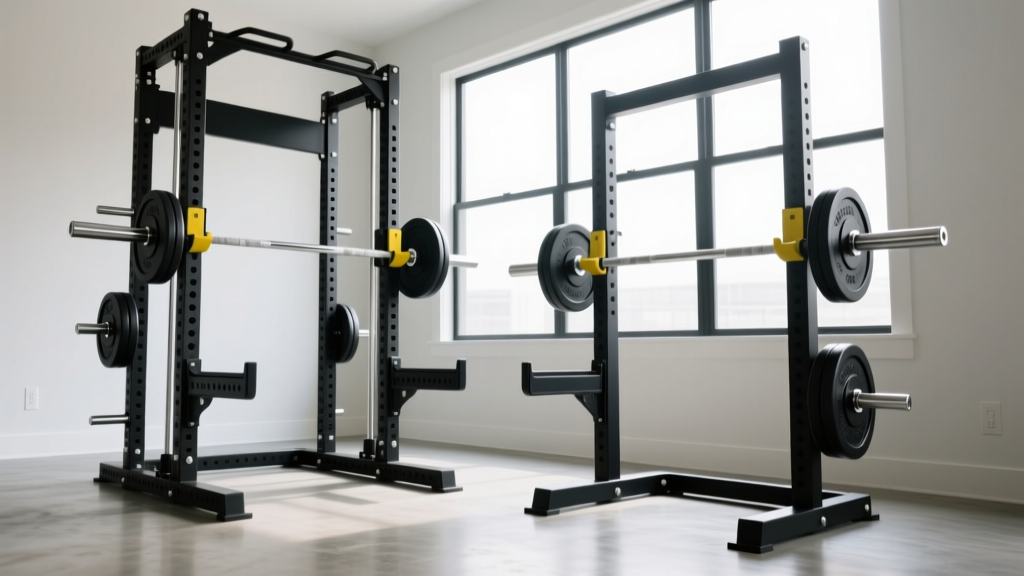
Power Rack vs Squat Stand: Setup for Single Dumbbell Deadlifts

Cast Iron vs Competition Kettlebells & Dumbbell Exercises for Rounded Shoulders

EZ Bar vs Straight Bar: The Dumbbell Neutral Grip Chest Press Shift

Power Rack vs Squat Stand: Troubleshooting Flat Dumbbells & Space

Bumper vs Iron Plates: Value for Spin Lock Dumbbell & Bar Rigs
