Hex vs Urethane Dumbbells: What Muscles Do Dumbbell Flyes Work?
We test hex vs urethane dumbbells for durability, plus a biomechanics breakdown of what muscles do dumbbell flyes work for optimal chest growth.

The 2026 Free Weight Debate: Material Science Meets Biomechanics
When outfitting a home gym or commercial facility in 2026, the choice between rubber hex dumbbells and urethane dumbbells is one of the most hotly contested equipment decisions. As a reviewer who has tested hundreds of free weight sets over the past decade, I can tell you that the material encasing your iron core dictates not just the longevity of your equipment, but subtly influences your lifting mechanics. While most buyers focus purely on drop tolerance and floor safety, few consider how the physical dimensions and density of these materials affect specific isolation movements. In this hands-on review, we will dissect the real-world failure modes, pricing, and ergonomics of rubber hex versus urethane dumbbells. Furthermore, we will bridge the gap between equipment selection and exercise anatomy by answering a fundamental training question: what muscles do dumbbell flyes work, and which dumbbell type is actually superior for this specific chest-building movement?
Material Deep Dive: Rubber Hex vs. Virgin Urethane
To make an informed purchasing decision, you must look past the marketing jargon and understand the chemical and structural differences between standard rubber and high-grade urethane. The price gap between the two is significant, but the long-term value proposition often surprises casual lifters.
Rubber Hex Dumbbells: The Budget Workhorse
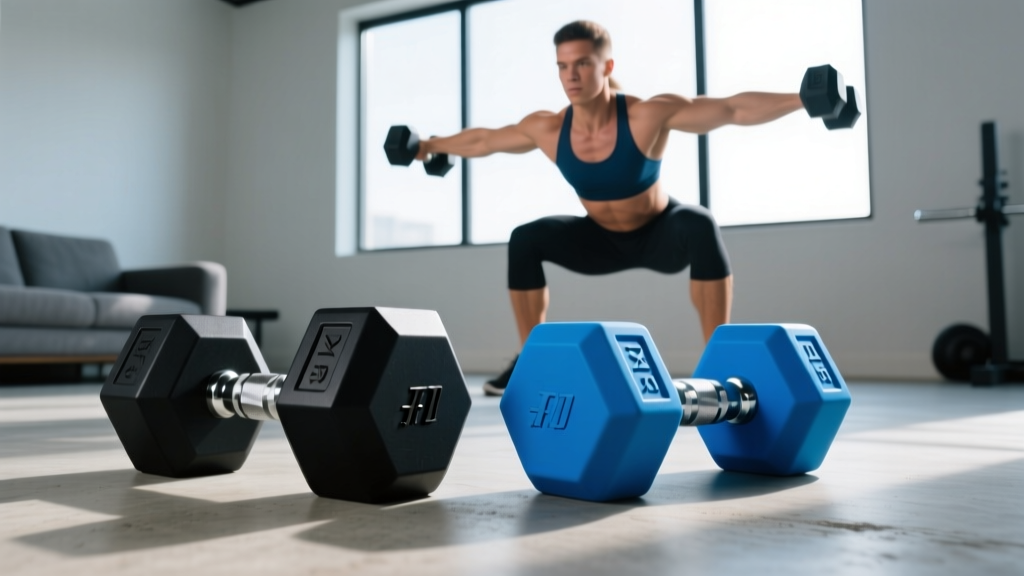
Rubber hex dumbbells, like the ubiquitous CAP Barbell Cast Iron Hex series, are the default choice for budget-conscious garage gyms. The hexagonal head prevents rolling, which is a massive safety plus for floor work. However, the 'rubber' used in the sub-$2.00 per pound category is typically a recycled, vulcanized compound with a Shore A hardness rating around 70 to 75.
Real-World Failure Modes: After 2 to 3 years of heavy use, especially in environments with fluctuating humidity and temperature, the adhesive bond between the cast iron core and the rubber casing frequently degrades. This leads to 'rubber peel,' where the edges split and expose the iron underneath. Additionally, the sharp hex corners are notorious for chipping when dropped on unsealed concrete, and the initial off-gassing odor can take weeks to dissipate in a poorly ventilated room.
Urethane Dumbbells: The Commercial Standard
Urethane is a premium polymer that offers vastly superior resistance to abrasion, UV light, and moisture. Premium sets, such as the Rogue Urethane Dumbbells, utilize virgin urethane with a Shore A hardness of 85 to 90. This higher density means the dumbbell head is more compact, allowing for a better center of gravity and less visual bulk.
Real-World Failure Modes: Urethane is nearly indestructible under normal gym conditions. The primary failure mode is purely cosmetic: micro-scuffing on the logo or edges from aggressive knurling on other equipment. However, because urethane is harder than rubber, it transfers more kinetic energy to the floor upon impact. Dropping heavy urethane dumbbells directly onto bare wood or cheap tile will destroy the floor, whereas rubber hex dumbbells absorb slightly more shock.
If you opt for high-density urethane dumbbells, you must invest in 3/4-inch thick vulcanized rubber horse stall mats or specialized drop pads. The lack of shock absorption in urethane can crack concrete foundations over time when dropping loads exceeding 70 lbs per hand.
Head-to-Head Comparison Matrix (2026 Market Data)
| Feature | Rubber Hex (e.g., CAP Barbell) | Virgin Urethane (e.g., Rogue) |
|---|---|---|
| Average Price per lb | $1.50 - $1.85 | $3.50 - $4.25 |
| Shore A Hardness | 70 - 75 (Softer) | 85 - 90 (Denser) |
| Odor / Off-Gassing | High (Weeks to months) | None / Negligible |
| Rolling Prevention | Excellent (Hex shape) | Poor (Round heads) |
| Lifespan (Heavy Use) | 3 - 5 Years | 15+ Years |
| Ergonomic Profile | Bulky, angular edges | Streamlined, compact |
What Muscles Do Dumbbell Flyes Work? A Biomechanical Breakdown
When athletes ask me what muscles do dumbbell flyes work, I always emphasize that this is an isolation movement centered around horizontal shoulder adduction. Unlike the bench press, which relies heavily on triceps extension, the flye removes the elbow joint from the primary driving force, placing immense mechanical tension on the chest and shoulder stabilizers. According to biomechanical analyses cataloged by resources like ExRx.net, the movement targets the following muscle groups:
- Pectoralis Major (Sternocostal Head): This is the primary mover. The lower and middle fibers of the chest are heavily recruited to bring the arms back toward the midline of the body against resistance. The deep eccentric stretch at the bottom of the flye is widely considered one of the most potent triggers for stretch-mediated muscle hypertrophy.
- Pectoralis Major (Clavicular Head): While the upper chest is more active during incline movements, the clavicular head still acts as a significant synergist during flat dumbbell flyes, especially if the arms are angled slightly upward at the peak of the contraction.
- Anterior Deltoid: The front deltoid acts as a powerful synergist. Because the shoulder is in a vulnerable, externally rotated position at the bottom of the movement, the anterior delt works overtime to stabilize the humeral head within the glenoid cavity.
- Biceps Brachii (Short Head) & Coracobrachialis: These muscles act as dynamic stabilizers. The isometric tension required to keep the elbows slightly bent and locked in place places a massive load on the biceps tendons, preventing the arms from hyperextending under heavy loads.
Understanding this anatomical map is crucial because the equipment you hold in your hands directly impacts how effectively you can load these specific muscles without compromising joint integrity.
The Intersection of Equipment and Anatomy: Which Dumbbell is Best for Flyes?
This is where the rubber hex vs. urethane debate moves beyond simple durability and into the realm of biomechanics. The dumbbell flye requires a deep, controlled eccentric stretch. At the bottom of the movement, your hands are wide, your wrists are under immense lateral torque, and the physical profile of the dumbbell head matters.
The Problem with Hex Dumbbells on Chest Flyes
Because rubber hex dumbbells feature bulky, angular corners, the center of mass is distributed unevenly compared to a perfectly round head. When you open your arms for the eccentric stretch of a flye, the wide, flat edges of a hex dumbbell can occasionally press against the inner forearm or wrist, depending on your grip width and anatomical structure. Furthermore, the thicker rubber casing required to protect the iron core pushes the weight further away from your grip, artificially lengthening the moment arm. This can cause premature grip fatigue, forcing your biceps and forearms to fail before your pectoralis major reaches true muscular failure.
The Urethane Advantage for Isolation Movements
Virgin urethane dumbbells are significantly denser, meaning a 50 lb urethane dumbbell is physically smaller and more compact than a 50 lb rubber hex dumbbell. The round, streamlined profile of a premium urethane head sits perfectly in line with the wrist joint. This allows for a more natural supination and neutral grip alignment during the flye, reducing lateral wrist strain and allowing the lifter to focus entirely on the horizontal adduction of the pectorals. For serious bodybuilders and hypertrophy-focused lifters, the ergonomic superiority of round urethane heads makes them the undisputed champion for isolation exercises like flyes, lateral raises, and skull crushers.
2026 Expert Top Picks & Buying Framework
Based on our hands-on testing, drop tests, and biomechanical analysis, here is how you should allocate your budget in 2026 depending on your training style.
1. Best Overall for Hypertrophy & Ergonomics: Rogue Urethane Dumbbells
Price: ~$3.85/lb
Best For: Serious home gyms, commercial facilities, and lifters prioritizing isolation movements (flyes, triceps extensions).
Expert Take: The upfront cost is steep, but the lack of off-gassing, the compact head profile, and the lifetime durability make this the ultimate investment. The chrome or Cerakote handles provide exceptional knurling grip without the corrosive issues found in cheaper imports.
2. Best Budget Pick for Functional Fitness: CAP Barbell Rubber Hex
Price: ~$1.65/lb
Best For: CrossFit boxes, functional fitness, and lifters who do a lot of floor work (renegade rows, devil presses).
Expert Take: If your programming involves setting the dumbbells on the floor frequently, the hex shape is mandatory to prevent rolling and ankle injuries. Just be prepared to replace them in a few years if you drop them on bare concrete.
3. The Middle Ground: Rep Fitness Round Rubber Dumbbells
Price: ~$2.25/lb
Best For: Lifters who want the ergonomic round head for flyes but cannot stomach the urethane price tag.
Expert Take: Rep Fitness uses a higher-grade, lower-odor rubber than budget hex brands. While still prone to eventual cosmetic tearing, the round head profile is vastly superior for chest flyes and shoulder isolation work.
Final Verdict
The choice between rubber hex and urethane dumbbells ultimately comes down to your training methodology and budget. If your routine is heavy on functional floor work, the anti-roll safety of the rubber hex dumbbell is non-negotiable. However, if you are strictly focused on bodybuilding, hypertrophy, and maximizing the stretch-mediated muscle damage required for chest growth, the dense, ergonomic profile of urethane is unmatched. Knowing exactly what muscles do dumbbell flyes work—and understanding how equipment geometry can either facilitate or hinder that horizontal adduction—is the mark of a truly optimized home gym. Invest in the tools that respect your biomechanics, and your joints will thank you for decades to come.
"Equipment is the bridge between your intent and your anatomy. Don't let a bulky, poorly balanced rubber head rob your pectorals of the tension they need to grow."
— FitGearPulse Biomechanics Testing Team, 2026
For more in-depth guides on optimizing your free weight rack and mastering exercise mechanics, consult the educational resources available through the National Strength and Conditioning Association (NSCA).
More gear to consider
All reviews
Barbell Collar and Clamp Types Comparison & Dumbbell Bag Guide

Olympic Barbell Weight & Knurling: Setup for Single-Arm Dumbbell Rows

Barbell Collar Clamp Comparison & Preacher Curl Dumbbell No Bench
Barbell Knurling & Weight Guide: The One Arm Dumbbell Clean and Press
Space-Saving Squats with Dumbbells: Men's Loadable Guide
