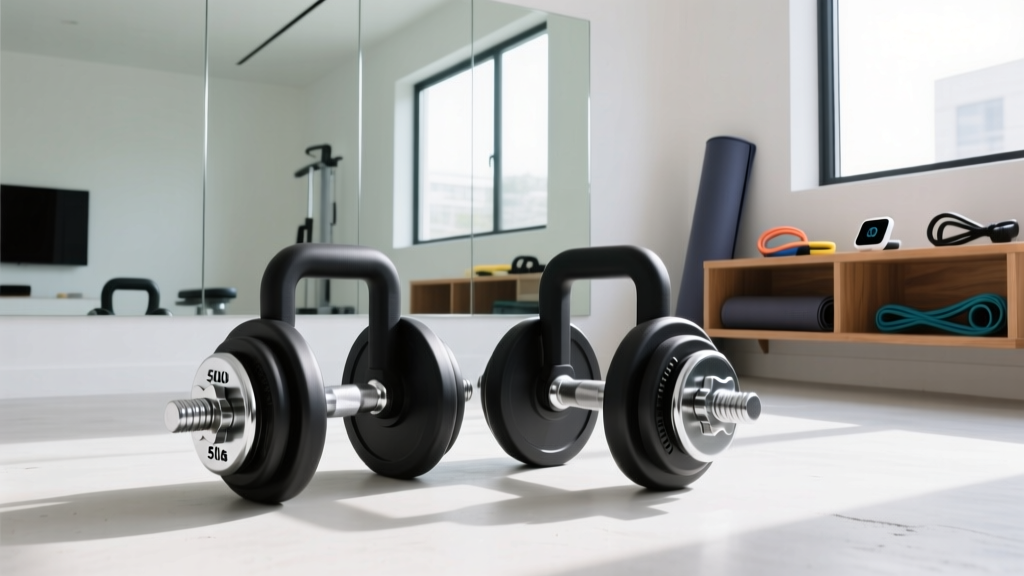
Loadable Dumbbells: The 2026 Lat Pulldown Dumbbell Alternative
Discover why loadable dumbbells with interchangeable plates are the top 2026 lat pulldown dumbbell alternative. Market trends, biomechanics, and top models.

The 2026 Home Gym Pivot: Modular Free Weights vs. Cable Towers
The home gym landscape of 2026 is defined by spatial efficiency and biomechanical precision. As urban living constraints squeeze dedicated workout spaces, the traditional $3,500 dual-cable functional trainer is losing market share to a highly specialized, modular contender. For athletes seeking a viable lat pulldown dumbbell alternative, the standard fixed-weight hex dumbbell falls dangerously short due to its fixed weight jumps and lack of rotational mechanics. Enter the loadable dumbbell with interchangeable plates—a rapidly trending equipment category that merges the space-saving footprint of free weights with the micro-progression and variable resistance profiles previously reserved for high-end cable machines.
According to recent fitness equipment market analyses, the demand for modular free-weight systems has surged over the last 24 months. Consumers are prioritizing progressive overload on isolation movements without sacrificing floor space or taking on second mortgages for commercial-grade cable stacks. The loadable Olympic dumbbell handle, paired with precision interchangeable plates, has emerged as the ultimate hybrid tool for back development.
Biomechanics of the Vertical Pull: Can a Dumbbell Really Replace the Lat Pulldown?
To understand why this specific equipment configuration is trending, we must examine the biomechanics of the latissimus dorsi. The lats are a massive muscle group responsible for shoulder extension, adduction, and internal rotation. A traditional cable lat pulldown relies heavily on vertical adduction (pulling the arms down toward the sides in the frontal plane). Gravity-dependent dumbbells cannot perfectly replicate a vertical cable pull on their own. However, a loadable dumbbell setup provides two highly effective, biomechanically sound alternatives that trigger identical hypertrophic responses:
- The Heavy Dumbbell Pullover (Sagittal Extension): By lying perpendicular on a bench and lowering a heavily loaded dumbbell behind the head, you engage the lats through shoulder extension. According to the ExRx biomechanics database, shoulder extension under a deep stretch is one of the most potent triggers for latissimus dorsi hypertrophy, effectively mimicking the tension profile of a straight-arm cable pulldown.
- The Anchored Pulley System (Vertical Adduction): In 2026, the most popular hack among space-conscious lifters is using a heavily loaded 2-inch Olympic dumbbell as a dead-weight floor anchor. By attaching a $35 portable pulley attachment and a lat bar to the loadable dumbbell, lifters can perform true seated vertical pulldowns. The interchangeable plates allow the anchor weight to be scaled perfectly to the user's pulling strength without the anchor lifting off the floor.
The Crucial Role of Interchangeable Fractional Plates
The true market differentiator in 2026 is not just the handle, but the interchangeable fractional plates. Isolation movements for the back demand precise load management. When performing a single-arm dumbbell pullover or a high-pulley lat extension, jumping from a 35 lb to a 40 lb fixed dumbbell often shifts the mechanical tension away from the lats and onto the synergists—specifically the long head of the triceps and the teres major.
Loadable dumbbells allow for the use of micro-plates (0.25 lb, 0.5 lb, and 1.25 lb urethane fractional plates). This enables exact progressive overload, allowing lifters to add just 1 lb to the movement per week. This micro-loading capability is the primary reason physical therapists and elite bodybuilders are abandoning fixed-weight racks in favor of loadable plate systems for lat isolation.
Market Data: Equipment Allocation Trends in 2026
Recent data highlights a distinct shift in consumer spending away from bulky all-in-one trainers toward high-density modular free weights. The global home fitness market continues to evolve, with Grand View Research noting a sustained preference for versatile, multi-functional equipment that caters to both heavy compound lifts and precise isolation work.
| Equipment Type | Avg Cost (2026) | Footprint (Sq Ft) | Micro-Load Capability | Lat Isolation Efficacy |
|---|---|---|---|---|
| Dual-Cable Functional Trainer | $3,200 - $4,500 | 24.5 | Excellent (2.5 lb increments) | Superior (True Vertical Pull) |
| Dial-Adjustable Dumbbells | $350 - $450 | 1.2 | Poor (5 lb jumps minimum) | Moderate (Bulky heads limit ROM) |
| Loadable Dumbbell + Plates | $180 - $275 | 3.5 | Superior (0.25 lb increments) | High (Pullovers & Anchored Pulls) |
'The ability to micro-load isolation movements is the single most overlooked variable in natural hypertrophy programming. A loadable dumbbell with fractional plates bridges the gap between the heavy loading of barbells and the precise targeting of cables.' — 2026 Hypertrophy Coaching Summit Notes
Top Loadable Dumbbell Configurations for Lat Isolation
Not all loadable handles are created equal. When using a dumbbell as a lat pulldown alternative—especially for pullovers where the weight hovers directly over the face and neck—sleeve length, knurling depth, and collar security are non-negotiable safety factors. Here are the top three models dominating the 2026 market:
1. Rogue Fitness Olympic Dumbbell Handle ($95.00)
The Rogue handle remains the gold standard for serious home gyms. It features a 15.5-inch overall length with a 6.5-inch loadable sleeve. The medium-depth volcano knurl provides excellent grip security during heavy, sweat-inducing pullover sets without tearing calluses. Its 1.9-inch shaft diameter mimics a standard barbell, making the transition from barbell rows to dumbbell pullovers seamless. Best for: Heavy anchor setups and maximum plate capacity.
2. Titan Fitness Loadable Dumbbell Handle ($69.99)
Titan's offering is slightly more compact at 14 inches overall, with a 5.25-inch loadable sleeve. While it holds slightly less weight than the Rogue, its aggressive knurl pattern is highly favored by lifters who struggle with grip fatigue during single-arm lat rows and heavy pulldowns. The shorter sleeve also means the plates sit closer to the hand, improving the balance and center of gravity during unilateral movements. Best for: Budget-conscious lifters prioritizing balance and grip.
3. Core Home Fitness 2-Inch Rotating Handle ($89.00)
Core Home Fitness introduced a game-changer for 2026: a loadable handle featuring internal needle bearings rather than standard bronze bushings. This allows the sleeves to rotate independently of the grip. When performing single-arm lat rows or anchored pulldowns, the rotational torque is absorbed by the bearings, drastically reducing wrist and elbow strain. Best for: Lifters with pre-existing wrist or elbow tendinopathy.
⚠️ Critical Safety Warning: Collar Selection for Pullovers
When performing dumbbell pullovers as a lat pulldown alternative, the weight is suspended directly over your face and neck. Standard spring-clip collars are strictly prohibited for this movement, as the outward horizontal force can cause them to slip. You must use lock-jaw collars (e.g., Rogue HG 2.0 or OSO Pro collars) that utilize a mechanical locking tab to secure the interchangeable plates to the sleeve.
Execution Guide: The 'Anchored' Lat Pulldown Hybrid Protocol
To maximize your loadable dumbbell as a true lat pulldown alternative, implement this hybrid protocol into your next back day. This setup requires your loadable dumbbell, a set of plates, a portable door/floor pulley attachment, and a single D-handle.
- The Anchor Setup: Load the dumbbell to a weight that is at least 20% heavier than your maximum single-arm pulldown strength (e.g., if you pull 60 lbs, load the dumbbell to 75 lbs). Place it on a rubber mat to prevent sliding.
- The Rigging: Run the nylon strap of your portable pulley system securely around the center knurled shaft of the dumbbell. Attach the carabiner to your single D-handle.
- The Execution: Kneel on the floor or sit on a low plyo box. Grasp the D-handle with a pronated (overhand) grip. Initiate the pull by driving your elbow down toward your hip, focusing on scapular depression and shoulder adduction.
- The Eccentric: Allow the weight to pull your arm upward and slightly across your body, achieving a deep stretch in the latissimus dorsi before initiating the next rep.
Cost-Benefit Analysis: Loadable Plates vs. All-In-One Trainers
From a financial perspective, the loadable dumbbell route offers an undeniable ROI for the space-constrained lifter. A premium setup—including the Rogue handle ($95), a pair of heavy-duty lock-jaw collars ($45), and 100 lbs of calibrated urethane interchangeable plates ($160)—totals roughly $300.
Compare this to a commercial-grade functional trainer ($3,500+) or even a mid-tier cable crossover ($1,200), and the financial advantage is stark. Furthermore, the interchangeable plates used on the loadable dumbbell can be instantly transferred to a standard Olympic barbell for deadlifts and squats, a level of cross-compatibility that dial-adjustable dumbbells and dedicated cable machines simply cannot offer.
Final Verdict for the Space-Conscious Lifter
As we move deeper into 2026, the narrative that you need a massive cable stack to build a wide, thick back is officially dead. A high-quality loadable dumbbell with interchangeable plates provides the micro-loading precision, rotational mechanics, and anchoring versatility required to stimulate the latissimus dorsi from every biomechanical angle. By leveraging heavy pullovers and anchored pulley hybrids, lifters can achieve elite-level back development in a fraction of the space and at a fraction of the cost.
More gear to consider
All reviews
Best Loadable Dumbbells for Deltoids: 2026 Hands-On Review
Home Gym Setup: Using Neoprene Dumbbells for Legs Effectively

Rack vs Stand: Best for One Legged Hip Thrust With Dumbbell

Best Dumbbell Racks 2026: Storage for Heavy Dumbbell Hack Squats
Flying With Dumbbells? The Loadable Plate Budget Breakdown
