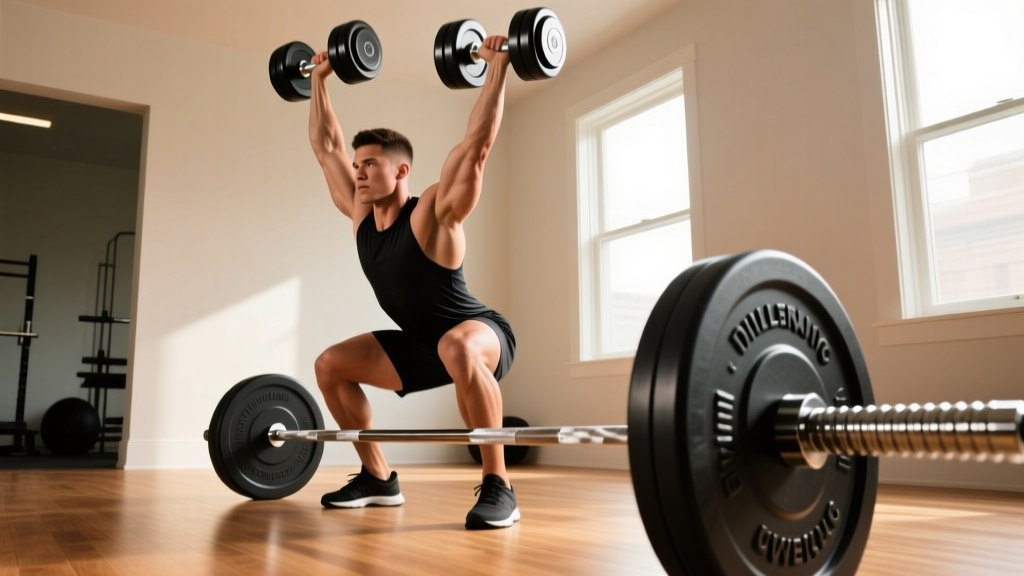
Power Cleans with Dumbbells: Mistakes & Barbell Knurling Guide
Troubleshoot common power cleans with dumbbells mistakes and learn how to upgrade with our Olympic barbell buying guide on weight, diameter, and knurling.

Power cleans are a staple in athletic performance programming, renowned for developing explosive hip extension, rate of force development, and central nervous system priming. While many lifters begin their Olympic lifting journey performing power cleans with dumbbells, this implement eventually introduces severe biomechanical bottlenecks. As you progress past the intermediate stage, the physical limitations of dumbbells force compensatory movement patterns that can stall your power output and increase injury risk.
This comprehensive troubleshooting guide dissects the most common mistakes lifters make when performing power cleans with dumbbells. More importantly, it provides a definitive 2026 Olympic barbell buying guide focused on shaft weight, diameter, and knurling profiles, ensuring you select the exact equipment needed to break through your explosive plateau.
The Biomechanical Ceiling: Why Dumbbells Fail the Power Clean
The dumbbell power clean is an excellent regressional tool for beginners learning the triple-extension sequence (ankles, knees, and hips). However, as the load increases, the implement's geometry works against human anatomy. According to biomechanical analyses of the clean pull, the barbell allows the load to travel in a single, unified vertical path close to the body's center of mass. Dumbbells, conversely, split the load laterally, demanding immense stabilization from the rotator cuff and altering the optimal bar path.
⚠️ The 60-Pound Threshold: Most strength coaches agree that once a lifter can comfortably clean 60 lb. to 70 lb. dumbbells for reps, the risk-to-reward ratio shifts. The grip demands and lateral instability begin to overshadow the actual hip power being developed.Troubleshooting the 3 Most Common Dumbbell Mistakes
Before discarding your dumbbells, audit your technique. If you are experiencing any of the following three issues, it is a clear indicator that your equipment is limiting your neurological output.
1. The 'Hex Bump' During the Second Pull
The second pull (the explosive shrug and jump) requires the implement to brush against the upper thigh. When using urethane or rubber hex dumbbells, the corners of the hexagon frequently collide with each other or dig into the femurs during the extension phase. This causes lifters to subconsciously loop the weights outward in a 'U' shape to avoid impact, entirely bleeding the vertical force vector required for a successful catch.
2. Grip Failure and Asymmetric Loading
Standard commercial dumbbells feature mild, often worn-down knurling or smooth chrome handles. To hold 80 lb. dumbbells during a violent hip extension, lifters over-grip, prematurely fatiguing the forearm flexors. Furthermore, if your dominant arm pulls slightly faster than your non-dominant arm, the asymmetric loading can torque the thoracic spine mid-air, leading to uneven catches and shoulder impingements.
3. Incomplete Triple Extension
Because dumbbells hang at the sides rather than in front of the hips, lifters often fail to achieve full hip extension. They 'arm pull' the weights up rather than using the hips to launch them. If your elbows are bending before your hips and knees fully lock out, the dumbbell's lateral position is likely ruining your kinetic chain sequencing.
The Equipment Pivot: Transitioning to the Olympic Barbell
When troubleshooting reveals that the implement is the point of failure, it is time to invest in an Olympic barbell. The transition from dumbbells to a barbell centralizes the load, allows for the use of the hook grip, and enables the bar to glide seamlessly up the body. However, not all barbells are created equal. Buying the wrong barbell in 2026 can result in bent shafts, torn calluses, and failed lifts.
Olympic Barbell Buying Guide: Decoding Shaft Weight and Diameter
The shaft is the business end of the barbell. For Olympic weightlifting movements like the power clean, the diameter and tensile strength of the shaft dictate how the bar behaves during the violent transition from the pull to the catch.
Shaft Diameter: 28mm vs. 29mm
- 28mm (Olympic Weightlifting Standard): This is the mandatory diameter for IWF competition. A 28mm shaft provides optimal 'whip' (elastic deformation) which aids in pulling the lifter under the bar during the third pull. It also accommodates the hook grip for lifters with smaller hands.
- 28.5mm (Hybrid/Training): Bars like the Rogue 28MM Training Bar or American Barbell Cali Bar often sit right around 28mm to 28.5mm, offering a balance of whip for cleans and rigidity for squats.
- 29mm (Powerlifting Standard): Avoid 29mm shafts (like the standard Ohio Power Bar) for power cleans. The thicker shaft maximizes rigidity for heavy back squats but severely restricts the hook grip and lacks the whip necessary for a smooth turnover in the clean.
Tensile Strength and Weight Tolerances
Tensile strength, measured in PSI (pounds per square inch), indicates the point at which the steel will permanently deform. When you drop a loaded barbell from the shoulders after a missed power clean, the impact force is immense.
In 2026, any reputable Olympic weightlifting bar must feature a minimum tensile strength of 190,000 PSI. Premium competition bars from brands like Eleiko or Uesaka push this to 215,000+ PSI, ensuring the bar will never permanently bend under dynamic dropping.
Ensure the bar you purchase is rated for dynamic drops, not just static weight capacity. A bar with a 1,000 lb. static rating but only 165,000 PSI tensile strength will bend the first time you drop 300 lbs. from the rack position.
The Knurling Matrix: Choosing Your Grip Pattern
Knurling is the cross-hatched pattern machined into the steel shaft. It is the single most critical factor for grip security during the first and second pulls of a power clean. The aggressiveness, depth, and geometry of the knurling vary wildly between manufacturers.
| Knurl Profile | Geometry & Feel | Best For | Example Models (2026) |
|---|---|---|---|
| Volcano | Peaks with a small crater in the center. Grippy but not tear-inducing. | Olympic Lifting, High-Volume Cleans | Rogue 28MM Training Bar, Rep Fitness Excalibur |
| Mountain | Sharp, aggressive peaks. Bites deeply into the skin. | Powerlifting, Heavy Deadlifts (Avoid for high-rep cleans) | Rogue Ohio Power Bar, SBD Barbell |
| Hill | Rounded, shallow peaks. Very mild, often found on cheap bars. | Beginners, Budget Home Gyms | Generic Amazon/Big Box Store Bars |
The Center Knurl Debate
For dedicated weightlifters who only perform cleans, snatches, and front squats, a smooth center shaft or a very passive center knurl is preferred to prevent tearing the skin on the collarbone during the catch. However, if your programming includes heavy back squats immediately following your power cleans, a center knurl is mandatory to prevent the bar from sliding down your traps. Look for IWF hash marks (spaced 910mm apart) to ensure your grip width is perfectly symmetrical on every single set.
Final Verdict: Upgrading Your Home Gym in 2026
Power cleans with dumbbells are a fantastic entry point, but they are ultimately a temporary bridge. Once you hit the 60 lb. threshold per hand, the biomechanical compromises—hex bumping, asymmetric pulling, and grip failure—will actively sabotage your explosive development. Transitioning to a dedicated 28mm Olympic weightlifting bar with volcano knurling and a minimum 190,000 PSI tensile strength is not just an equipment upgrade; it is a neurological necessity. By centralizing the load and securing your grip via the hook grip, you unlock the true force-production potential of your posterior chain, turning stalled plateaus into record-breaking PRs.
More gear to consider
All reviews
Cast Iron vs Competition Kettlebells & Bowflex SelectTech 1090 Dumbbell

Cast Iron vs Competition Kettlebell Care & One Legged RDL Dumbbell Tips

Space-Saving Gym: Kettlebells & How to Work Tricep with Dumbbells

Power Rack vs Squat Rack vs Squat Stand for a Female Lower Body Dumbbell Workout

Rubber Hex vs Urethane Dumbbells for Your Beginner Dumbbell Workout Plan PDF
