Loadable Dumbbells for Rear Dumbbell Flys: Value Breakdown
Is investing in loadable dumbbells worth it for rear dumbbell flys? We break down the budget, biomechanics, and best value models for your home gym.

The Biomechanical Challenge of Rear Dumbbell Flys
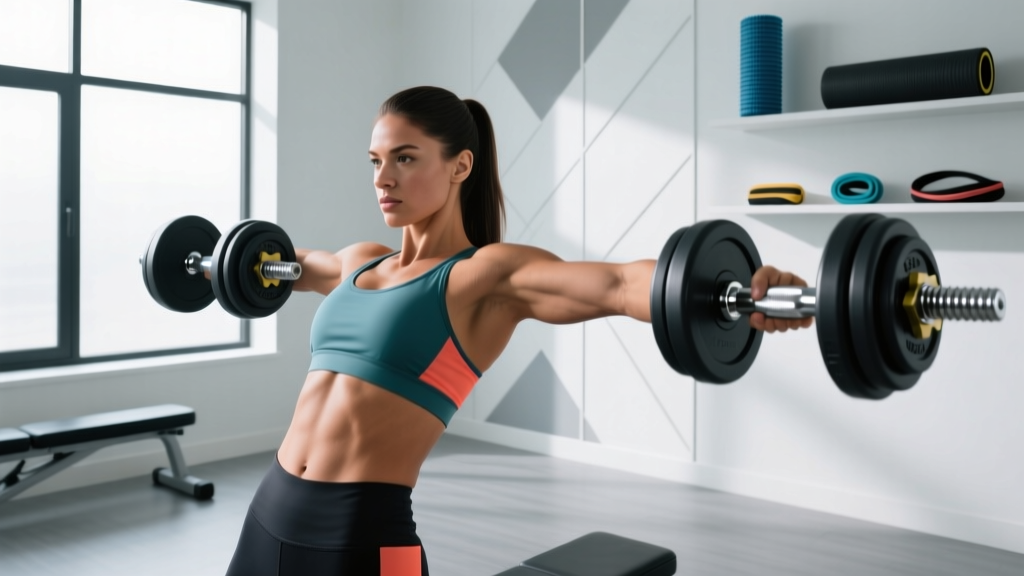
When building a home gym on a budget, the posterior chain often gets the most attention, but the posterior deltoids are equally critical for shoulder health and aesthetic balance. Performing strict rear dumbbell flys is notoriously difficult, not just because of the muscle's small size, but because of the unforgiving biomechanics involved. According to ExRx.net's biomechanical breakdown, the rear deltoid functions primarily to horizontally abduct the shoulder. Because the lever arm is longest when the arm is parallel to the floor, the mechanical tension on the joint is immense, meaning lifters typically require much lighter loads for rear flys compared to pressing movements.
This creates a unique equipment dilemma. Most commercial gym-goers grab a pair of 15 or 20-pound fixed hex dumbbells and swing through the motion, allowing the trapezius and rhomboids to hijack the movement. To truly isolate the rear delt, you need precise weight increments, an ergonomic handle that allows for natural wrist pronation, and a compact weight profile that doesn't alter your center of gravity when bent over. This is where the debate between fixed dumbbells and a loadable dumbbell with interchangeable plates becomes a critical budget and value analysis.
The Micro-Loading Rule for Rear Delts
The rear deltoids are a small, easily fatigued muscle group. Jumping from 15 lbs to 20 lbs represents a 33% increase in total load. The American College of Sports Medicine (ACSM) emphasizes that smaller muscle groups require smaller progressive overload increments to avoid form breakdown. Without 2.5 lb or 5 lb micro-jumps, lifters inevitably resort to momentum, negating the isolation benefit of the fly.
Budget Breakdown: Fixed vs. Loadable Systems
To determine the true value of loadable dumbbells for rear delt training, we must look at the cost-per-pound and the functional utility of the equipment. Building a dedicated 'rear delt zone' with fixed rubber hex dumbbells is a massive capital expenditure. Conversely, loadable systems offer a spectrum of value depending on their design.
| System Type | Est. Cost (10-30lb Range) | Micro-Loading Capability | Ergonomic Score for Flys |
|---|---|---|---|
| Fixed Rubber Hex | $280 - $350 | Poor (Requires buying new pairs) | Excellent |
| Standard Spinlock + Cast Iron | $85 - $120 | Excellent (1.25lb plates) | Good (Grip dependent) |
| Olympic Loadable Handles | $220 - $260 | Excellent (Fractional bumpers) | Excellent |
| Dial-Adjustable (e.g., Bowflex) | $349 - $399 | Poor (5lb jumps minimum) | Poor (Bulky profile) |
| Nuobell / Snode (Traditional Profile) | $350 - $420 | Moderate (5lb jumps) | Very Good |
Evaluating Loadable Systems for Rear Delt Isolation
Not all interchangeable plate systems are created equal. When your torso is parallel to the floor during a rear dumbbell fly, the physical dimensions of the dumbbell head can literally block your range of motion or force your wrists into awkward extension. Here is how the top loadable categories stack up for this specific movement.
1. Traditional Spinlock Handles with Cast Iron Plates
For the strict budget analyst, standard 1-inch spinlock handles paired with cast iron plates remain the undisputed value champion. A pair of chrome spinlock handles costs roughly $30. Sourcing used cast iron plates at $1.00 to $1.25 per pound means you can build a highly versatile 10 to 30-pound range for under $100. More importantly, spinlock handles accept 1.25 lb fractional plates. This allows you to progress your rear dumbbell flys from 12.5 lbs to 13.75 lbs, honoring the ACSM's guidelines for small muscle group progression.
The Drawback: The star nuts or spinlock collars can dig into your forearms during the eccentric phase of a fly if the plates are pushed too close to the handle's center. Furthermore, cheap spinlock handles often lack adequate knurling, making grip security an issue when your hands get sweaty during high-rep rear delt burnout sets.
2. Olympic Loadable Dumbbell Handles
If you already own a home gym with Olympic plates, investing in a pair of Olympic loadable dumbbell handles (such as those from Titan Fitness or Rogue Fitness) is a phenomenal mid-tier value. Priced between $110 and $140 per pair, these handles feature thick, heavily knurled shafts and robust spring collars. Because they utilize standard Olympic plates, you can use fractional change plates (like 0.5 lb or 1 lb steel plates) to micro-load your rear flys with surgical precision.
The Drawback: Olympic plates are physically massive. Even a 10-pound Olympic bumper plate has a large diameter. When performing rear flys, the outer edges of the plates can clash together at the top of the concentric contraction, artificially limiting your range of motion and preventing the peak contraction necessary for rear delt hypertrophy.
3. Premium Adjustable 'Loadable' Hybrids (Nuobell / Snode)
While technically dial-adjustable, systems like Nuobell mimic the exact dimensions of a traditional loadable dumbbell by using interlocking steel plates along a central bar. At roughly $399 for a 50 lb set, they are a premium investment. However, for rear dumbbell flys, they offer the best of both worlds: the compact, traditional profile that allows for full horizontal abduction without plate-clashing, and a solid, knurled steel handle that won't flex or rattle. While they lack built-in 1.25 lb micro-adjustments, their 5 lb increments are far superior to the bulky cages of block-style adjustable dumbbells.
Expert Warning on Block-Style Dumbbells: Avoid cage-style adjustable dumbbells (like PowerBlock) for rear flys. The enclosed rectangular cage restricts natural wrist pronation and physically blocks the dumbbell from crossing your body's midline at the top of the movement, severely limiting posterior deltoid activation.
The True Cost of Ownership: Hidden Fees and Failure Modes
When analyzing the budget of free weights, the initial purchase price is only half the equation. Loadable dumbbells with interchangeable plates introduce specific failure modes and hidden costs that fixed dumbbells simply do not have.
- Plate Rattle and Noise: Cheaper loadable handles with loose tolerances will rattle violently during the deceleration phase of a rear fly. This isn't just annoying; the micro-vibrations can cause grip fatigue, forcing your forearms to fail before your rear delts do.
- Collar Degradation: Spinlock threads can strip over time if cross-threaded when loading small 1.25 lb plates. Replacing handles or collars adds $20-$40 to your long-term budget.
- Flooring Damage: If you are dropping your loadable dumbbells after a grueling set of rear flys, cast iron plates on standard handles will crack your rubber flooring. You must factor in the cost of high-density horse-stall mats ($50-$80 per 4x6 sheet) to protect your subfloor.
- Time Tax: Loading and unloading 1.25 lb and 2.5 lb plates takes time. If you are doing drop-sets for rear delts (e.g., 20 lbs, then 15 lbs, then 10 lbs), manually unscrewing spinlock collars will allow your muscles to recover too much between drops, reducing metabolic stress.
Strategic Recommendations for Your Home Gym Budget
So, is a loadable dumbbell system the right financial move for mastering rear dumbbell flys? The answer depends entirely on your current equipment ecosystem and your tolerance for setup time.
If you are starting from scratch with a strict sub-$150 budget, standard spinlock handles with cast iron and fractional plates offer unmatched value. You get the exact micro-loading capabilities required for strict rear delt isolation, and the traditional handle profile ensures perfect biomechanics. The 'time tax' of changing plates is the trade-off for saving over $200 compared to premium adjustable sets.
If you already own a rack and Olympic plates, Olympic loadable handles are a no-brainer, provided you are mindful of plate diameter clashing at the top of the movement. Stick to steel change plates rather than thick bumpers to preserve your range of motion.
Finally, if you have a $400+ budget and despise the slow loading times of spinlocks, investing in a Nuobell or Snode traditional-profile adjustable set is the ultimate value play. While you sacrifice the 1.25 lb micro-loading, the ability to instantly twist the handle to drop 5 lbs for a rear fly drop-set, combined with a perfectly balanced, traditional center of gravity, makes it the most ergonomic and time-efficient loadable solution on the market for 2026.
Frequently Asked Questions
Can I use ankle weights to micro-load my rear dumbbell flys?
Yes. If you own a dial-adjustable dumbbell that only allows 5 lb jumps, wrapping a 1.25 lb or 2.5 lb magnetic ankle weight around the handle or your wrist is a highly effective, budget-friendly hack to achieve the micro-loading required for rear delt progression without buying a new set of loadable handles.
Why do my traps take over when I use heavier loadable dumbbells?
The trapezius is a much stronger muscle group than the rear deltoid. When the load is too heavy, or when you jump up 5 lbs too quickly, the body instinctively recruits the traps to retract the scapula rather than allowing the rear delt to horizontally abduct the shoulder. Focus on a 'soft' scapular position and use lighter, micro-loaded interchangeable plates to maintain strict isolation.
Are urethane-coated interchangeable plates worth the extra cost?
For a home gym, urethane plates cost roughly $3.00 to $4.00 per pound, compared to $1.50 for raw cast iron. While urethane eliminates the 'iron smell' and reduces noise when plates clink together during flys, it does not change the biomechanics of the movement. For strict budget analysis, raw cast iron paired with a silicone sleeve or proper flooring offers better financial value.
More gear to consider
All reviews
Power Rack vs Squat Rack: Beyond Dumbbell Exercises at Home No Bench

Best Dumbbell for One Arm Bent Over Row: Rubber vs Urethane
Beyond the Dumbbell Yoga Workout: Olympic Barbell Weight & Knurling

Olympic vs Standard Plates & What Muscle Does Dumbbell Row Work?
Cast Iron vs Competition Kettlebells + Adding Resistance Bands to Dumbbells
