Space-Saving Loadable Dumbbells for Dumbbell Circuit Training
Maximize your home gym layout with loadable dumbbells. Discover space-saving designs and layouts optimized for effective dumbbell circuit training.

In the evolving landscape of home fitness in 2026, square footage remains the ultimate premium. Urban dwellers and garage gym enthusiasts alike are constantly battling spatial constraints, especially when attempting to implement high-density workout modalities. Mayo Clinic experts consistently highlight that efficient strength training requires minimal equipment but maximum versatility. This is where dumbbell circuit training shines—keeping heart rates elevated while targeting multiple muscle groups. However, executing a proper circuit traditionally requires a massive rack of fixed-weight dumbbells, which can easily consume an entire wall of your home gym.
The spatial antidote? Loadable dumbbells with interchangeable plates. By shifting from fixed pairs to plate-loaded handles, you can reclaim up to 80% of your gym's footprint without sacrificing the biomechanical benefits of free weights. In this guide, we break down the exact spatial math, handle specifications, and layout designs necessary to build a high-performance circuit training zone in a compact space.
The Spatial Math: Fixed Racks vs. Loadable Handles
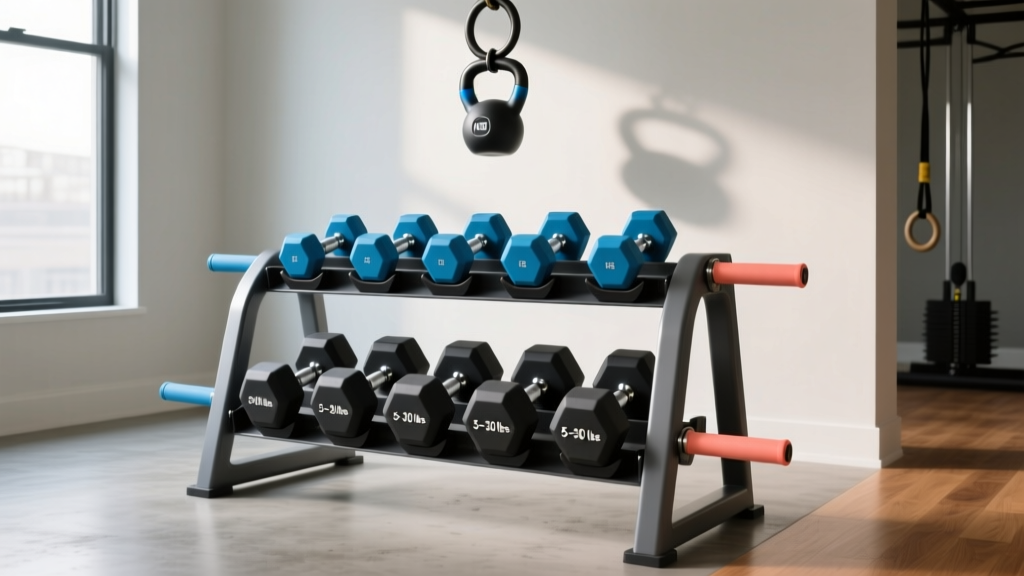
To understand the spatial advantage of loadable dumbbells, we must first quantify the footprint of traditional gear. A standard commercial 5 to 50-pound rubber hex dumbbell set (10 pairs) requires a three-tier A-frame or wall-mounted rack.
- Fixed Dumbbell Rack Footprint: Typically 96 inches wide by 28 inches deep, occupying roughly 18.6 square feet of floor space. Furthermore, you need an additional 3-foot clearance zone in front of the rack to safely pick up and drop heavy pairs.
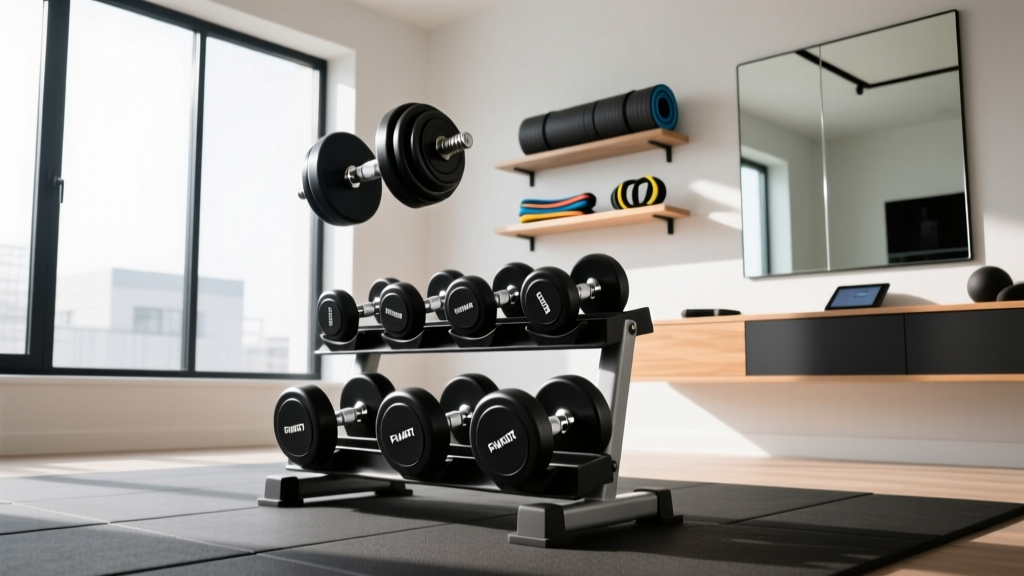
- Loadable Dumbbell Footprint: Two 20-inch Olympic loadable handles, paired with a compact vertical plate tree holding 200 lbs of calibrated steel or bumper plates, measures roughly 24 inches by 24 inches. This occupies just 4 square feet.
By switching to a loadable system, you save approximately 14.6 square feet of permanent floor space. In a standard 10x10 spare bedroom gym, this reclaimed space is critical for laying out a dedicated dumbbell circuit training mat, allowing for sprawling movements like renegade rows, dumbbell thrusters, and lateral lunges without striking a wall.
Choosing the Right Loadable Handle for Circuit Workflows
Not all loadable handles are created equal. When your goal is circuit training—where rest intervals are strictly capped at 30 to 60 seconds—the mechanics of the handle sleeve and collar system dictate your workout's flow. According to biomechanical data from ExRx, dumbbell stabilization requires a natural grip width; overly thick or unbalanced handles will prematurely fatigue your forearms during high-rep circuit sets.
1-Inch Standard vs. 2-Inch Olympic Sleeves
The market is split between 1-inch standard handles (typically secured with spin-lock star nuts) and 2-inch Olympic handles (secured with spring collars or lever locks). For circuit training, 2-inch Olympic handles are vastly superior. Standard spin-lock nuts require 15 to 20 rotations to tighten, completely destroying the rapid transition times required in circuit training. Olympic sleeves allow you to slide plates on and snap a lever-lock collar into place in under 3 seconds.
| Brand & Model | Sleeve Length | Collar Type | Approx. Price (Pair) | Best For |
|---|---|---|---|---|
| Titan Fitness 20" Olympic | 7.5 inches | Spring / Lever | $95.00 | Heavy loading (up to 100+ lbs per hand) |
| Rogue Loadable Handles | 6.5 inches | Spring Collar | $110.00 | Durability and hard chrome knurling |
| Yes4All 14" Standard | 5.5 inches | Spin-Lock Nut | $35.00 | Budget setups (Not recommended for circuits) |
Overcoming the Transition Time Bottleneck
The most common objection to using loadable dumbbells for dumbbell circuit training is the changeover time. If your circuit prescribes 15 reps of heavy dumbbell floor presses followed immediately by 15 reps of lighter dumbbell snatches, stripping and reloading plates can take 45 seconds—ruining your target heart rate zone.
Here are three expert strategies to engineer this bottleneck out of your layout and programming:
- The Dual-Handle Investment: Purchase two pairs of loadable handles. Dedicate Pair A to your heavy compound movements (e.g., 60 lbs) and Pair B to your lighter accessory movements (e.g., 25 lbs). This eliminates mid-circuit plate changes entirely.
- Ascending/Descending Pyramids: Program your circuit so that weight requirements scale sequentially. Start with your lightest plates for overhead presses, add 10 lbs for squats, and add another 10 lbs for deadlifts. You only add plates; you never strip them until the circuit is over.
- Fractional Plate Micro-Loading: Keep a small bowl of 0.5 lb and 1 lb fractional magnetic plates on your loading mat. This allows for instant, micro-adjustments without removing the primary collars.
Designing the "Triangle Workflow" Layout
Space optimization is not just about the footprint of the gear; it is about the flow of the user. For a highly efficient dumbbell circuit training zone, we recommend the "Triangle Workflow" layout. This minimizes unnecessary steps and keeps your central nervous system focused on the workout, not on navigating a cluttered room.
The Three Points of the Triangle
Imagine an equilateral triangle drawn on your gym floor, with each point roughly 4 to 5 feet apart.
- Point A: The Plate Storage Tree. A vertical, 10-peg plate tree. Vertical trees have a footprint of just 18x18 inches, compared to horizontal A-frames which require 4x2 feet. Store your bumpers on the bottom pegs and fractional/iron plates on the top pegs for ergonomic loading.
- Point B: The Loading Zone. A heavy-duty rubber horse-stall mat (4x6 feet) placed directly adjacent to the plate tree. This is where the handles live when not in use. The mat protects your floor from dropped collars and provides a tactile boundary for your loading station.
- Point C: The Training Zone. Your primary workout space. For dumbbell circuit training, you need a minimum clearance of your total wingspan plus 2 feet on all sides. For an average male with a 70-inch wingspan, this means a dedicated clear zone of roughly 8x8 feet.
"In a well-designed home gym, you should never have to take more than three steps to transition from your loading station to your training zone. Every extra step breaks the psychological intensity of a high-intensity circuit." - FitGearPulse Layout Design Framework, 2026
Plate Storage Solutions for Small Footprints
When utilizing loadable dumbbells, the plates themselves become the primary spatial challenge. To maintain a compact layout, avoid buying traditional thick rubber hex plates. Instead, invest in calibrated steel plates or competition bumper plates.
A 10-pound calibrated steel plate is roughly 0.6 inches thick, whereas a standard 10-pound cast-iron plate can be over 1.2 inches thick. By utilizing thin, dense plates, you can fit significantly more weight increments onto a compact 2-inch Olympic sleeve, reducing the total volume of your plate storage tree. Furthermore, steel plates allow for precise weight jumps (e.g., moving from 35 lbs to 37.5 lbs per hand), which is vital for progressive overload in upper-body circuit movements like lateral raises and rear delt flyes.
Frequently Asked Questions
Can I use loadable dumbbells for drop sets during a circuit?
Yes, but it requires strategic gear selection. If you are using standard spring collars, drop sets are too slow. We recommend using Troy Barbell V-Grip lever-lock collars or quick-release magnetic collars. These allow you to strip a 10lb plate off the sleeve in under two seconds, keeping your drop set intensity aligned with circuit training principles.
Will the plates rattle and throw off my balance during dynamic movements?
Plate rattle is a common failure mode with cheap handles that have poorly machined sleeves. To prevent this during dynamic circuit moves like dumbbell snatches or renegade rows, ensure your plates are tightly secured against the handle's inner flange. Using a high-quality Rogue Fitness or Titan handle with tight-tolerance chrome sleeves, combined with a snug spring collar, eliminates 95% of lateral plate shift.
How much weight can a 20-inch loadable dumbbell safely hold?
Most high-quality 20-inch Olympic handles are rated for 150 to 200 lbs per dumbbell. However, the limiting factor is usually sleeve space. A 7.5-inch sleeve can comfortably hold about 100 lbs worth of standard 2-inch thick bumper plates. If your circuit training involves heavy farmer's carries or shrugs requiring 120+ lbs per hand, you will need to use thinner calibrated steel plates to maximize sleeve real estate.
Final Thoughts on Space and Sweat
Transitioning to loadable dumbbells with interchangeable plates is one of the most intelligent spatial decisions you can make for a home gym in 2026. While it demands a slightly higher cognitive load during the programming phase to manage weight transitions, the spatial dividends are massive. By implementing the Triangle Workflow layout and investing in quick-release Olympic collars, you can execute elite-level dumbbell circuit training in a fraction of the square footage required by traditional fixed-weight racks. Reclaim your floor space, protect your walls, and keep your heart rate exactly where it belongs.
More gear to consider
All reviews
Maintaining Loadable Dumbbells for the Single Dumbbell Thruster

Rubber Hex vs Urethane Care for Chest and Tricep Dumbbell Exercises

Olympic vs Standard Plates: Abs Exercise Using Dumbbells Guide
Olympic vs Standard Plates: Avoiding Bowflex Dumbbell Recall Failures

Brachialis Dumbbell Workout: Dumbbell Rack Budget Guide