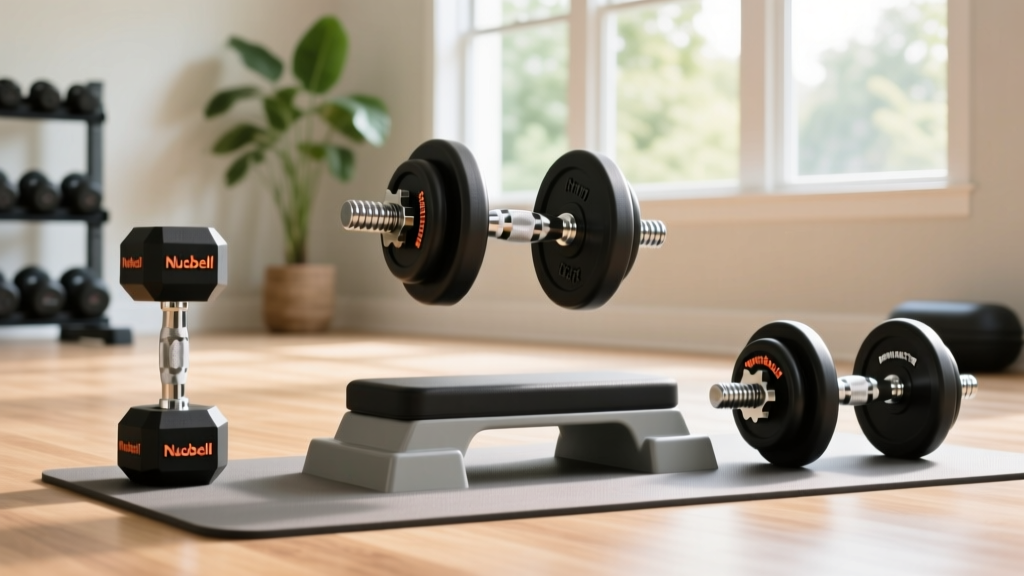
2026 Market Trends: Loadable Dumbbells for Dumbbell Calf Raises
Explore 2026 market trends for loadable dumbbells with interchangeable plates, optimized for heavy dumbbell calf raises and lower-leg hypertrophy.

The 2026 Pivot: Why Modularity is Beating Fixed Urethane
The home gym equipment market of 2026 is experiencing a definitive structural pivot. While fixed rubber and urethane dumbbells dominated the pandemic-era boom, the current landscape heavily favors modularity. Specifically, the loadable dumbbell with interchangeable plates has seen a massive surge in direct-to-consumer search volume and retail adoption. Why the sudden shift away from the convenience of fixed hex dumbbells? The answer lies at the intersection of supply chain economics and the biomechanical demands of heavy isolation work—most notably, the heavy dumbbell calf raise.
Market Insight: In 2026, the average cost per pound for commercial-grade fixed urethane dumbbells hovers around $3.80 to $4.50 due to sustained tariffs and shipping weights. Conversely, a pair of Olympic loadable handles requires a one-time investment of roughly $90 to $150, allowing users to leverage the fractional and standard plates they already own for barbell work.For advanced lifters and physical therapists alike, the triceps surae (the gastrocnemius and soleus muscles) represent a notorious hypertrophy bottleneck. These muscles are accustomed to moving the entire weight of the human body all day. To trigger growth, they require extreme mechanical tension and deep, loaded stretches. Fixed dumbbell racks in home gyms typically max out at 50 to 70 pounds per hand, forcing lifters into high-rep, low-load endurance territory. Loadable dumbbell handles shatter this ceiling, allowing users to stack 100+ pounds per hand using interchangeable plates, perfectly aligning with modern hypertrophy protocols.
The Biomechanical Bottleneck of Dumbbell Calf Raises
To understand the market demand for heavy loadable handles, we must examine the physiology of the lower leg. A landmark 2022 study published in Medicine & Science in Sports & Exercise by Maeo et al. demonstrated that training the calf muscles at long muscle lengths (the deep stretch position) yields significantly superior hypertrophic outcomes compared to shortened positions. You can read the full clinical breakdown of this stretch-mediated calf hypertrophy study on PubMed.
Executing a deep, heavy dumbbell calf raise requires the lifter to stand on a deficit block, lowering the heel well below the toes while holding massive loads. This creates two distinct engineering challenges for the equipment:
- Extreme Eccentric Shear: The bouncing or pausing at the bottom of the stretch places immense vertical shear force on the dumbbell sleeves and collars.
- Sleeve Clearance Limits: To achieve 100+ lbs per hand, you must stack multiple plates. If the sleeve is too short, or if the plates are too wide (like standard 45lb bumpers), the lifter cannot physically hold the dumbbell at their side without the plates scraping against their lateral thigh or knee.
The 2026 Plate-Loaded Dumbbell Handle Market Matrix
Not all loadable dumbbells are engineered equally. The market has bifurcated into standard (1-inch) and Olympic (2-inch) sleeve categories. For heavy dumbbell calf raises, the 2-inch Olympic sleeve is mandatory to accommodate high-density urethane grip plates and steel calibrations. Below is our 2026 market analysis of the top contenders:
| Brand / Model | Sleeve Type & Length | Max Load Capacity | 2026 Retail Price (Pair) | Verdict for Calf Raises |
|---|---|---|---|---|
| Yes4All Olympic Loadable | 2" Olympic / 10.5" | ~110 lbs (w/ Urethane) | $89.99 | Best Budget; Long sleeve fits multiple 25lb plates. |
| Rogue Fitness Loadable | 1" Standard / 8.5" | ~65 lbs | $145.00 | Superior knurling, but max load is too low for advanced calves. |
| Titan Fitness Plate-Loaded | 2" Olympic / 9.0" | ~100 lbs | $79.99 | Solid mid-tier; slightly shorter sleeve requires thin steel plates. |
| CAP Barbell Solid Handle | 1" Standard / 7.5" | ~45 lbs | $34.99 | Avoid for calves; yield strength fails under heavy eccentric loads. |
Hardware Failure Modes During Heavy Calf Raises
As a domain expert analyzing equipment failure rates, I must highlight the specific edge cases that occur when utilizing interchangeable plates for lower-leg isolation. The dumbbell calf raise is uniquely destructive to poorly engineered loadable handles.
⚠️ Critical Safety Warning: Collar MigrationThe oscillation at the bottom of a deep calf raise creates vertical kinetic energy. Standard wire spring collars will routinely slip off Olympic sleeves during this movement, resulting in a 45-pound steel plate dropping directly onto the lifter's foot or ankle. You must use clamp-style collars (e.g., Lockjaw or Rogue HG 2.0) with a minimum clamping force of 120 lbs.
- Sleeve Bending (Yield Strength Exceedance): Cheap chrome-plated handles often use hollow steel or low-grade aluminum for the sleeve. When loaded with 90+ lbs at the far edge of a 10-inch sleeve, the lever arm creates enough torque to permanently bend the sleeve downward, making plate removal impossible.
- Knurling Tear on Setup: To perform a standing dumbbell calf raise, you must pick up two 100lb loadable dumbbells from the floor or a low rack. The dumbbell rests against the lateral thigh during the deadlift-like pickup. Aggressive, poorly finished knurling on the handle will tear calluses before the set even begins. Look for handles with a moderate 'volcano' knurl pattern rather than sharp, machined ridges.
- Plate Width Interference: If you use standard rubber hex plates, their sheer width means you can only fit three per side on a 10-inch sleeve. To maximize load without sacrificing sleeve space, the 2026 meta dictates using calibrated steel plates or thin urethane grip plates, which are 40% thinner than traditional cast iron.
Strategic Buying Framework for Lower-Leg Isolation
If your 2026 training block prioritizes lower-leg development and you are transitioning to a plate-loaded system, follow this exact procurement and execution framework to maximize your return on investment and biomechanical output.
Step 1: Procure the Correct Handle Geometry
Purchase a pair of 50mm (Olympic) loadable handles with a minimum sleeve length of 10 inches. The Yes4All Olympic model remains the undisputed value leader for this specific application. Ensure the handle shaft diameter is between 32mm and 35mm to accommodate heavy grip demands without causing premature forearm fatigue before the calves fail.
Step 2: Source High-Density Interchangeable Plates
Do not use 45lb bumper plates for loadable dumbbells; the rubber is too wide, and the steel hub insert will scratch the dumbbell sleeves. Instead, invest in 10lb and 25lb urethane-coated steel grip plates. The urethane coating dampens the acoustic impact when the plates clink together during the concentric phase of the calf raise, and the integrated handles make loading and unloading significantly faster.
Step 3: Implement the Deficit Stretch Protocol
According to broader hypertrophy consensus documented in comprehensive muscle growth reviews on the NCBI database, mechanical tension in the lengthened position is the primary driver of hypertrophy. Pair your newly loaded 100lb dumbbells with a 3-inch wooden or steel deficit block. Perform a 3-second eccentric descent, pause for 1 full second in the deep stretch to eliminate the Achilles tendon's stretch reflex, and explode upward.
"The era of buying $800 pairs of fixed 120lb dumbbells just for calf raises and heavy shrugs is over for the intelligent home gym owner. The loadable dumbbell with interchangeable plates is the ultimate arbitrage play in 2026 fitness equipment economics." — FitGearPulse Market Analysis Team
Final Market Verdict
The trajectory of the free weights market is clear: consumers are demanding versatility, space efficiency, and cost-effectiveness without sacrificing the ability to apply extreme progressive overload. For stubborn muscle groups that require heavy, unilateral or bilateral isolation—like the gastrocnemius during dumbbell calf raises—the loadable dumbbell handle is no longer just a budget alternative to fixed weights. In 2026, it is the superior, data-backed choice for the serious hypertrophy enthusiast.
More gear to consider
All reviews
Cast Iron vs Competition Bells: Care & Convert Dumbbell to Kettlebell
Beyond the Dumbbells Emoji: Olympic vs Standard Plates Setup

Bumper vs Iron Plates: Beyond the Basic Meaning of Dumbbells

Best Adjustable Dumbbells for the Bent Over Dumbbell Row 2026

Rubber Hex vs Urethane Dumbbells vs Bowflex Dumbbells SelectTech 1090