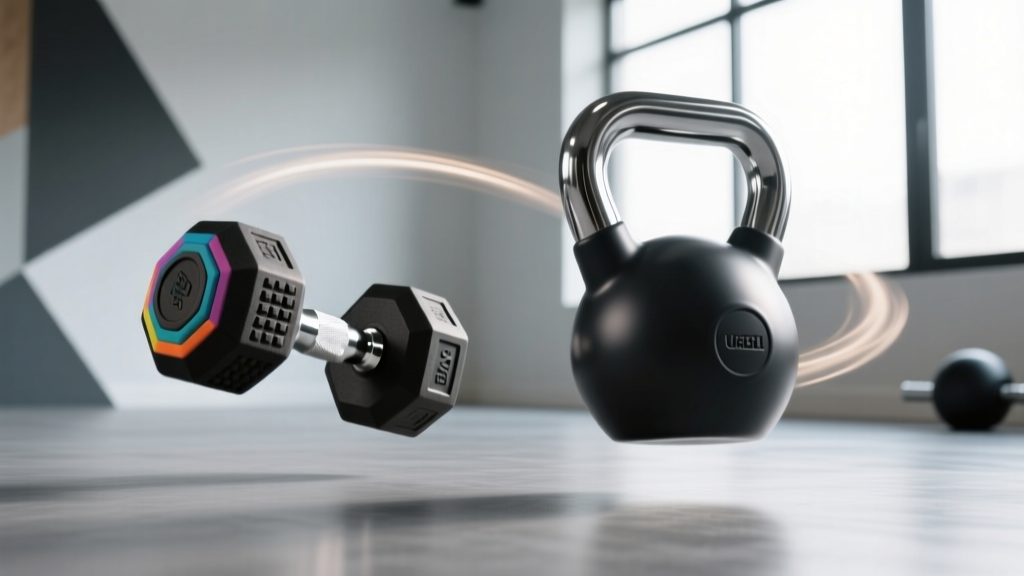
Dumbbell Swings Exercise: Rubber Hex vs Urethane Care
Discover how the dumbbell swings exercise impacts rubber hex vs urethane dumbbells. Expert maintenance tips, failure modes, and longevity care.

Most lifters treat dumbbells as static tools reserved for controlled presses, rows, and curls. But when you introduce the dumbbell swings exercise into your programming, you transform a simple cast-iron or steel implement into a high-velocity projectile. The hip-hinge mechanics of the swing generate massive centrifugal force, placing unique tensile and shear stresses on the handle-to-head junction. If you are deciding between rubber hex dumbbells and premium urethane dumbbells for a home or commercial gym where dynamic swings are on the menu, understanding their distinct failure modes and maintenance requirements is critical for long-term equipment survival.
The Biomechanical Toll of the Dumbbell Swings Exercise
To understand why maintenance protocols must differ based on material, we first have to look at the physics of the movement. According to a biomechanical analysis published in the Journal of Strength and Conditioning Research, swing-style hip hinge movements generate peak resultant forces that can exceed 3.5 times the static mass of the implement. When you swing a 40 lb dumbbell, the handle and head junction must withstand over 140 lbs of sheer and tensile force at the apex of the hip drive.
This repetitive, high-velocity loading exposes the structural weaknesses of budget-friendly equipment. While a standard bicep curl applies force linearly and predictably, the dumbbell swings exercise applies multi-planar torque, especially if the lifter shifts their grip or the implement rotates slightly in the hand during the backswing. Over hundreds of repetitions, this micro-torque degrades adhesives, loosens hardware, and stresses outer coatings.
CRITICAL SAFETY WARNING: Never perform the dumbbell swings exercise with dial-adjustable or pin-lock adjustable dumbbells. The extreme centrifugal force can dislodge the internal retention pins or shatter the plastic casing, causing weight plates to eject mid-swing. Always use solid, fixed-head dumbbells for dynamic ballistic movements.Material Matrix: Rubber Hex vs. Urethane
When outfitting a gym for dynamic movements, the two most common fixed-dumbbell options are vulcanized rubber hex and cast polyurethane (urethane). Below is a structural and economic comparison based on current 2026 market data from manufacturers like Rep Fitness and Rogue Fitness.
| Feature | Rubber Hex (e.g., CAP, Rep) | Urethane (e.g., Rogue, Eleiko) |
|---|---|---|
| Average Cost | $1.50 - $2.50 / lb | $3.50 - $6.00+ / lb |
| UV & Ozone Resistance | Low (Prone to dry rot) | Extremely High |
| Odor Off-gassing | High (Requires airing out) | Virtually None |
| Impact Absorption | High (Bounces slightly) | Medium (Deadens impact) |
| Junction Vulnerability | High (Head separation risk) | Low (Encapsulated core) |
Dynamic Failure Modes: What Breaks First?
The Rubber Hex Rattle and Head Separation
Many budget rubber hex dumbbells utilize a friction-welded or bolted steel head attached to a chrome or cerakote handle. Under the repetitive outward pull of the dumbbell swings exercise, friction welds can develop micro-fractures. If your rubber hex dumbbells feature an exposed hex bolt at the end of the handle, the vibration from swings will gradually back the bolt out. This results in the infamous 'dumbbell rattle' and, eventually, catastrophic head separation mid-swing. Furthermore, the vulcanized rubber coating is highly susceptible to tearing where the lifter's knuckles repeatedly grind against the inner collar during high-rep swing sets.
Urethane Edge Chipping vs. Core Integrity
Urethane dumbbells are cast with a steel core completely encapsulated in polyurethane. This means there is no physical seam or bolt at the handle junction for the centrifugal force to exploit. However, urethane is a harder material than rubber. If a lifter loses their grip during a heavy swing set and drops the dumbbell onto bare concrete or unsealed wood, urethane can suffer edge micro-chipping. While this does not compromise the structural integrity of the swing, it degrades the aesthetic and can leave sharp burrs on the hex edges.
Step-by-Step Maintenance Protocol for Dynamic Loading
To maximize the lifespan of your equipment when subjected to ballistic movements, implement the following maintenance schedule.
- The Post-Swing Wipe Down: The dumbbell swings exercise generates immense grip friction and sweat. Sweat contains urea and lactic acid, which actively breaks down the sulfur bonds in vulcanized rubber. After every session, wipe the handles and inner collars with a microfiber cloth dampened with a 10:1 water-to-white-vinegar solution. Never use bleach or ammonia-based cleaners, as these accelerate rubber dry-rot.
- Torque Verification (For Bolted Hex): If your rubber hex dumbbells have visible hex bolts at the ends of the handles, inspect them monthly. Use a torque wrench set to 45 Nm (Newton-meters) to ensure they are tight. If a bolt consistently backs out due to swing vibrations, apply a single drop of blue Loctite (medium strength) to the threads before re-tightening.
- Environmental Conditioning: Rubber hex dumbbells require periodic rehydration to prevent the outer shell from cracking under the stress of dynamic drops. Every six months, apply a light coat of 303 Aerospace Protectant or a silicone-based rubber conditioner. Wipe off the excess after 15 minutes. Urethane requires zero conditioning; a simple wipe-down with mild dish soap and water is sufficient.
- Chalk Removal: Magnesium carbonate chalk gets trapped in the knurling and the porous surface of rubber heads. Use a stiff nylon bristle brush (never wire) to dislodge chalk from the handle knurling weekly to prevent corrosion on chrome handles.
Expert Verdict: Which Survives the Swing Test?
If the dumbbell swings exercise is a staple in your programming, urethane dumbbells are the undisputed winner for longevity and safety. The fully encapsulated steel core eliminates the risk of head separation caused by centrifugal force, and the non-porous surface resists the acidic degradation of heavy sweat. While the upfront cost is significantly higher (often double or triple that of rubber hex), the elimination of hardware maintenance and the absence of UV dry-rot make urethane a lifetime investment.
However, if you are on a strict budget and must purchase rubber hex dumbbells, prioritize models that feature solid friction-welding over exposed bolt-on heads, and strictly adhere to the monthly torque and cleaning protocols outlined above. By respecting the unique biomechanical forces of the swing, you can safely utilize both materials while keeping your gym floor intact and your joints safe from equipment failure.
More gear to consider
All reviews
Dumbbell Racks for Seated Dumbbell Strict Press: 2026 Budget Guide

Top Dumbbell Racks & How to Clean Dumbbells to Prevent Rust

Space Optimization: Loadable Dumbbell Incline Bench Setups

How Low Should the Bench Be for Incline Dumbbell Press? (Barbell Guide)

Best Adjustable Dumbbells for a 5 Minute Dumbbell Arm Workout
