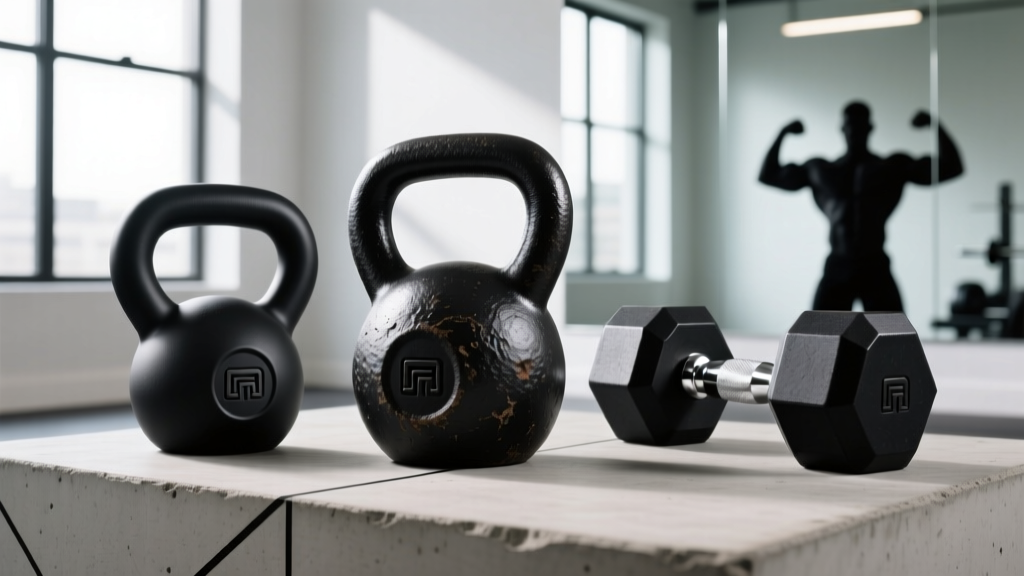
Cast Iron vs Competition Kettlebells & Dumbbell Shrugs for Back Trends
2026 market trends comparing cast iron vs competition kettlebells, alongside the rising demand for heavy dumbbell shrugs for back and trap development.

The 2026 Free Weight Market Shift: Ballistic vs. Isolation
The fitness equipment market in 2026 has bifurcated into two distinct but complementary philosophies: high-velocity ballistic conditioning and heavy, targeted isolation work. As hybrid training methodologies dominate commercial and home gym programming, equipment buyers are forced to make critical decisions about where to allocate their budgets. On one side of the spectrum, the kettlebell market is fiercely debating the merits of traditional cast iron versus precision-machined competition steel. On the other side, strength coaches are increasingly prescribing heavy dumbbell shrugs for back and posterior chain development, driving a massive surge in premium hex dumbbell sales.
According to Grand View Research's fitness equipment market reports, the global free weights segment has seen a sustained year-over-year growth of 7.4%, heavily driven by the 'garage gym' demographic seeking commercial-grade durability. This trend report breaks down the metallurgical, dimensional, and financial realities of the kettlebell market, while analyzing the parallel explosion in heavy dumbbell trap and back training.
Cast Iron vs. Competition Kettlebells: A Market Breakdown
The kettlebell industry is currently split between two primary manufacturing standards: powder-coated cast iron and competition-grade steel. Understanding the difference is no longer just about aesthetics; it fundamentally alters the biomechanics of your lifts and the longevity of your equipment.
Metallurgy and Dimensional Tolerances
Cast iron kettlebells, typically forged from gray or ductile iron, are the workhorses of the industry. Brands like Rogue Fitness and Rep Fitness utilize ductile iron for their premium lines due to its superior tensile strength and drop resistance. However, the defining characteristic of cast iron is its variable geometry. A 16kg cast iron bell will have a significantly smaller bell diameter and a narrower handle window than a 32kg bell. Furthermore, handle diameters can fluctuate between 33mm and 35mm depending on the weight class.
Conversely, competition kettlebells are machined from steel alloys and feature a hollow core (often filled with steel shot or precision weight blocks for lighter sizes). The critical selling point, as highlighted in BarBend's comprehensive kettlebell market analysis, is absolute dimensional consistency. Whether you are lifting an 8kg or a 48kg competition bell, the handle diameter remains a strict 35mm, the bell height is exactly 210mm, and the bell diameter is 210mm. This uniformity is non-negotiable for competitive kettlebell sport (Girevoy) and complex double-kettlebell front rack positions.
| Feature | Premium Cast Iron (e.g., Rogue) | Competition Steel (e.g., Kettlebell Kings) |
|---|---|---|
| Material | Ductile Iron, Powder-Coated | Steel Alloy, Hollow Core / Painted |
| Handle Diameter | Variable (33mm - 35mm+) | Uniform 35mm (All Weights) |
| Bell Dimensions | Scales with Weight | Uniform 210mm x 210mm |
| 2026 Avg Price/lb | $2.40 - $3.20 | $4.80 - $6.50 |
| Best Use Case | Grinds, Basic Swings, Goblet Squats | Snatches, Jerks, Double KB Work |
The Parallel Rise of Heavy Trap Training: Dumbbell Shrugs for Back
While kettlebells dominate the ballistic conditioning space, the hypertrophy and strength market has seen a massive pivot toward heavy, targeted upper-back development. Specifically, the programming of heavy dumbbell shrugs for back and trap synergy has become a staple in 2026 strength protocols.
Biomechanics and the Shift Away from Barbells
Historically, lifters relied on behind-the-neck or standard barbell shrugs to build the trapezius. However, modern sports science has heavily criticized the barbell shrug for locking the scapula into a fixed, internally rotated path that can impinge the shoulder joint over time. As detailed in expert guides on dumbbell shrug biomechanics, utilizing dumbbells allows the arms to hang naturally at the sides, aligning the resistance vector perfectly with the muscle fibers of the upper trapezius and levator scapulae.
Furthermore, when programming heavy dumbbell shrugs for back thickness, the middle and lower traps, along with the rhomboids and erector spinae, act as crucial isometric stabilizers. The static hold required to control 100lb+ dumbbells at the peak contraction taxes the entire upper back, making it a highly efficient movement for posterior chain development.
Market Demand for Urethane Hex Dumbbells
This biomechanical shift has directly impacted equipment manufacturing. In 2026, urethane hex dumbbells have largely cannibalized the market share previously held by rubber-coated and bare steel dumbbells. Urethane, measured typically at an 85A to 90A Shore durometer, offers superior drop-durability, zero off-gassing (eliminating the toxic 'new gym smell' associated with cheap rubber), and a dead-bounce profile that protects home gym flooring.
Industry Insight: The transition to urethane has driven prices up. While standard rubber hex dumbbells sit around $1.80 to $2.20 per pound, premium urethane hex sets from manufacturers like Fringe Sport and Rogue now command $3.20 to $4.50 per pound in the 2026 market, reflecting the raw material costs and advanced molding processes required to prevent handle loosening.
2026 Cost Analysis: Building the Ultimate Posterior Chain Station
For gym owners and serious home lifters looking to optimize both ballistic power and heavy back/trap hypertrophy, budget allocation is critical. Below is a comparative cost matrix for building a foundational posterior chain and trap station in 2026.
| Equipment Setup | Components Included | Estimated 2026 Cost | Primary Training Focus |
|---|---|---|---|
| Ballistic Power Setup | Pair of 24kg & 32kg Competition KBs | $650 - $820 | Explosive Hips, Snatches, Cleans |
| Heavy Isolation Setup | Pair of 100lb Urethane Hex Dumbbells | $640 - $900 | Dumbbell Shrugs for Back, Heavy Rows |
| Hybrid Athlete Setup | 1x 24kg Cast Iron KB + Pair 80lb Hex DBs | $450 - $580 | Swings, Farmer Walks, Trap Hypertrophy |
Expert Verdict: How to Allocate Your Equipment Budget
The decision between investing heavily in competition kettlebells versus premium dumbbells ultimately hinges on your primary training adaptation goals.
- Choose Competition Kettlebells If: Your programming involves high-rep kettlebell sport, double kettlebell front squats, or complex flow routines where a shifting center of mass and variable handle diameters would disrupt your wrist alignment and rack position.
- Choose Cast Iron Kettlebells If: You are primarily performing heavy goblet squats, basic swings, and Turkish get-ups. The lower price-per-pound allows you to purchase a wider variety of weight increments, which is ideal for progressive overload in grinding movements.
- Prioritize Heavy Urethane Dumbbells If: Your primary goal is muscle hypertrophy, specifically targeting the upper back and traps. Heavy dumbbell shrugs for back development require equipment that can withstand aggressive drops and provide a secure, knurled grip when your hands are fatigued. The hex profile prevents rolling, ensuring safety during heavy drop-sets.
As supply chains continue to stabilize in 2026, the smartest buyers are taking advantage of direct-to-consumer freight promotions. By pairing a single, versatile 24kg cast iron kettlebell for ballistic conditioning with a pair of heavy urethane hex dumbbells for targeted dumbbell shrugs for back and trap work, lifters can achieve a world-class posterior chain stimulus without exceeding a $600 equipment budget.
More gear to consider
All reviews
Power Rack vs Squat Rack vs Squat Stand + Incline Dumbbell Curl GIF

Barbell Collar & Clamp Types: Tricep Push Down Dumbbell Safety

Single Dumbbell Overhead Press: Beginner Guide for Neoprene Weights
Bumper vs Iron Plates & Centr 12 Sided Dumbbell Set Hands-On Review

Dumbbell Side Lateral Raises: Adjustable Dumbbell Mistakes & Fixes
