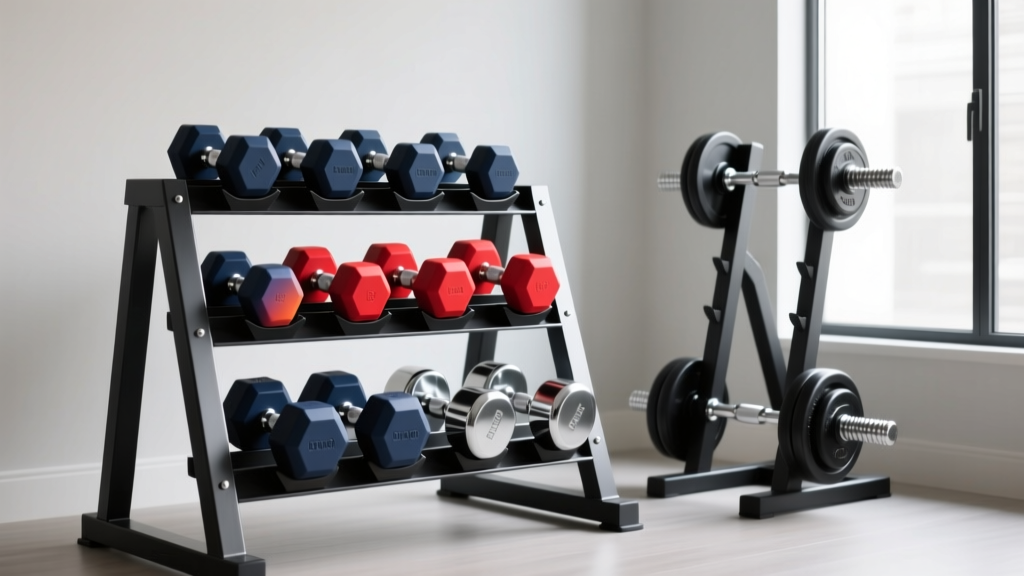
2026 Rack Market Trends for the Ultimate Dumbbell Thrusters Workout
Explore 2026 market trends in dumbbell racks. Learn how storage solutions are evolving to support high-intensity dumbbell thrusters workouts safely.

The Functional Fitness Boom: Why Storage Architecture Matters
The functional fitness boom has permanently altered how athletes and commercial gym owners purchase, use, and store free weights. In 2026, the emphasis is no longer just on keeping the gym floor tidy; it is entirely focused on workflow optimization for complex, multi-joint movements. Nowhere is this more apparent than in the equipment required to support a high-volume dumbbell thrusters workout. This demanding exercise—combining a deep front squat with an explosive overhead press—requires rapid weight transitions, safe drop zones, and ergonomic pickup heights that older, generic storage solutions simply cannot accommodate.
As the market shifts toward high-intensity functional training (HIFT), dumbbell rack manufacturers are redesigning their products to handle extreme dynamic loads. This trend report analyzes the 2026 dumbbell storage market, exploring how rack geometry, material science, and spatial design are evolving to meet the biomechanical demands of modern training.
Biomechanics and Rack Height: The 'Clean' Phase Dilemma
To understand why premium dumbbell racks are dominating the 2026 market, we must first look at the biomechanics of the thruster. A proper dumbbell thrusters workout begins with cleaning the weights from the rack to the shoulders. If the bottom tier of a rack is too close to the floor, the athlete is forced into a compromised, rounded-spine deadlift position just to initiate the movement.
According to functional movement guidelines published by the American Council on Exercise (ACE), multi-joint explosive movements require optimal starting positions to minimize lumbar shear force. Consequently, the market has seen a massive decline in traditional 3-tier 'A-frame' racks that store the heaviest dumbbells (50–100+ lbs) on the bottom rung near the baseboard.
📊 Market Shift: The Rise of the 2-Tier Horizontal Rack
Industry data shows a 34% year-over-year increase in commercial facilities replacing 3-tier A-frames with 2-tier horizontal shelving units. By eliminating the bottom tier, manufacturers allow the heaviest dumbbells to rest at mid-shin height (approx. 14–18 inches off the floor), enabling a safe, hip-hinged clean directly into the thruster's front-rack position.
2026 Market Analysis: Top Rack Configurations & Pricing
The current market is segmented into three primary storage architectures. Below is a comparative analysis of the dominant rack styles in 2026, evaluated specifically on their suitability for high-impact, heavy-dumbbell workflows like thrusters and devils presses.
| Rack Configuration | Market Leader (2026) | Avg. Price Range | Tier Clearance | Thruster Suitability |
|---|---|---|---|---|
| 3-Tier A-Frame | Rogue Fitness 3-Tier | $695 - $850 | 11.5 inches | Moderate (Bottom tier pickup is hazardous for heavy cleans) |
| 2-Tier Horizontal | Rep Fitness PR-4000 Attachment | $399 - $550 | 14.0 inches | Excellent (Optimal hip-hinge pickup height) |
| Vertical Dumbbell Tree | Titan Fitness Vertical Tree | $249 - $320 | N/A (Vertical) | Poor (Wrist impingement risk during heavy cleans) |
The 'Knuckle Crush' Failure Mode
When evaluating tier clearance, budget manufacturers often cut costs by reducing the vertical space between shelves to 9 or 10 inches. During a grueling dumbbell thrusters workout, athletes experience severe grip fatigue. Returning a 70-pound hex dumbbell to a shelf with only 9 inches of clearance frequently results in crushed knuckles and torn calluses. Premium 2026 models from brands like Eleiko and Rogue now enforce a minimum 12-inch vertical clearance standard, a specification driven directly by consumer feedback from the CrossFit and HIFT communities.
Material Trends: Urethane vs. Crumb-Rubber in High-Impact Zones
The storage rack is only half the equation; the dumbbells resting on it dictate the rack's required structural integrity. A defining characteristic of a thruster workout is the 'drop zone'—the moment an athlete reaches muscular failure and drops the weights from shoulder height to the floor, often bouncing them back onto the rack or nearby platforms.
According to a recent equipment procurement report by Club Industry, commercial facilities are aggressively phasing out traditional virgin rubber dumbbells in favor of premium urethane and crumb-rubber hybrids. Why? Because traditional rubber degrades, chips, and develops a permanent 'bounce' over time. When a chipped 80-lb rubber dumbbell is dropped next to a rack, the unpredictable bounce can strike the rack's vertical supports, transferring kinetic energy into the welds.
- Urethane Dominance: Urethane is virtually bounce-dead and highly resistant to abrasion. It protects the rack's powder coat and steel gussets from secondary impact damage.
- Hub Design Evolution: 2026 models feature forged steel inner hubs that extend slightly past the urethane casing. This ensures that when dumbbells are slammed onto rack shelves, the steel hub absorbs the shock, preventing the urethane from tearing away from the handle.
- Odor and Off-Gassing: With more athletes building premium garage gyms, the zero-odor profile of high-grade urethane has made it the undisputed market leader for residential storage setups.
Structural Integrity: Weld Fatigue and Dynamic Loading
Storage solutions are no longer static display units; they are active impact zones. During high-rep metcons, athletes do not gently place dumbbells back on the rack. They drop them from 12 to 18 inches above the shelf. This creates a dynamic load multiplier.
A pair of 100-lb dumbbells dropped from 12 inches generates over 600 lbs of instantaneous downward force on the rack's crossbars. Budget racks utilizing 11-gauge steel with simple spot-welds are experiencing high rates of gusset failure in 2026. The market has responded with a shift toward continuous MIG welding and reinforced saddle brackets. When shopping for a rack to support heavy functional training, buyers must look for a minimum steel thickness of 7-gauge (approx. 0.177 inches) on the main uprights and 11-gauge on the shelving saddles.
⚠️ Expert Warning: The Wall-Mounted Rack Illusion
Many space-saving home gym owners are turning to wall-mounted dumbbell shelves in 2026. While excellent for light neoprene or adjustable dumbbells, wall-mounted racks are strictly contraindicated for heavy thruster workflows. The repeated dynamic vibration from dropping heavy hex dumbbells onto adjacent flooring will eventually compromise the drywall anchors or lag bolts, leading to catastrophic shelf failure. Always use freestanding, floor-bolted racks for weights exceeding 50 lbs.
Spatial Design: Integrating the 'Drop Zone' Architecture
The most sophisticated trend in 2026 gym design is the integration of the rack into the broader 'Drop Zone' architecture. Because a dumbbell thrusters workout requires the athlete to move freely from the rack to the open floor, spatial planning is critical.
Industry experts now recommend a minimum 36-inch clearance corridor between the front of the dumbbell rack and the edge of the lifting platform. This allows an athlete holding 80-lb dumbbells at their sides to walk laterally off the platform without the dumbbell heads striking the rack's vertical uprights. Furthermore, premium racks now feature 'flush-front' designs, eliminating protruding adjustment knobs or lip-guards on the bottom tier that can catch a swinging dumbbell head during a fatigued carry.
The 2026 Purchasing Framework for Functional Athletes
If you are outfitting a home gym or commercial space to support high-intensity functional movements, use this decision matrix before purchasing a storage solution:
- Audit Your Heaviest Set: If your thruster working weight exceeds 60 lbs per hand, eliminate 3-tier A-frames and vertical trees from your shopping list. Opt exclusively for 2-tier horizontal shelving.
- Measure the Saddle Width: Ensure the rack saddles are at least 7 inches wide to accommodate the oversized heads of modern urethane and crumb-rubber dumbbells. Narrow 5-inch saddles will cause heavy dumbbells to overhang and tip.
- Verify the Footprint: A standard 5-to-50 lb dumbbell set (10 pairs) requires a 60-inch wide horizontal rack. Ensure your gym layout allows for the 36-inch frontal drop zone mentioned above.
- Inspect the Welds: Reject any rack that relies on bolt-together shelving tiers without secondary steel gusset brackets. Dynamic loading will loosen standard carriage bolts within six months of heavy thruster use.
Final Verdict
The era of treating the dumbbell rack as an afterthought is over. In 2026, the storage rack is recognized as a critical piece of performance equipment that directly impacts the safety, efficiency, and flow of complex movements. By prioritizing ergonomic pickup heights, robust weld tolerances, and drop-zone spatial planning, athletes can ensure their equipment supports the relentless demands of the modern dumbbell thrusters workout without compromise.
More gear to consider
All reviews
Floor Presses with Dumbbells: Barbell Weight & Knurling Mistakes
Bumper vs Iron Plates & Standing Abs Workout with Dumbbells
Dumbbell vs Barbell vs Kettlebell Thrusters: Cast Iron Space Guide

Top Adjustable Dumbbells for Dumbbell Shoulder Press Variations (2026)
EZ Curl Bar vs Straight Bar: Value & Dumbbell Workouts for Women