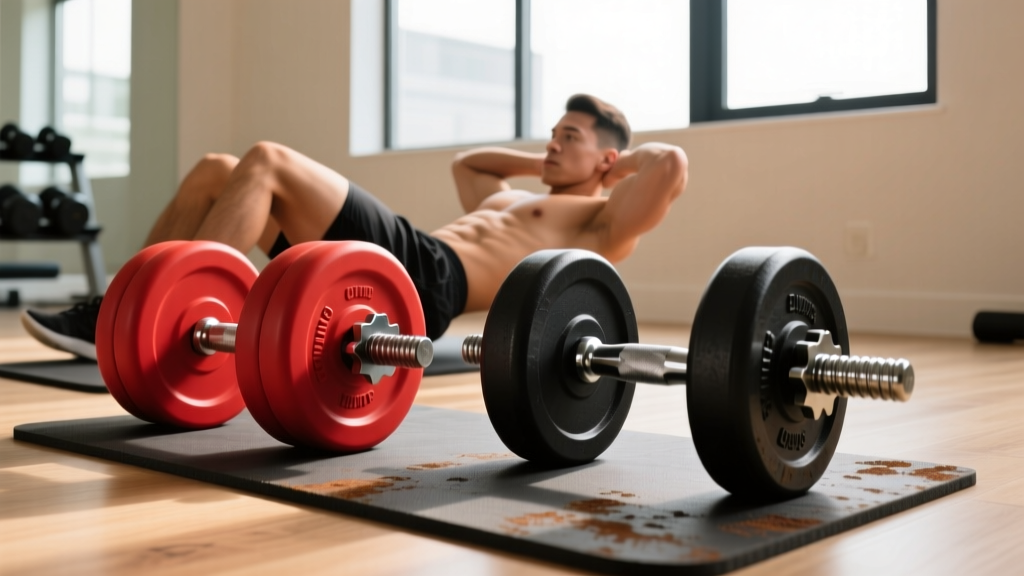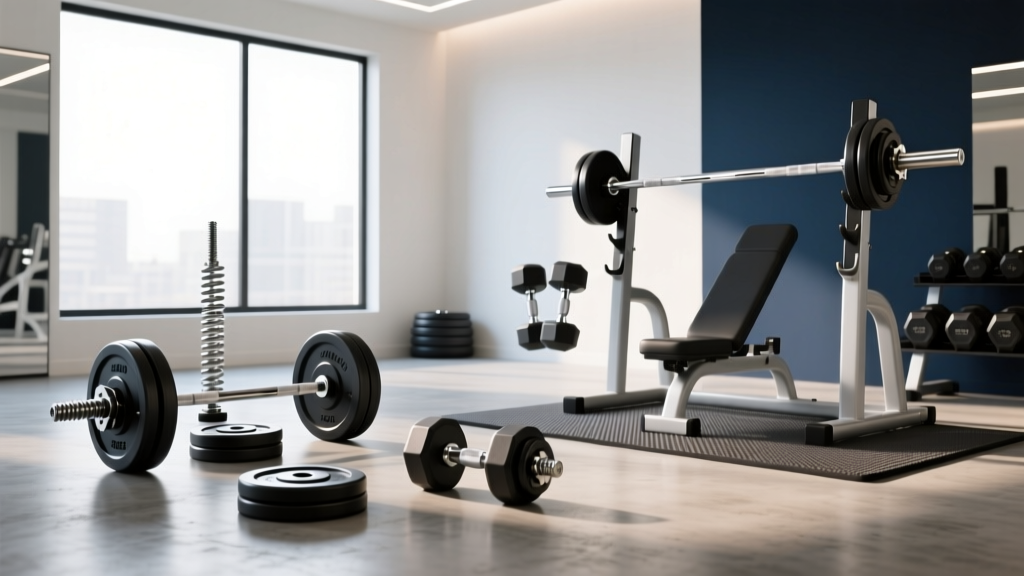
Barbell Collar Comparison & Core Training with Dumbbells Setup
Master your home gym setup with our walkthrough on barbell collar types for heavy safety and configuring your space for core training with dumbbells.

Building a comprehensive, safe, and functional free-weight zone requires more than simply unboxing iron and dropping it on the floor. A proper installation walkthrough must address both the extreme safety requirements of heavy compound barbell lifts and the spatial dynamics needed for accessory work. In this 2026 setup guide, we will break down the critical barbell collar and clamp types comparison to secure your heavy loads, and then transition into configuring an optimized zone for core training with dumbbells.
Phase 1: Securing the Barbell Station
The barbell station is the high-risk zone of any gym. When executing heavy squats, deadlifts, or overhead presses, plate shift can alter the bar's center of gravity, leading to catastrophic failure. Furthermore, modern Olympic bars are engineered with 'whip' (elastic deformation). Without proper collars, this whip causes plates to rattle and slide outward, degrading your lift mechanics and posing a severe hazard to spotters.
Barbell Collar and Clamp Types Comparison
Not all collars are created equal. The market has evolved significantly, offering solutions ranging from basic tension clips to competition-grade locking mechanisms. Below is a detailed comparison matrix to help you choose the right hardware for your specific training style.
| Collar Type | Model Example | Avg. Price (Pair) | Material & Weight | Best Application | Known Failure Modes |
|---|---|---|---|---|---|
| Spring Clips | Cap Barbell Spring Clip | $12 - $18 | Zinc-plated steel; ~0.4 lbs | Light accessories, bench press, home use | Slip on dusty sleeves; tension springs fatigue and warp after ~6 months of heavy drops. |
| Clamp-Style (Plastic) | Lock-Jaw PRO 2.0 | $26 - $32 | Glass-filled nylon; ~0.6 lbs | CrossFit, Olympic lifting, garage gyms | Nylon becomes brittle in unheated garages below 40°F; can shatter if dropped from overhead. |
| Clamp-Style (Aluminum) | Rogue HG-2.0 | $24 - $28 | Aircraft aluminum/resin; ~0.68 lbs | Heavy powerlifting, daily garage gym use | Can scratch chrome sleeves if microscopic grit is trapped between the collar and the bar. |
| Competition Collars | Eleiko IPF Competition | $65 - $85 | Hardened steel/rubber; 5.5 lbs (2.5kg) | Meet prep, IPF-sanctioned lifting | Heavy and cumbersome to install quickly; overkill for casual home gym users. |
Installation and Maintenance of Clamps
Proper installation is just as critical as the hardware itself. When installing clamp-style collars (like the Rogue HG-2.0 or Lock-Jaw), follow this protocol:
- Clean the Sleeve: Wipe the barbell sleeve with a microfiber cloth and a light application of 3-in-One oil to remove chalk and rust dust. Grit trapped under a clamp will score the sleeve.
- Flush Placement: Push the collar completely flush against the outermost weight plate. Leaving even a 1/4-inch gap allows for kinetic plate shifting during explosive movements like the clean and jerk.
- Lock and Verify: Engage the locking mechanism and attempt to twist the collar by hand. If it rotates freely around the sleeve, the tension is insufficient.
Expert Insight: According to the International Powerlifting Federation (IPF) rulebook, competition collars must weigh exactly 2.5 kg each. If you are training for a meet, you must account for this 5.5 lbs of additional weight on the bar during your heavy singles, as standard gym clamps weigh less than a pound combined.
Phase 2: Configuring the Core Training Zone
Once the heavy barbell station is secured, the next phase of our setup walkthrough focuses on the accessory and rehabilitation space. Integrating core training with dumbbells requires a dedicated footprint that prioritizes floor interaction, anti-rotational stability, and safe equipment clearances.
Spatial Planning and Flooring
Core training with dumbbells involves dynamic movements like renegade rows, weighted planks, and dumbbell Russian twists. These exercises require you to be on the floor, often bearing weight on your hands and knees.
- Footprint: Allocate a minimum 6x8 foot clear zone adjacent to your dumbbell rack. This allows for full-body extension during exercises like the dumbbell pullover or suitcase carries.
- Flooring Specification: Do not use interlocking EVA foam tiles for this zone. EVA foam compresses unevenly under the concentrated load of a dumbbell, compromising wrist stability during renegade rows. Install 3/4-inch (19mm) vulcanized rubber mats. This provides the necessary shock absorption for dropping weights while maintaining a rigid, stable surface for wrist-bearing core exercises.
Selecting Dumbbells for Core Mechanics
The type of dumbbell you install in this zone directly impacts the safety and efficacy of your core work.
Setup Warning: Avoid Adjustable Dumbbells for Floor Work
While adjustable dumbbells (e.g., Bowflex SelectTech or PowerBlock) are excellent for standing isolation work, they are highly discouraged for core training with dumbbells. The bulky plastic housings and square profiles of adjustable bells create unstable contact points with the floor. When performing a renegade row or weighted plank, an adjustable dumbbell can easily tip over, leading to severe wrist sprains or facial injuries.
Solution: Invest in a dedicated set of Urethane Hex Dumbbells (ranging from 10 lbs to 35 lbs). The hexagonal heads prevent rolling, and the urethane coating protects your rubber flooring and deadens noise.
Phase 3: Execution and Routine Integration
With the barbell station secured and the core zone mapped out, the final step is integrating these elements into a cohesive workflow. The Centers for Disease Control and Prevention (CDC) emphasizes that core stability is foundational for injury prevention and functional balance, making it a mandatory component of any strength program.
The Biomechanics of Dumbbell Core Work
Unlike static crunches, core training with dumbbells introduces asymmetrical loading and anti-rotational demands. According to movement specialists at the Mayo Clinic, engaging the core through multi-planar resistance builds functional stability that translates directly to heavier, safer barbell lifts.
Recommended Setup-Specific Exercises:
- Renegade Rows: Utilize 15-25 lb urethane hex dumbbells. The flat hex edges grip the vulcanized rubber mat, providing a stable base to row while your core fights rotational torque.
- Suitcase Carries: Grab a heavy dumbbell (40-60 lbs) in one hand. Walk the length of your 8-foot core zone. This targets the quadratus lumborum and obliques, directly improving your bracing capacity for heavy squats back at the barbell station.
- Weighted Dead Bugs: Hold a light 10 lb dumbbell in each hand, pressing them straight up toward the ceiling while extending opposite limbs. This challenges anterior core stability without placing compressive loads on the lumbar spine.
Final Walkthrough Checklist
Before signing off on your gym installation, run through this final safety and spatial checklist:
- Verify all barbell collars are free of micro-fractures and grip the sleeve without manual rotation.
- Ensure the 3/4-inch rubber matting in the core zone is flush, with no trip hazards between seams.
- Confirm that hex dumbbells are stored on a low-tier rack adjacent to the core zone to prevent carrying heavy loads across the gym floor.
- Check that the 6x8 foot core zone is clear of barbell plates, collars, and bench legs.
By treating your barbell collar selection with the same analytical rigor as your heavy lifts, and by intentionally designing a stable, roll-proof zone for core training with dumbbells, you create a 2026-ready home gym that is as safe as it is effective. Proper setup isn't just about aesthetics; it is the physical foundation of your long-term strength and injury resilience.
More gear to consider
All reviews
Rubber Hex vs Urethane: Best for a Dumbbell Lat Workout?

Barbell vs Dumbbells: Why Barbell Collars and Clamps Matter

Preacher Curls with Dumbbells: 2026 Adjustable Comparison

Dumbbell Seated Calf Raises: Neoprene Dumbbell Mistakes & Fixes
Power Rack vs Squat Rack vs Squat Stand & Circle Dumbbells