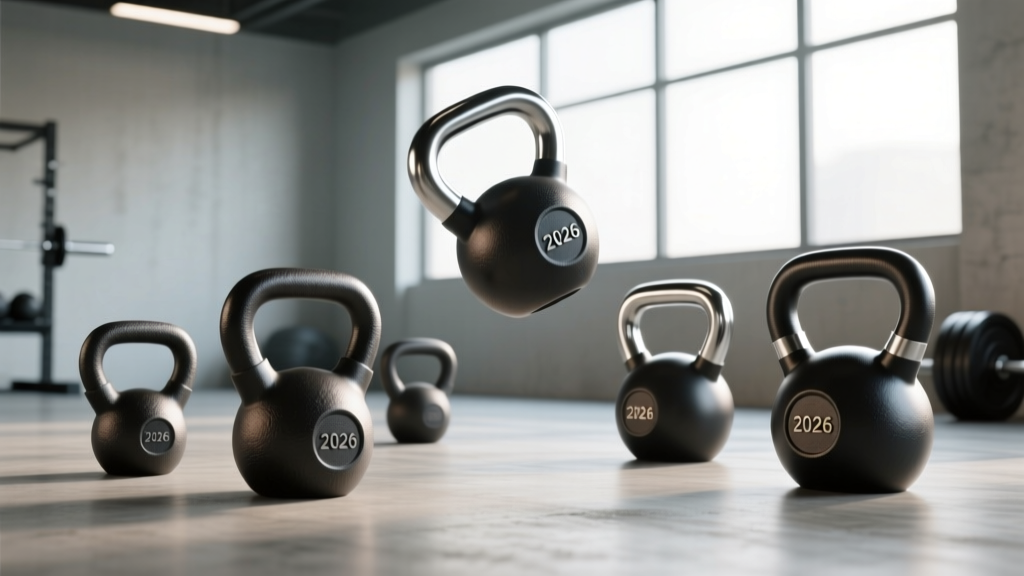
Beyond the Dumbbell Rear Delt Fly: 2026 Kettlebell Trends
Explore 2026 kettlebell market trends, comparing cast iron vs. competition models. Discover pricing, grip geometry, and the shift beyond isolation exercises.

The 2026 Shift: From Isolation to Ballistic Integration
The home and commercial gym equipment market has undergone a radical transformation over the last few years. While traditional bodybuilding staples like the dumbbell rear delt fly remain crucial for targeted posterior chain hypertrophy and shoulder health, the broader 2026 market data shows a massive pivot toward full-body, ballistic functional training. Consumers are no longer satisfied with purely isolation-based routines; they are seeking versatile, high-yield implements that bridge the gap between strength and conditioning.
Nowhere is this shift more evident than in the kettlebell sector. According to recent fitness industry analyses, functional training equipment sales have outpaced traditional free weights, driven by the rise of hybrid training methodologies that combine powerlifting with endurance-based kettlebell sport techniques. For the discerning buyer, this market expansion presents a critical dilemma: should you invest in traditional cast iron kettlebells or the standardized, precision-engineered competition models? This comprehensive market analysis breaks down the metallurgy, biomechanics, and 2026 pricing structures of both categories to help you make an informed purchasing decision.
Market Breakdown: Cast Iron vs. Competition Kettlebells
To understand the current market landscape, we must first examine the manufacturing processes that define these two distinct categories. The price disparity and use-case scenarios are rooted deeply in how these tools are forged, finished, and balanced.
Cast Iron Kettlebells: The Rugged Standard
Cast iron kettlebells are produced using sand-casting molds. Molten iron is poured into a single mold, creating a solid, one-piece bell (handle and body fused). Because the density of iron is fixed, the physical dimensions of the bell scale linearly with its weight. A 12kg cast iron bell will be noticeably smaller in both the bell diameter and handle width than a 32kg bell. In 2026, premium cast iron models, such as the Rogue Powder Coat Kettlebells, dominate the high-end home gym market due to their aggressive handle texture and durability.
Competition Kettlebells: Precision Engineering
Competition kettlebells are born from the strict requirements of Kettlebell Sport (Girevoy Sport). To ensure fairness in competition, every bell—from 8kg to 32kg—shares the exact same physical dimensions: 280mm in height, 210mm in width, and a standardized 33mm handle diameter. To achieve this, manufacturers use a hollow steel shell. The weight is calibrated by filling the hollow core with ball bearings, lead shot, or specialized resins, which are then sealed with a welded steel plug. Brands like Kettlebell Kings have popularized these bells for the mainstream fitness market, utilizing color-coded plastic bands on the handle to denote weight.
2026 Pricing & Specifications Matrix
The financial investment required for each type of kettlebell varies significantly based on material costs and manufacturing complexity. Below is a comparative look at the current 2026 market averages for a standard 16kg (35lb) bell.
| Feature | Premium Cast Iron (e.g., Rogue) | Competition Steel (e.g., KB Kings) |
|---|---|---|
| Material | Solid Cast Iron | Hollow Steel Shell w/ Steel Shot Core |
| Handle Diameter | Varies (Typically 35mm at 16kg) | Strict 33mm (All weights) |
| Bell Dimensions | Scales with weight | Uniform 280mm x 210mm |
| Finish | Powder Coat or E-Coat | Bare Polished Steel or Painted Shell |
| Avg. Price (16kg) | $55.00 - $75.00 | $110.00 - $145.00 |
| Primary Use Case | Grinds, Heavy Swings, General Fitness | High-Rep Snatches, Jerks, Kettlebell Sport |
Biomechanics & Grip: Why Handle Geometry Matters
When transitioning from isolation movements—where grip is rarely the limiting factor, such as when executing a controlled dumbbell rear delt fly—to high-rep ballistic kettlebell movements, handle geometry becomes the single most important variable in equipment selection.
The 33mm vs 35mm Handle Debate
The standard competition kettlebell features a 33mm handle diameter. This specific measurement is not arbitrary; it is biomechanically optimized to allow the user to hook their fingers over the handle while keeping the wrist in a neutral, stacked position during the overhead lockout of a jerk or snatch. A 33mm handle minimizes forearm flexor fatigue, allowing athletes to sustain high-rep sets (e.g., 10-minute long-cycle sets) without grip failure.
Conversely, heavier cast iron kettlebells often feature handles that scale up to 35mm or even 38mm (in the case of 32kg+ bells). While a thicker handle is excellent for building crushing grip strength and performing heavy, low-rep grinds like goblet squats or Turkish get-ups, it forces the wrist into slight extension during overhead lockouts. This can lead to premature forearm burnout and wrist impingement during high-volume ballistic work.
Window Height and Horn Width
Competition bells feature a large, rectangular "window" (the space between the handle and the bell) and wide horns. This design allows the bell to rest comfortably on the forearm in the "rack" position without crushing the wrist. Cast iron bells, particularly lighter weights, have smaller windows and narrower horns, which can pinch the forearm during cleans and squats, leading to bruising and compromised breathing mechanics.
Real-World Failure Modes and Edge Cases
As fitness equipment reviewers, we test gear until it breaks or fails the user. Both cast iron and competition bells have distinct failure modes that buyers must consider in 2026.
Expert Insight: "The biggest mistake home gym owners make is buying competition bells for outdoor or garage use without considering humidity. The bare steel handles rust rapidly, and the hollow cores can trap moisture if the welded plug seal fails, leading to internal corrosion and unpredictable weight shifts."
- Chalk Clogging in Competition Bells: The wide horns and flat tops of competition bells tend to trap magnesium carbonate (gym chalk). Over time, this creates a slick, compacted layer that ruins the grip texture. Regular wire-brushing is mandatory.
- Powder Coat Tearing: While premium powder coat (like Rogue's) provides excellent grip without chalk, cheaper cast iron imports use a rough, sandpaper-like finish that will tear calluses off the palms during high-rep swings. Always check the "grit" level of a powder coat before purchasing.
- Seam Lines: Lower-tier cast iron bells often leave the mold seam line unpolished on the handle. This vertical ridge will slice your hands during snatches. Premium brands machine these seams flat, but budget brands do not.
2026 Purchasing Framework: Which Should You Buy?
The decision between cast iron and competition kettlebells ultimately depends on your training methodology, budget, and environment. The American Council on Exercise (ACE) notes that kettlebell training provides unparalleled cardiovascular and core benefits, but only if the equipment allows for proper, pain-free mechanics.
Buy Cast Iron If:
- Your training focuses on heavy, low-rep strength work (grinds, heavy swings, carries).
- You are outfitting a garage gym on a budget and need to maximize weight per dollar.
- You prefer using chalk and want a textured powder-coat finish that bites into the skin.
- You primarily use the kettlebell for two-handed movements where handle diameter is less critical.
Buy Competition If:
- You practice Kettlebell Sport or follow high-rep, endurance-based protocols (e.g., Tactical Athlete prep).
- You require the exact same physical dimensions across all weights to maintain consistent muscle memory for the rack position and snatch lockout.
- You train indoors in a climate-controlled environment where rust on the bare steel handle is manageable.
- You have smaller hands and require the strict 33mm handle diameter to safely hook the bell without wrist strain.
Frequently Asked Questions
Can I use a competition kettlebell for heavy swings?
Yes, but with a caveat. The smooth, bare steel handle of a competition bell requires significantly more chalk than a powder-coated cast iron bell. During heavy two-handed swings, the smooth steel can become slippery if your hands sweat profusely, increasing the risk of the bell slipping. For heavy, high-force swings, a textured cast iron bell is generally safer.
Why are competition kettlebells so much more expensive?
The manufacturing process is vastly more complex. Creating a hollow steel shell, precision-welding the base, and calibrating the exact weight using steel shot or bearings requires advanced machining and strict quality control. Cast iron bells simply require pouring molten metal into a sand mold, cooling, and painting, making them much cheaper to produce at scale.
Do I need both types for a complete home gym?
For the ultimate hybrid setup in 2026, many advanced lifters utilize a "mixed battery." They keep a pair of heavy cast iron bells (24kg and 32kg) for grinds and heavy swings, and a set of lighter competition bells (12kg, 16kg, 20kg) for high-rep snatches, jerks, and technical skill work. This approach optimizes both your budget and your biomechanics.
More gear to consider
All reviews
2026 Rack Trends: Storage for Single Dumbbell Exercises for Back
Smart Storage for Your 20 Minute Dumbbell Strength Workout
Space Layouts: Bumper vs Iron Plates & Hammer Strength Dumbbell Set

Space-Saving Loadable Handles for the Dumbbell Farmer's Walk

Rubber Hex vs Urethane: Care for Dragon Ball Dumbbells & Pro Gear
