
Gym Layout: Kettlebells & Seated Dumbbell Overhead Triceps Extension
Optimize your compact home gym layout. Compare cast iron vs competition kettlebells and master space for the seated dumbbell overhead triceps extension.

The Micro-Gym Footprint: Merging Heavy Ballistics and Isolation
As urban living spaces shrink and dedicated home gym square footage becomes a premium luxury in 2026, the era of the sprawling garage gym is giving way to the "micro-gym." Fitness enthusiasts are now tasked with engineering high-density layouts within 40 to 60 square foot footprints, often confined to a single 4x6 or 5x5 power rack. The ultimate spatial challenge lies in accommodating two drastically different training modalities within the same zone: the wide-arc, explosive ballistic movements required for kettlebell training, and the strict, vertical clearance demands of isolation work like the seated dumbbell overhead triceps extension.
Designing a layout that seamlessly transitions from heavy kettlebell swings to precision triceps isolation requires more than just buying compact gear; it demands a rigorous understanding of equipment geometry, biomechanical clearance, and storage ergonomics. In this guide, we break down the spatial mathematics of choosing between cast iron and competition kettlebells, and blueprint the exact layout required to execute overhead dumbbell extensions without destroying your drywall or your rack's uprights.
Cast Iron vs. Competition Kettlebells: A Spatial Analysis
When outfitting a tight floor plan, the physical dimensions of your free weights dictate your storage solutions and floor clearance. The debate between cast iron and competition kettlebells is usually framed around grip feel or durability, but from a space optimization perspective, it is entirely about volumetric consistency.
The Cast Iron Variable
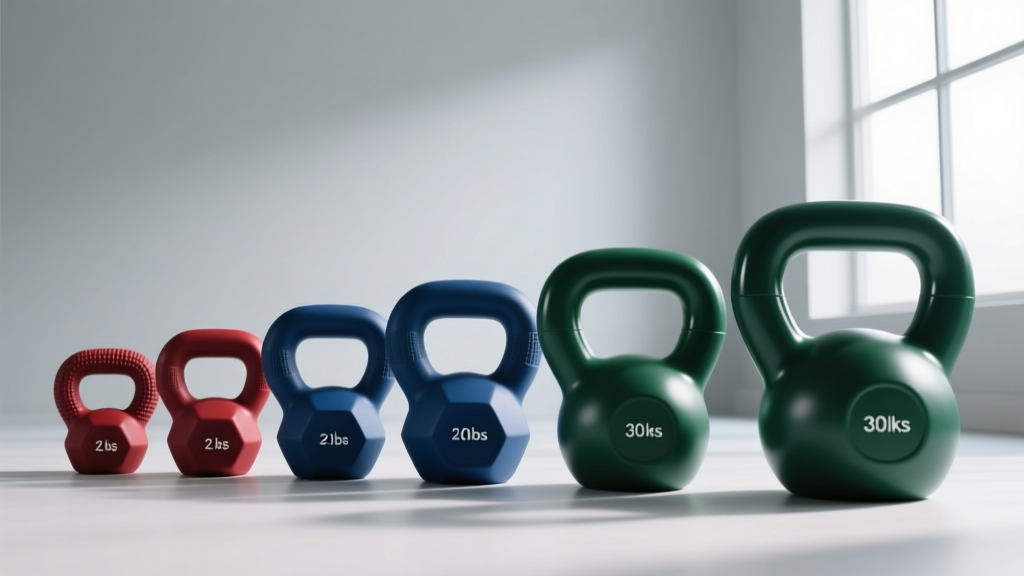
Traditional cast iron kettlebells, such as the Rogue Powder Coat Kettlebells, are manufactured using a scaling mold. As the weight increases, the physical volume of the bell grows exponentially. An 8kg cast iron bell has a base diameter of roughly 119mm and a height of 190mm. However, a 32kg bell expands to a massive 210mm base and 280mm height. This tapered growth creates a spatial nightmare for wall-mounted storage. To store a full set flush against a wall, you must utilize staggered, custom-depth shelving or accept that larger bells will protrude further into your walking path, creating a tripping hazard in a narrow 4-foot aisle.
The Competition Advantage for Compact Layouts
Competition kettlebells, like the Kettlebell Kings Competition Line, are engineered to IUKMF standards. Regardless of whether the bell is 8kg or 32kg, the dimensions remain strictly uniform: 210mm in height, 280mm in width, and a 35mm handle diameter. For the space-optimized gym owner, this uniformity is a superpower. You can engineer a single-tier, flush-mounted wall shelf exactly 285mm deep and 220mm high per slot. Every bell slots in perfectly flush, maximizing vertical wall space and keeping the floor entirely clear for bench placement.
Space Optimization Pro-Tip: If your budget restricts you to cast iron, limit your purchases to the 16kg, 20kg, and 24kg range. The dimensional variance between these three sizes is minimal enough to share a standard 12-inch deep storage shelf without creating dangerous overhangs.| Feature | Cast Iron (16kg) | Cast Iron (32kg) | Competition (Any Weight) |
|---|---|---|---|
| Base Width | 165mm | 210mm | 280mm (Uniform) |
| Total Height | 230mm | 280mm | 210mm (Uniform) |
| Shelf Depth Required | 8-10 inches | 12-14 inches | 11.5 inches (Exact) |
| Floor Clearance Impact | Variable / High Risk | High Risk | Minimal (Wall Flush) |
Designing the Isolation Zone: Seated Dumbbell Overhead Triceps Extension
While kettlebells dominate the floor space, the seated dumbbell overhead triceps extension dominates the vertical and lateral airspace. This movement is non-negotiable for targeting the long head of the triceps, which requires maximum shoulder flexion. However, executing this safely inside a confined power rack requires meticulous bench positioning.
The Bench Footprint and Offset Strategy
A standard adjustable bench, such as the Rogue AB-3, has a footprint of roughly 17 inches wide by 35 inches long. When placed inside a standard 49x49 inch interior rack space, you are left with only 16 inches of lateral clearance on either side. When performing the seated dumbbell overhead triceps extension, the user must grip a single heavy dumbbell (often 50lbs to 80lbs for advanced lifters) and lower it behind the skull. The natural biomechanical path of the elbows dictates a slight outward flare to protect the rotator cuff and elbow joints.
The Failure Mode: If the bench is centered or pushed flush against the rear crossmember of the rack, the flared elbows or the dumbbell plates will scrape against the uprights or safety straps at the bottom of the eccentric phase. This not only damages the equipment but forces the lifter to tuck their elbows unnaturally, shifting the tension away from the long head of the triceps and onto the lateral head and elbow joints.
The Layout Solution: Offset the bench 18 to 24 inches forward from the rear uprights. This places the user's torso in the center of the rack, providing a 360-degree bubble of unobstructed airspace for the elbows to flare and the dumbbell to travel safely behind the head. Alternatively, utilize a standalone folding utility bench positioned entirely outside the front of the rack, eliminating upright interference altogether.
WARNING: Overhead Clearance & Ceiling JoistsA 6-foot tall user sitting on a 17-inch high bench has a seated shoulder height of approximately 50 inches. Add a 34-inch arm extension and a 10-inch dumbbell, and the apex of the movement reaches 94 inches (7 feet 10 inches). Standard 8-foot residential ceilings leave only 2 inches of margin for error. Always map your vertical clearance zone before bolting your rack to the floor, and avoid placing the bench directly beneath exposed ceiling joists or low-hanging garage door tracks.
Integrated Storage Solutions for Tight Footprints
To merge the storage of heavy competition kettlebells and the dumbbells required for triceps extensions, you must utilize the "dead zones" of your power rack. The space beneath the J-cups and the exterior sides of the uprights are prime real estate.
- Vertical Upright Storage: Utilize bolt-on kettlebell horns on the exterior of the front uprights. Because competition bells have a uniform 35mm handle, they slide onto standard 5/8" or 1" horns without the wobble associated with tapered cast iron handles.
- Under-Bench Dumbbell Staging: Do not store your heavy triceps extension dumbbell on a floor rack that requires deep bending. Install a low-profile, slide-out dumbbell tray attached to the base of the rack's rear crossmember. This allows you to seat yourself on the bench, reach down between your knees, and safely clean the dumbbell to the starting position without navigating a cluttered floor.
- Wall-Mounted Cradles: If using cast iron kettlebells, mount individual saddle cradles on the wall outside the rack footprint, staggering them diagonally to accommodate the growing base diameters while keeping the floor inside the rack 100% clear for bench movements.
Expert Facility Standards & References
Proper facility layout is not just about convenience; it is a matter of safety and biomechanical integrity. According to the National Strength and Conditioning Association (NSCA) facility design guidelines, a minimum of 3 feet of clearance is required around any free-weight station to account for the natural arc of limbs and equipment during fatigue-induced form breakdown. When applying this standard to a micro-gym, the uniform dimensions of competition kettlebells and the strategic offsetting of isolation benches become mandatory rather than optional.
By treating your 4x6 footprint as a three-dimensional grid rather than a flat floor plan, you can seamlessly integrate heavy ballistic conditioning and precise hypertrophy work. Whether you are swinging a 32kg competition bell or locking out a heavy seated dumbbell overhead triceps extension, the right spatial geometry ensures your equipment works for you, not against your walls.
More gear to consider
All reviews
Space-Saving Dumbbell Racks for the Female Dumbbell Bench Press

Decline Chest Workout with Dumbbells: 2026 Adjustable Guide

Upper Body Dumbbell Workout Men: Hex vs Urethane Gym Layout Guide

Rack Storage and Longevity Care for a 5 100 Pound Dumbbell Set
Rubber vs Urethane Dumbbells: Maintenance & Dumbbell Size Chart
