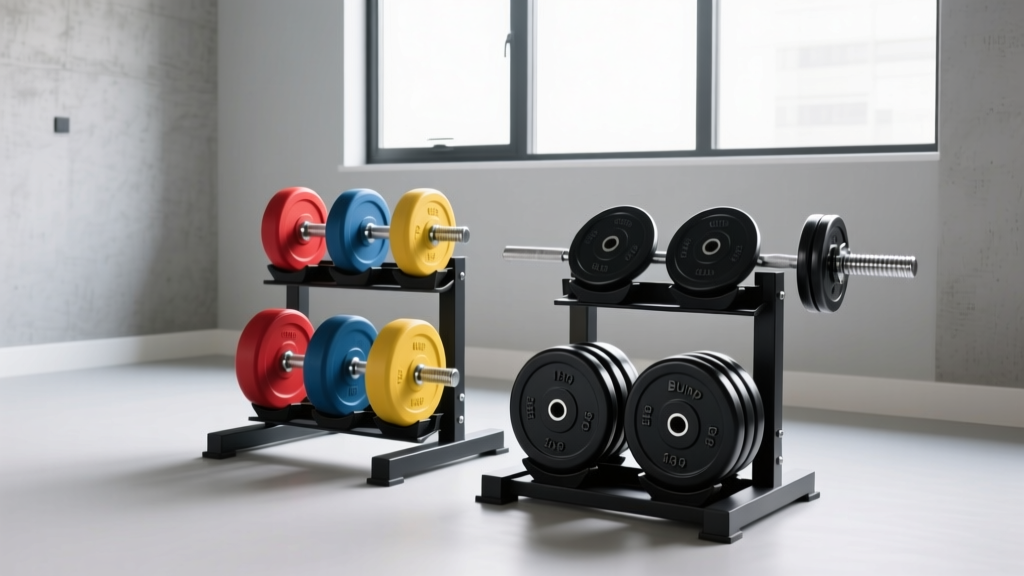
Bumper vs Iron Plates: Space for Standing Dumbbell Lateral Raises
Compare bumper vs iron plates for compact gym layouts. Learn exact clearance dimensions for standing dumbbell lateral raises and optimal storage racks.

The Spatial Physics of the Modern Micro-Gym
Designing a high-functioning home gym in 2026 is no longer just about accumulating gear; it is an exercise in volumetric tetris. When square footage is at a premium, every piece of equipment must justify its physical footprint. This is especially true when balancing the heavy, dense storage requirements of barbell plates with the expansive, dynamic clearance needed for isolation movements. The most common spatial conflict in compact garage and basement gyms occurs between plate storage zones and the lateral wingspan required for exercises like standing dumbbell lateral raises.
If you position a vertical plate tree too close to your primary dumbbell work area, you risk a catastrophic failure mode: mid-rep collisions. Clipping a cast iron plate or a rubber bumper with a 30-pound hex dumbbell not only damages your drywall and equipment but also triggers subconscious range-of-motion (ROM) restriction, severely limiting hypertrophy. To optimize your layout, we must rigorously compare the dimensional footprint of bumper plates versus cast iron plates and map them against the biomechanical clearance required for standing dumbbell lateral raises.
Bumper Plates vs. Cast Iron: The Dimensional Data
Before drawing your floor plan, you must understand the exact physical dimensions of the plates you intend to store. While both plate types share the same 50mm center hole, their outer diameters and thicknesses vary wildly, dictating the type of storage rack you can use and how far that rack must sit from your workout zones.
| Plate Type (45lb / 20kg) | Diameter | Thickness | Storage Rack Footprint | Drop Safety Profile |
|---|---|---|---|---|
| Machined Cast Iron | 14.5 inches | 1.3 inches | Compact (Vertical Tree) | Low (Requires mats) |
| Competition Bumper | 17.7 inches | 1.5 inches | Medium (A-Frame / Wall) | High (Safe for drops) |
| Crumb Rubber Bumper | 17.7 inches | 3.5 inches | Massive (Wide A-Frame) | Very High (Deadbounce) |
As highlighted by the specifications from Rogue Fitness, a standard 45lb Echo Bumper plate maintains a strict 17.7-inch diameter. Conversely, a standard 45lb cast iron plate typically measures around 14.5 inches. While iron plates save space on the sleeve of the barbell and on a vertical storage tree, their smaller diameter means they cannot be safely dropped from overhead or shoulder height without transferring immense kinetic energy into your subfloor. Bumpers solve the drop problem but demand significantly wider storage solutions, pushing your equipment further into the room's usable airspace.
The "Wing Zone": Calculating Standing Dumbbell Lateral Raises Clearance
When mapping your gym layout, you must designate a "Wing Zone"—an unobstructed rectangular area dedicated to wide-arm isolation work. Standing dumbbell lateral raises are the ultimate stress test for this zone. To calculate the exact clearance required, we must look at anthropometric data.
Clearance Calculation Formula
According to ExRx anthropometric standards, the average adult male wingspan is approximately 70 to 75 inches. However, wingspan only measures fingertip to fingertip. You must add the physical length of the dumbbells.
- Average Wingspan: 72 inches
- Standard 30lb Hex Dumbbell Length: 11.5 inches (adds ~5.75 inches per side past the fist)
- Total Absolute Width: 83.5 inches
- Safety Buffer (Momentum & Error): + 12 inches
- Minimum Required Wing Zone Width: 95.5 inches (approx. 8 feet)
If your plate storage rack intrudes into this 8-foot wide corridor, standing dumbbell lateral raises become a hazard. This is where the bumper vs. iron debate directly impacts your floor plan. A vertical plate tree loaded with cast iron might only protrude 18 inches from the wall, leaving your 8-foot Wing Zone intact. A fully loaded A-frame bumper rack, however, can protrude 30 to 36 inches into the room, effectively shrinking your lateral raise clearance and forcing you to reorient your entire gym layout.
Designing the Layout: Avoiding the "Clipping" Failure Mode
Failure to account for the intersection of plate storage and lateral raise clearance leads to the "clipping" failure mode. This occurs when a lifter, fatigued on the 12th rep of standing dumbbell lateral raises, drifts backward or allows the dumbbell to swing slightly behind the frontal plane. If a plate tree or A-frame is positioned directly behind or immediately adjacent to the lifter, the dumbbell strikes the metal or rubber.
Step-by-Step Layout Integration
- Anchor the Drop Zone First: Place your Olympic lifting platform or heavy rubber matting against the longest, most reinforced wall. This is where your bumpers and barbell live.
- Mount Plates on the Perimeter: Utilize wall-mounted A-frames (like the Rogue A-Frame) for bumper plates. By mounting them flush to the wall, you eliminate the 360-degree protrusion of a freestanding vertical tree, reclaiming up to 2 feet of lateral floor space.
- Establish the 8-Foot Wing Zone: Directly in front of or adjacent to your dumbbell rack, measure out a strict 96-inch wide by 48-inch deep rectangle. Tape this off during your planning phase.
- Position Dumbbell Racks Perpendicular: Never place a 3-tier dumbbell rack parallel to the Wing Zone if space is tight. Position it perpendicular so you can step into the open space to perform standing dumbbell lateral raises without a 100-pound rubber hex dumbbell sitting inches from your knuckles.
"In high-density gym environments, the floor space you don't buy equipment for is just as important as the space you do. A 30-inch gap between a bumper rack and a lifting zone is an accident waiting to happen during lateral movements." — Biomechanical Space Planning Guidelines, 2026.
Storage Hardware for High-Density Zones
To maximize the space required for standing dumbbell lateral raises while still accommodating heavy plate storage, your choice of hardware is critical. Here is how different storage solutions impact your spatial layout:
- Vertical Plate Trees (Best for Iron): These have a tiny footprint (often just 24" x 24"). If you exclusively use cast iron plates, a vertical tree can be tucked into a corner, leaving the center of the room entirely open for wide-stance isolation work. However, they are a tipping hazard if loaded asymmetrically with heavy 45lb plates.
- Wall-Mounted A-Frames (Best for Bumpers): Essential for bumper plate owners. By utilizing vertical wall space, you keep the floor clear. Ensure the bottom lip of the A-frame sits at least 18 inches off the ground so you can slide a low-profile dumbbell bench underneath when not in use.
- Integrated Rack Storage (The Compromise): If you own a power rack (e.g., Rep Fitness PR-4000), utilizing rear-mount plate storage pegs keeps the weight contained within the rack's existing 48" x 48" footprint. This prevents the need for standalone trees that eat into your lateral raise clearance.
Cost vs. Space: The 2026 Market Reality
Space optimization also has a financial component. In 2026, the price gap between iron and bumpers remains significant, affecting how much storage hardware you need to purchase. Standard cast iron plates average $1.50 to $2.00 per pound, meaning a 250lb set costs around $450. Because iron is dense, a basic $80 vertical tree is all you need to store it.
Conversely, high-quality urethane or virgin rubber bumper plates cost between $4.50 and $7.00 per pound. That same 250lb set will cost upwards of $1,300. Furthermore, because bumpers are thicker, you must invest in heavy-duty, wide-stanced A-frames or reinforced wall brackets, adding another $150 to $250 to your footprint budget. If your primary training modality involves strict bodybuilding and isolation work—where standing dumbbell lateral raises and chest-supported rows are prioritized over Olympic weightlifting—the spatial and financial tax of bumper plates may not yield a functional return on investment. Opting for machined iron plates and rubber flooring allows you to reclaim the square footage necessary for uncompromised, full-ROM isolation training.
Final Verdict: Protecting Your Range of Motion
Ultimately, the choice between bumper and iron plates in a compact gym dictates the geometry of your entire room. Bumper plates demand wide, deep storage solutions that encroach on the open floor space required for dynamic isolation movements. Cast iron plates offer superior volumetric density, allowing for compact, corner-tucked storage that preserves the critical 8-foot Wing Zone. If your programming heavily features standing dumbbell lateral raises, prioritize cast iron or wall-mounted bumper storage to ensure your biomechanics are never limited by the architecture of your equipment storage.
More gear to consider
All reviews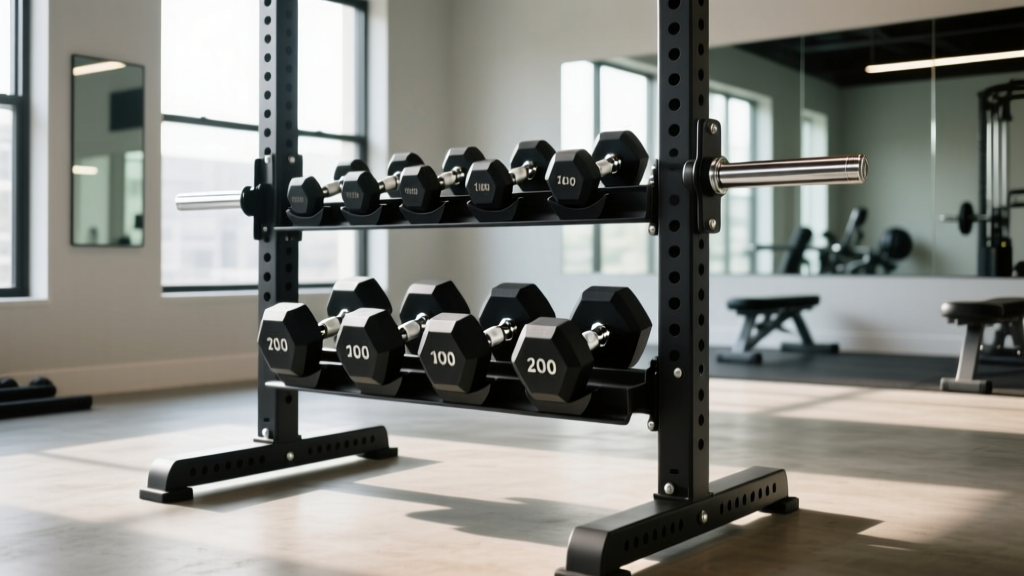
Storing a 200 Pound Dumbbell: Heavy-Duty Rack Reviews 2026

One Arm Overhead Dumbbell Extension: Neoprene Home Setup

Budget Dumbbell Racks to Clear Space for Dead Bugs With Dumbbells

Fix Your Push Dumbbell Workout: Adjustable Dumbbell Troubleshooting

Bumper vs Iron Plates & Standing Ab Workout With Dumbbells Layouts
