
EZ vs Straight Bar: Small Gym Layouts & RDL Form for Glutes Dumbbell
Compare EZ curl bar vs straight bar for small gym layouts. Includes space-saving storage tips and RDL form for glutes dumbbell variations.

The Spatial Reality of Home Gym Barbell Selection
Designing a high-performance home gym in 2026 requires a ruthless evaluation of spatial efficiency. While commercial facilities can dedicate entire zones to specialized Olympic lifting, garage and spare-bedroom gyms demand equipment that serves multiple biomechanical purposes without monopolizing floor space. The debate between an EZ curl bar and a standard straight barbell is traditionally framed around bicep isolation and wrist ergonomics. However, from a layout and space optimization perspective, this comparison hinges on rack compatibility, lateral clearance requirements, and multi-joint utility in constrained environments.
When mapping out your gym's footprint, every inch of lateral and vertical real estate matters. Choosing the right barbell isn't just about the exercises you want to perform; it is about how the equipment integrates with your power rack, your storage solutions, and your movement corridors. Below, we break down the exact dimensions, spatial demands, and layout strategies for integrating these bars into a compact training space.
Dimensional Breakdown: The Footprint Showdown
To understand how these bars impact your gym layout, we must look beyond marketing copy and examine exact specifications. A standard Olympic barbell requires a massive lateral footprint, which often dictates the minimum width of your training room. Specialty bars offer distinct spatial advantages, provided you understand their limitations.
| Equipment Type | Total Length | Shaft Diameter | Loadable Sleeve | Min. Room Width (with 36" clearance) |
|---|---|---|---|---|
| Standard Olympic Straight Bar | 86 inches | 28mm - 29mm | 16.4 inches | 158 inches (13.1 ft) |
| Short Straight Bar (e.g., Titan 71") | 71 inches | 28.5mm | 11.5 inches | 143 inches (11.9 ft) |
| Standard EZ Curl Bar (e.g., Rogue) | 47 inches | 25mm - 28mm | 5.5 inches | 119 inches (9.9 ft) |
According to facility design guidelines emphasized by strength and conditioning professionals, maintaining a minimum 36-inch clearance on either side of a barbell is critical for safe plate loading and bailing during failed lifts. As the table illustrates, a standard 86-inch barbell requires a room width of over 13 feet just to function safely. If your layout is constrained to a 10x10 spare bedroom, the standard straight bar is spatially unviable, forcing a pivot to compact alternatives.
Rack Compatibility and the J-Cup Dilemma
A major, often overlooked spatial factor is how the bar interfaces with your squat rack. Standard power racks feature an internal width of roughly 43 to 49 inches.
- Straight Bars (71" and 86"): These rest comfortably on standard J-cups, allowing for seamless transitions between squats, presses, and rack pulls without altering your rack's hardware footprint.
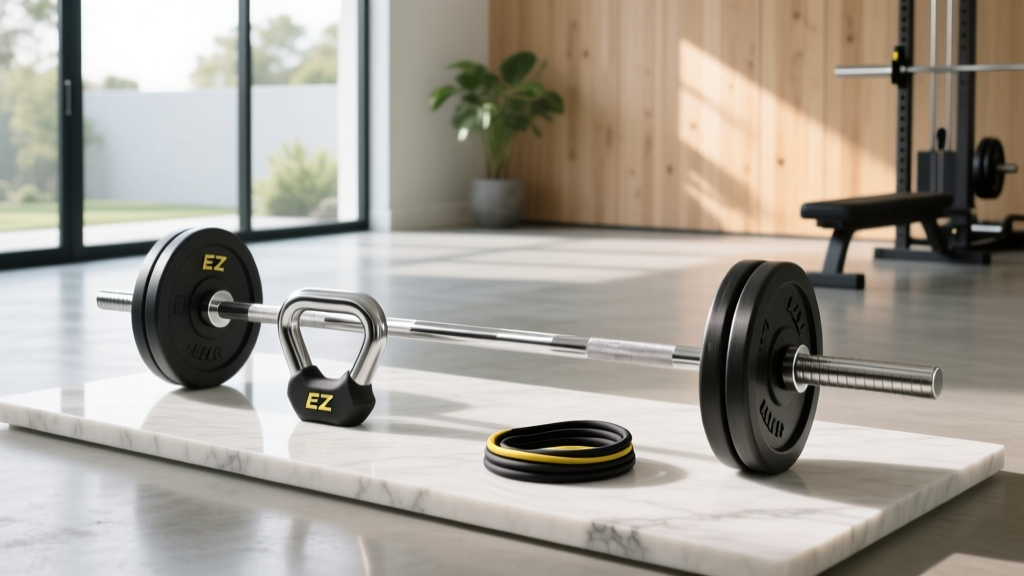
- EZ Curl Bars (47"): At just 47 inches total length, a standard EZ bar will physically fall through the uprights of a standard 49-inch power rack. To rack an EZ bar safely, you must invest in specialized narrow J-cups, sandwich J-cups, or use a standalone spotter arm setup outside the main rack footprint. This requires additional storage space for swapping hardware, which directly impacts your layout's organizational flow.
Lower Body Hinges in Cramped Layouts: Navigating Tight Spaces
The hip hinge is a foundational movement pattern, but executing it safely in a narrow garage gym or low-ceiling basement presents unique spatial challenges. When the lateral walls are too close for a 7-foot barbell, lifters must adapt their equipment to maintain progressive overload without compromising safety.
The Search Intent Reality: If your layout forces you to search for RDL form for glutes dumbbell routines due to narrow walls, consider the 47-inch EZ bar as a heavy-loading spatial compromise. Dumbbells solve the width issue, but grip strength often fails before the glutes and hamstrings reach true mechanical failure.
When perfecting your Romanian Deadlift (RDL) mechanics, the implement you choose dictates your spatial requirements and biomechanical efficiency:
1. Dumbbell RDLs (The Tight-Space Default)
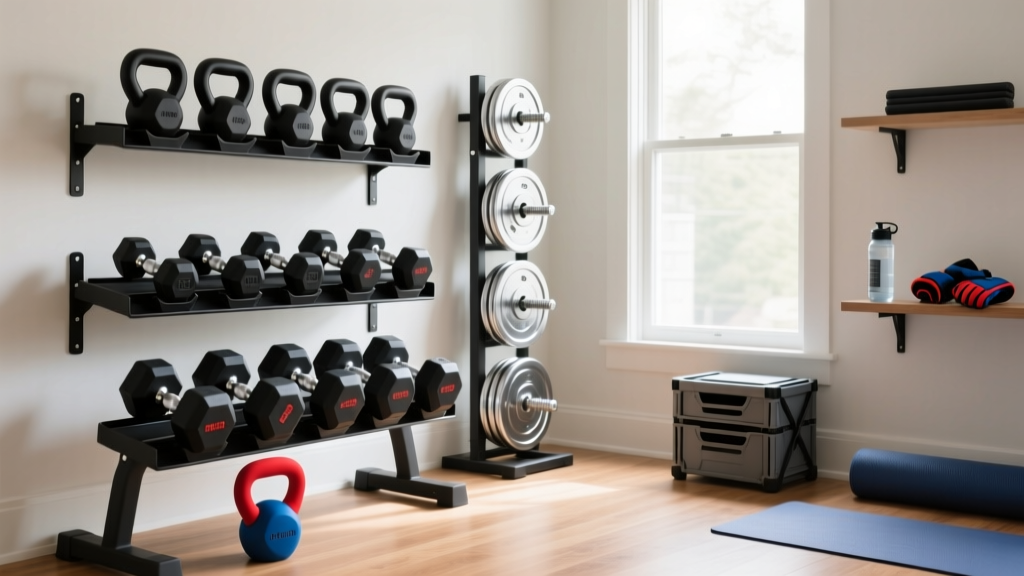
Dumbbells require zero lateral clearance beyond your own shoulders. You can perform them in a 3x3 foot corner. However, holding 100+ lb dumbbells for high-volume glute hypertrophy places immense stress on the forearm flexors. Furthermore, storing a full set of heavy hex dumbbells requires a massive 3-tier rack footprint that consumes valuable floor space.
2. The EZ Curl Bar RDL (The Spatial Bridge)
Using an EZ curl bar for RDLs allows you to load 150+ lbs while keeping the total equipment width under 5 feet. The angled grips naturally place the wrists in a semi-supinated position. While biomechanical exercise directories note that semi-supinated grips are optimal for pulling movements like rows, using them for a lower-body hinge forces the lats to engage differently to keep the bar close to the shins. It is an excellent spatial compromise for glute overload when a straight bar is impossible to swing safely.
3. The Short Straight Bar (71")
The 71-inch short bar offers the neutral wrist alignment of an Olympic bar but fits in rooms as narrow as 12 feet. It allows for standard mixed-grip or hook-grip heavy hinges without the wrist torque induced by the EZ bar's cambers.
Vertical Storage and Layout Flow
Floor space is premium; vertical space is often underutilized. How you store these bars when not in use dictates the flow of your gym.
- Horizontal Wall Mounts: A standard straight bar requires a 40-inch horizontal wall cradle. This creates a "dead zone" on your wall where no other equipment can be hung, and it protrudes roughly 6 inches into the room, creating a shin-level hazard in tight walkways.
- Vertical Bar Holders: Both the EZ curl bar and the short straight bar can be stored vertically in wall-mounted holsters that occupy less than a 10x10 inch footprint. The Rogue Curl Bar, weighing in at roughly 30 lbs with its specialized shaft geometry, slides effortlessly into standard 2-inch vertical storage tubes, keeping the floor entirely clear for mat work and dumbbell movements.
Final Decision Matrix: Which Bar Fits Your Layout?
Choose your equipment based on your room's physical constraints and your primary training adaptations.
| Room Constraint | Best Barbell Choice | Primary Layout Advantage |
|---|---|---|
| Width under 11 feet | 47" EZ Curl Bar | Fits in narrow corridors; vertical storage; ideal for upper body and spatial-compromise hinges. |
| Width 11 to 13 feet | 71" Short Straight Bar | Allows standard grip mechanics for RDLs and presses; fits standard J-cups; moderate wall storage. |
| Width over 13 feet | 86" Olympic Straight Bar | Full loadable sleeves for heavy squats/deadlifts; requires dedicated horizontal storage zone. |
Ultimately, optimizing a home gym layout in 2026 means abandoning the "one-size-fits-all" commercial gym mentality. By carefully measuring your lateral clearances, understanding the rack-compatibility of specialty bars, and strategically implementing tools like the EZ curl bar for heavy hinges when dumbbells fall short, you can build a high-performance training environment in virtually any footprint.
More gear to consider
All reviews
Bumper Plate vs Iron Plate: Space Layout & Dumbbell Pullover Muscles
Why Are Dumbbells Called Dumbbells? History & Storage Layouts

Bumper vs Iron Plates & Chest Press with Dumbbells Floor Budget Guide
Beyond the Lats Dumbbell Workout: EZ Bar vs Straight Bar Trends

Best Racks for Lower Body Workouts with Dumbbells: 2026 Trends
