Cast Iron vs Competition Kettlebells: Dumbbell Pullover Alternatives
Discover why kettlebells are elite dumbbell pullover alternatives. We compare cast iron vs competition models, handle geometry, and 2026 pricing.

If you have ever felt the sharp pinch of shoulder impingement or the awkward wrist strain of holding a heavy, fixed-grip dumbbell over your face, you are not alone. While the traditional dumbbell pullover is a classic latissimus dorsi and serratus anterior builder, its ergonomic flaws have driven many lifters to seek better options. Enter the kettlebell. As one of the most biomechanically forgiving dumbbell pullover alternatives, the kettlebell shifts the center of mass, allows for a neutral wrist position, and provides a superior resistance curve.
However, not all kettlebells are created equal. If you are going to use a kettlebell for overhead and floor-based pullover variations, the geometry of the bell is critical. This brings us to the ultimate free weight debate: cast iron vs. competition kettlebells. In this 2026 buying guide, we break down the metallurgy, handle dimensions, and real-world pricing to help you choose the perfect bell for your home gym.
The Biomechanics: Why Kettlebells Beat Dumbbells for Pullovers
According to research highlighted by the American Council on Exercise (ACE), the offset center of mass in a kettlebell demands greater stabilization and alters the torque applied to the shoulder joint compared to a balanced dumbbell. When performing a floor or bench pullover, holding a kettlebell by the horns or the handle allows your wrists to remain stacked and neutral.
Expert Insight: The 'window' (the gap between the handle and the bell body) is the secret weapon for pullovers. A larger window allows you to rest the heel of your hand comfortably without the bell crushing your forearm at the bottom of the movement. This single design feature dictates whether a kettlebell is a viable dumbbell pullover alternative or a wrist-breaking nightmare.Cast Iron Kettlebells: The Rugged Traditionalist
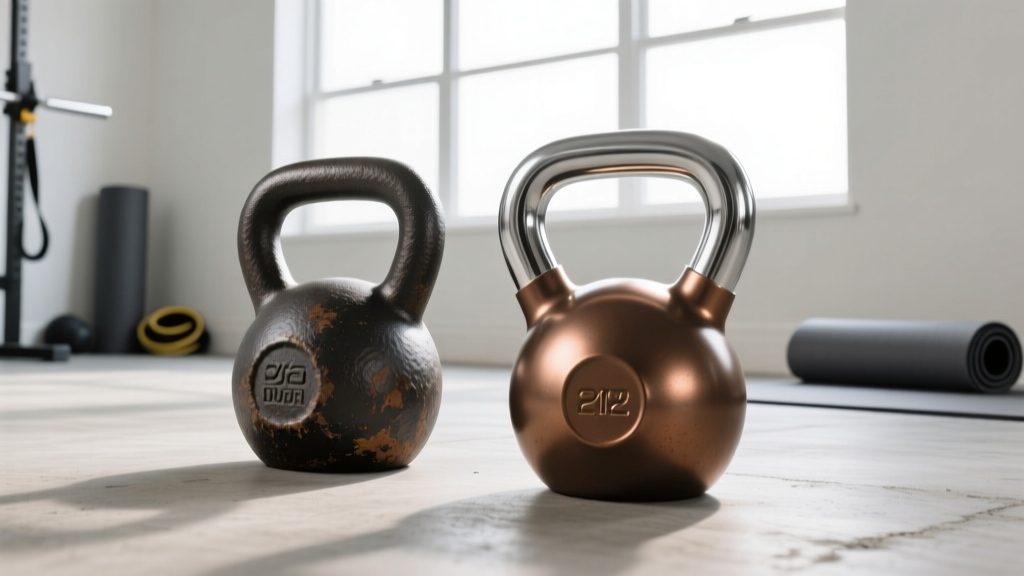
Cast iron kettlebells are the standard issue for most commercial and home gyms. They are poured into molds, meaning their physical dimensions scale up as the weight increases. A 12kg cast iron bell is physically smaller than a 32kg bell.
Pros and Cons for Pullovers and General Lifting
- Pros: Highly affordable (typically $1.50 to $2.20 per pound in 2026), incredibly durable, and the thicker handles on heavier bells build immense grip strength.
- Cons: The 'window' shrinks as the bell gets heavier. A 24kg or 32kg cast iron bell has a very tight window, making two-handed pullovers or deep goblet squats highly uncomfortable. Furthermore, handle diameters vary wildly between brands, ranging from 32mm to 38mm.
Top 2026 Cast Iron Pick: Rogue Fitness Powder Coat
Rogue’s Powder Coat kettlebells remain the gold standard for cast iron. The powder coating protects against rust while retaining enough texture for chalk. At roughly $1.75 per pound, a 24kg (53lb) bell will cost you around $95. The handle diameter sits at a manageable 33mm-35mm, but be warned: the window on their heavier bells is notoriously tight for pullover variations.
Competition Kettlebells: The Precision Instrument
Competition kettlebells are engineered for the sport of Kettlebell Lifting (Girevoy Sport). Unlike cast iron, every competition kettlebell shares the exact same physical dimensions, regardless of whether it weighs 8kg or 48kg. They are typically made from hollow steel, with the internal cavity filled with lead or steel shot to achieve the target weight.
Why They Are the Ultimate Pullover Alternative
Because the dimensions never change, the 'window' on a competition kettlebell is exceptionally large and uniform. When you grip a 24kg competition bell for a pullover, your hand sits deep in the window, and the smooth, wide base of the bell rests perfectly against your chest or the floor without pinching your wrists. Furthermore, the handle diameter is strictly standardized at 33mm, providing a consistent grip that won't overtax your forearms during high-rep lat work.
'If your primary goal includes high-volume pressing, snatching, or using the bell as a dumbbell pullover alternative, the uniform 33mm handle and massive window of a competition bell will save your joints and improve your mechanics.' — StrongFirst Foundational Standards
Top 2026 Competition Pick: Kettlebell Kings Competition Series
Kettlebell Kings dominates the competition space. Their steel competition bells feature a seamless, single-cast construction that eliminates the rough welds found on cheaper Amazon brands. Pricing is premium—expect to pay around $4.50 per pound. A 24kg bell will run you approximately $145. The vinyl or painted color-coding is durable, though dropping them on bare concrete will eventually chip the paint.
Head-to-Head Comparison Matrix
To help you visualize the differences, here is a direct comparison of how these two styles perform in a modern home gym setup.
| Feature | Cast Iron (e.g., Rogue) | Competition (e.g., KB Kings) |
|---|---|---|
| Material | Solid Cast Iron | Hollow Steel (Shot-filled) |
| Handle Diameter | Varies (32mm - 38mm) | Strict 33mm |
| Window Size | Shrinks as weight increases | Large and uniform across all weights |
| Pullover Comfort | Poor on heavy bells (>20kg) | Excellent (wrist-friendly) |
| 2026 Avg Price (24kg) | ~$90 - $105 | ~$135 - $160 |
| Primary Failure Mode | Surface rust, enamel chipping | Paint chipping on drops, internal rattle |
Maintenance and Real-World Failure Modes
When investing over $100 in a single piece of free weight equipment, you must consider longevity.
Cast Iron Care
The primary enemy of cast iron is oxidation. If you keep your gym in a garage with high humidity, uncoated or poorly enameled cast iron will develop surface rust within months. Solution: Opt for powder-coated or e-coated finishes. If you buy raw iron, wipe it down with a light coat of 3-in-One oil or mineral oil every few months.
Competition Bell Care
Competition bells are hollow. If you drop a 32kg steel competition bell directly onto a concrete floor from overhead, the steel shell can dent, or the internal weld can fracture, causing the internal steel shot to rattle or leak. Solution: Always use horse-stall mats (minimum 3/4-inch thick rubber) when performing drops or heavy floor-based pullovers.
Expert Verdict: Which Should You Buy?
If your budget is strict and your programming revolves around heavy, slow grinds like deadlifts and farmer's carries, cast iron kettlebells are the most cost-effective choice. The thicker handles on heavier bells will build crushing grip strength, and the lower price point allows you to buy a wider variety of weights.
However, if you are specifically seeking dumbbell pullover alternatives, high-rep ballistic movements (snatches, cleans), or you suffer from wrist and forearm fatigue, competition kettlebells are the undisputed winner. The uniform 33mm handle and the generous window size eliminate the ergonomic bottlenecks of cast iron, allowing you to focus entirely on muscle contraction rather than joint pain. For the serious home gym owner in 2026, investing in at least one or two competition bells for upper-body isolation work is a decision your shoulders and lats will thank you for.
More gear to consider
All reviews
EZ Bar vs Straight Bar: Space Layouts & Dumbbell Pullover Clearance
Power Rack vs Squat Rack vs Stand for Upper Body Dumbbell Workouts

Barbell Collar Guide: Safety & How to Recover After Dumbbell Workout

Resistance Bands for Dumbbells: Adjustable Set Mistakes & Reviews

Rack Storage Maintenance for Heavy Dumbbell Squat Workouts