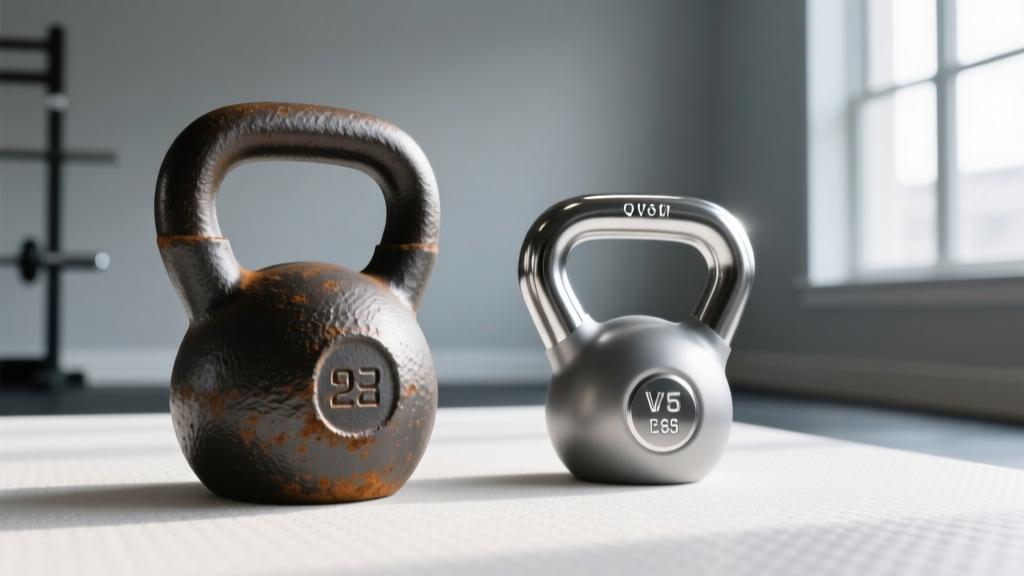
Cast Iron vs Competition Kettlebells: Beyond Dumbbell Pec Exercises
Expert 2026 review comparing cast iron vs competition kettlebells. Discover handle dimensions, pricing, and how they stack up against dumbbell pec exercises.

The Great Divide: Cast Iron vs. Competition Kettlebells
Building a versatile home gym requires understanding the nuanced differences between free weight implements. Many lifters start their journey with adjustable dumbbells, relying on them for everything from heavy compound presses to isolation work. When it comes to targeted chest development, dumbbell pec exercises—such as incline flyes, floor pullovers, and the hex press—remain the gold standard for achieving a deep, unloaded stretch at the bottom of the movement. However, as your training evolves, you may notice a gap in your stabilizer development, core integration, and ballistic power. This is where the kettlebell enters the picture.
But not all kettlebells are created equal. The market is fundamentally split into two distinct categories: Cast Iron and Competition. Choosing the wrong type for your specific training modality can lead to bruised forearms, compromised grip mechanics, and wasted money. In this hands-on 2026 buyer’s guide, we break down the exact specifications, failure modes, and top picks for both styles, while exploring how they complement your existing dumbbell routines.
Anatomy & Specifications: The Data Breakdown
Before diving into specific brands, it is crucial to understand the physical differences between these two bell types. According to technique standards outlined by StrongFirst, the global authority on kettlebell instruction, the handle diameter and bell dimensions drastically alter the biomechanics of grinds (presses, squats) and ballistics (swings, snatches).
| Feature | Cast Iron Kettlebell | Competition Kettlebell |
|---|---|---|
| Material | Cast Iron (sometimes steel alloy) | Solid Steel or Steel Shell w/ Shot |
| Handle Diameter | Varies (30mm - 35mm) | Uniform (Typically 35mm) |
| Bell Size | Grows with weight | Uniform across all weights |
| Window (Horn) Size | Narrower, tighter grip clearance | Wider, accommodates two-handed drills |
| Base | Flat, varies in width | Flat, uniform 210mm x 280mm |
| Best For | Grinds, general fitness, small hands | Ballistics, sport, high-rep cleans |
Hands-On Review: Top Cast Iron Picks for 2026
Cast iron bells are the traditional choice. Because their physical footprint scales with their weight, a 16kg bell will be significantly smaller than a 32kg bell. This makes them ideal for lifters with smaller hands or those who prioritize strict grinds like the military press, where a thinner handle (often 32mm or 33mm) allows for a more secure grip.
1. Rogue E-Coat Cast Iron Kettlebell
Price: ~$1.45 per pound
Handle Diameter: 33mm (approx)
The Verdict: Rogue’s e-coat finish is a standout in the 2026 market. Unlike powder coat, which can fill in the casting texture over time and become slippery during heavy sweat sessions, the e-coat preserves the aggressive grain of the cast iron. Failure Mode Warning: Avoid cheap, vinyl-dipped cast iron bells from big-box stores. The vinyl inevitably tears at the horn under the friction of high-rep snatches, trapping moisture against the raw iron and causing catastrophic rust.
2. Rep Fitness Powder Coat Cast Iron
Price: ~$1.60 per pound
Handle Diameter: 32mm - 35mm (scales slightly)
The Verdict: Rep Fitness offers exceptional handle clearance. The 'window' of the bell is slightly more rectangular than spherical, providing extra room for your hand to rotate during cleans without crushing your fingers against the bell's body. It is a top-tier choice for general strength and conditioning.
Hands-On Review: Top Competition Kettlebell Picks
Competition kettlebells are standardized. Whether you are lifting an 8kg or a 32kg bell, the physical dimensions remain exactly the same. This ensures that your technique, rack position, and clean mechanics never have to adapt to a changing bell size. They are filled with steel shot or machined from solid steel to achieve the target weight.
1. Kettlebell Kings Competition Series
Price: ~$2.20 per pound
Handle Diameter: 35mm
The Verdict: The 35mm handle is thick. If you are transitioning from standard dumbbell pec exercises where handles rarely exceed 30mm, the 35mm competition handle will heavily tax your grip during heavy presses. However, the wide horn makes two-handed swings and goblet squats incredibly comfortable. The steel construction absorbs shock better than cast iron, saving your forearms during high-volume clean and jerk sessions.
2. Eleiko Competition Kettlebell
Price: ~$3.00+ per pound
Handle Diameter: 35mm
The Verdict: Eleiko remains the premium benchmark. The surface finish is treated to resist chalk buildup, and the calibration is exact. For competitive kettlebell sport athletes (Girevoy sport), this is the only acceptable standard. For the average home gym owner, the price premium is difficult to justify over Kettlebell Kings.
Expert Callout: The Biomechanics of the Chest Press
While traditional dumbbell pec exercises remain unmatched for isolating the pectoralis major through a deep stretch, kettlebells introduce an offset center of mass. When performing a Kettlebell Floor Press or a Kettlebell Squeeze Press, the weight pulls your hands laterally and downward. According to biomechanical analyses referenced by the National Strength and Conditioning Association (NSCA), this offset load demands intense recruitment of the anterior deltoids and the sternal head of the pecs to maintain adduction (squeezing the bells together). Use dumbbells for stretch-mediated hypertrophy, and use kettlebells for peak-concentration tension and stabilizer endurance.
Programming Integration: Bridging the Gap
How do you effectively program both implements without overtraining? The key lies in understanding the force-velocity curve and the specific adaptations each tool provokes.
- Hypertrophy & Isolation (Dumbbells): Stick to your dumbbell pec exercises like incline presses and flyes. The symmetrical load and thinner handles allow you to push closer to muscular failure safely without your grip giving out first.
- Ballistic Power & Core (Kettlebells): Use competition bells for swings, snatches, and cleans. The uniform size and wide horns allow for smooth transitions and rack positions.
- Grinds & Stabilization (Cast Iron): Use cast iron bells for Turkish Get-Ups, strict military presses, and goblet squats. The thicker bell body and narrower handle provide a secure lock-in for slow, controlled grinds.
Coating Failure Modes: What Brands Don't Tell You
When investing $100 to $200 per bell, you must consider how the finish will degrade over a 5-to-10-year lifespan. Here is the reality of kettlebell coatings in 2026:
- Enamel Paint: Found on budget bells. It chips easily upon impact with other weights or the floor, leading to immediate oxidation (rust).
- Powder Coat: Excellent for drop-resistance, but the friction from knurling-like textures eventually wears smooth in the high-contact zones of the handle, requiring periodic sanding and re-coating.
- E-Coat (Electrophoretic Deposition): The current industry leader for cast iron. It bonds at a molecular level, providing rust resistance while maintaining the raw iron texture necessary for chalk adhesion.
- Bare Steel (Competition): Requires minimal maintenance but will develop a patina. A quick wipe with a 3-in-1 oil and a Scotch-Brite pad keeps it pristine.
The Final Verdict: Which Should You Buy?
If your primary goal is general fitness, hypertrophy, and you have smaller hands, invest in a high-quality Cast Iron E-Coat set (like Rogue). It will seamlessly complement your adjustable dumbbells, allowing you to transition from heavy dumbbell pec exercises to offset kettlebell presses without grip fatigue ruining your set.
If you are pursuing kettlebell sport, focusing heavily on high-rep ballistics, or plan to perform complex flows (like the Armor Building Complex), the uniform dimensions of a Competition Steel bell (like Kettlebell Kings) are non-negotiable. For a deeper dive into exercise selection and joint-safe mechanics, the exercise directories at ExRx.net remain an invaluable, free resource for mapping out your free-weight programming.
Ultimately, the best home gyms in 2026 don't force a choice between the two—they leverage the unique mechanical advantages of both.
More gear to consider
All reviews
2026 Dumbbell Rack Trends: Protecting Dumbbell Bench Form

Compact Gyms: Dumbbell Exercises for Buttocks & EZ vs Straight Bars

Dumbbell Thrusters Muscles Worked: Cast Iron vs Competition Kettlebell

The Best Dumbbell Step Up Substitute: 2026 Loadable Dumbbell Trends
Best Adjustable Dumbbells for Stiff Legged Dumbbell Deadlifts (2026)
