
Kettlebell Care: Cast vs Competition & Dumbbell Side Plank Hip Dips
Compare cast iron vs competition kettlebell maintenance. Learn longevity tips for core flows, including transitions from dumbbell side plank hip dips.

The evolution of functional fitness has blurred the lines between traditional bodybuilding and dynamic core training. As athletes build foundational stability using movements like the dumbbell side plank hip dips, they often transition to kettlebell flows for advanced rotational and anti-rotation challenges. However, this shift in equipment introduces a new variable: metallurgy and finish maintenance. Whether you are outfitting a commercial facility or a humidity-prone garage gym in 2026, understanding the longevity differences between cast iron and competition kettlebells is critical for protecting your investment.
The Core Transition: Dumbbell Anchors to Kettlebell Horns
When performing high-rep floor routines, the geometry of your weight matters. The hex dumbbell is a staple for core work because its flat edges provide a stable, non-rolling anchor. During dumbbell side plank hip dips, the flat side of the bell rests securely against the floor or bench, allowing the athlete to focus entirely on oblique engagement and hip stabilization without worrying about the equipment shifting.
Kettlebells, by contrast, feature a spherical base and an offset center of mass. When you incorporate them into weighted side planks, arm bars, or drag variations, the handle (the 'horns') absorbs the brunt of your grip tension, sweat, and acidic skin oils. Furthermore, the rounded base means the bell is more prone to rolling and micro-abrasions if placed carelessly on rough concrete or rubber matting. This fundamental difference in design dictates entirely different maintenance protocols depending on whether you choose cast iron or competition steel.
Finish Forensics: E-Coat vs. Powder Coat vs. Enamel
To properly maintain your kettlebells, you must first understand the protective layer shielding the raw metal. As of 2026, manufacturing standards have improved, but the core differences remain:
Coating Breakdown
- E-Coat (Electro-Deposition): Common on premium cast iron bells (like the Rogue Fitness Kettlebell lineup). It is exceptionally thin, preserving the aggressive texture of the cast iron handle for superior chalk retention. However, because it is thin, deep scratches can expose the raw iron to oxidation.
- Powder Coat: Often found on budget to mid-tier cast iron bells. It is baked on and much thicker. While highly resistant to chipping, it tends to fill in the handle's natural grain, resulting in a slicker surface that degrades faster under heavy, sweaty use.
- Competition Enamel: Competition bells are made from solid alloy steel and painted with a hard enamel. The steel is far more resistant to cracking from drops, but if the enamel chips down to the bare metal, rust will form rapidly and spread beneath the surrounding paint.
Maintenance Matrix: Failure Modes & Longevity Protocols
Below is a comparative framework to help you anticipate the wear and tear associated with each kettlebell type, especially when subjected to the heavy sweat loads typical of high-interval core flows.
| Feature | Cast Iron (E-Coat / Powder) | Competition (Steel / Enamel) |
|---|---|---|
| Base Material | Brittle Cast Iron (prone to cracking if dropped on concrete) | Solid Alloy Steel (highly durable, survives drops) |
| Handle Diameter | Variable (32mm - 38mm depending on weight) | Standardized 35mm (sometimes 33mm) |
| Primary Failure Mode | Surface rust on handle horns from acidic sweat | Enamel chipping on the base and inner horns |
| Maintenance Frequency | Weekly wipe-downs; Monthly oiling | Post-workout wipe; Touch-up paint as needed |
| 2026 Price Range | $45 - $140 USD | $160 - $320+ USD |
The Longevity Protocol: Step-by-Step Care
Human sweat has a pH ranging from 4 to 6.8, making it mildly acidic. When you transition from stable floor anchors to dynamic kettlebell snatches or heavy side planks, your grip tightens, transferring this acidic moisture directly into the microscopic pores of the kettlebell handle. Follow this protocol to neutralize the threat.
Step 1: The Post-Sweat Neutralization
Never leave sweat to dry on your bells. The salts left behind act as a desiccant, pulling moisture from the air and accelerating oxidation. After your session, wipe the handles and the bell body with a microfiber cloth lightly dampened with a 50/50 mix of water and white vinegar, or a specialized, non-bleach gym wipe. Warning: Avoid ammonia-based cleaners, as they will strip the e-coat and degrade powder coat finishes over time.
Step 2: Rust Remediation for Cast Iron
If you notice orange spotting on the horns of your cast iron bells, act immediately before it turns into deep pitting.
- Scrub the affected area with 0000-grade (super fine) steel wool. Do not use coarse wire brushes, as they will strip the surrounding e-coat.
- For stubborn rust, apply a paste of baking soda and water, let it sit for 10 minutes, and scrub again.
- Wipe clean and dry thoroughly.
- Apply a micro-thin layer of mineral oil or 3-in-One oil to the handle. Buff it out with a dry cloth so it does not feel greasy during your next grip-heavy set.
Step 3: Enamel Protection for Competition Bells
Competition bells do not require oiling, as the steel is sealed beneath enamel. However, floor work is their enemy. When setting the bell down during complex flows, the enamel on the flat base can chip against rough rubber mats or concrete. Once the bare steel is exposed, it will flash-rust within 48 hours in humid environments. Keep a small bottle of color-matched rust-inhibiting enamel paint (like Rust-Oleum) in your gym kit to dab onto any base chips immediately.
Floor Work, Core Flows, and Base Abrasion
Let us return to the biomechanics of floor-based core training. As noted by the Onnit Academy Kettlebell Guide, the offset center of mass in a kettlebell requires intense stabilizer engagement. When athletes perform weighted side planks or rotational drags, the bell is often in contact with the floor.
"The spherical base of a kettlebell concentrates all downward force onto a single, small point of contact. Unlike the distributed weight of a hex dumbbell during side plank variations, a dragging kettlebell acts like a localized abrasive wheel, slowly sanding away the bottom coating with every rep."
To mitigate base abrasion during core flows, always use high-density EVA foam mats (minimum 3/4-inch thickness) rather than thin rubber horse-stall mats. Furthermore, train athletes to 'place' the bell deliberately between sets rather than dropping or rolling it onto its side, which stresses the structural integrity of the cast iron base.
Storage and Environmental Degradation
Where you store your bells between sessions is just as important as how you clean them. Cast iron is highly susceptible to ambient humidity. If your garage gym exceeds 60% relative humidity, uncoated or scratched cast iron will develop surface oxidation overnight.
- Rack Selection: Avoid bare steel storage racks where the kettlebell base rests directly on metal. The friction of loading and unloading will scrape the bottom coating. Opt for wooden (pine or oak) storage tiers, or line your steel rack shelves with heavy-duty UHMW polyethylene tape.
- Chalk Management: Magnesium carbonate (gym chalk) is hygroscopic—it absorbs moisture from the air. If chalk dust accumulates in the crevices of a powder-coated handle, it will hold dampness against the metal. Use a stiff nylon brush to clean out the handle grain weekly.
Final Verdict: Which Survives Your Training Environment?
If your programming heavily features dynamic core flows, high-sweat interval training, and transitions from foundational movements like dumbbell side plank hip dips into advanced kettlebell arm bars, competition steel kettlebells offer superior structural longevity. They will not crack if dropped, and their standardized 35mm handles provide a consistent grip metric. However, they require vigilant enamel touch-ups.
Conversely, if you prefer the aggressive, tactile grip of cast iron e-coat bells for heavy grinds and are willing to commit to a strict monthly oiling and post-workout wipe-down protocol, they remain the most cost-effective and chalk-friendly option on the market. Ultimately, equipment longevity in 2026 is not just about the initial purchase price; it is about matching the metallurgy to your maintenance discipline and training environment.
More gear to consider
All reviews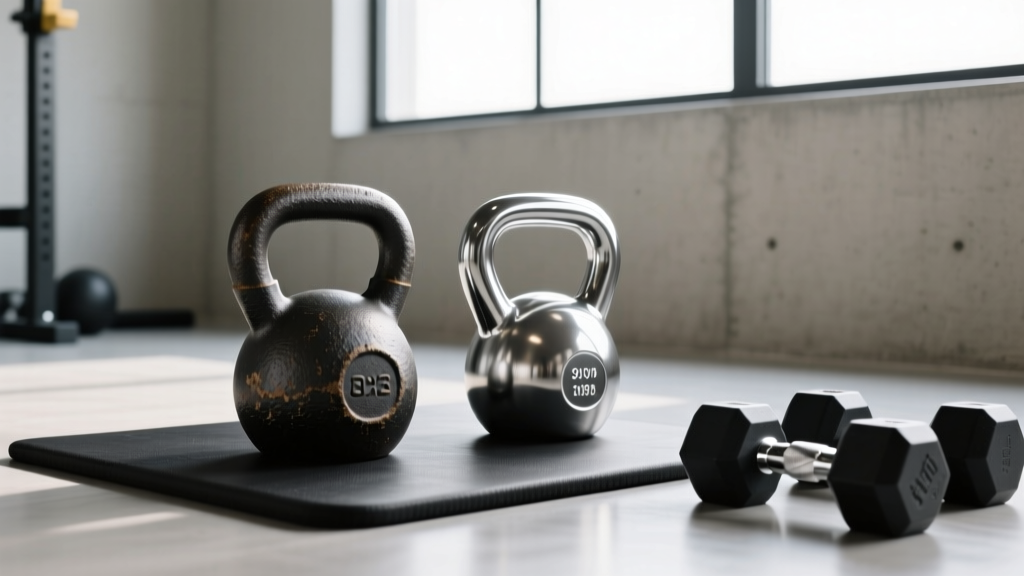
Cast Iron vs Competition Kettlebells: Deltoid Exercises with Dumbbells

Olympic vs Standard Weight Plates & Best Ab Workouts with Dumbbells

Standard vs Olympic Plates for Standing Dumbbell Chest Exercises

Barbell Collar vs Clamp: Securing One Dumbbell Exercises for Biceps

Rubber Hex vs Urethane Dumbbells: Market Trends and Anticholinergic Grip Factors
