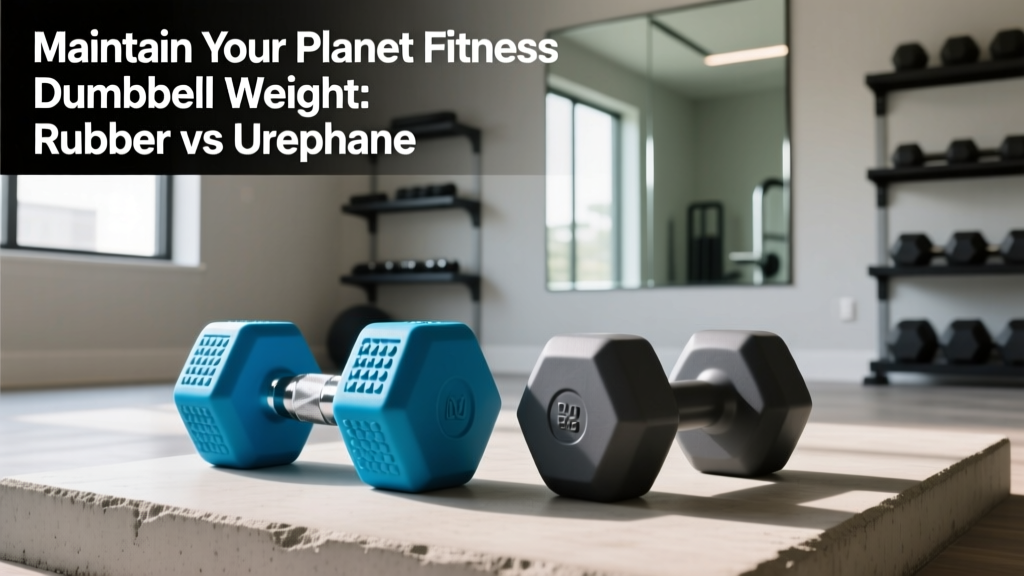
Maintain Your Planet Fitness Dumbbell Weight: Rubber vs Urethane
Compare rubber hex and urethane dumbbells for longevity. Learn maintenance tips to match the Planet Fitness dumbbell weight standard in your home gym.

The Commercial Standard: Decoding the Planet Fitness Dumbbell Weight
When outfitting a home gym, enthusiasts often seek the indestructible feel of commercial equipment. A common benchmark in online fitness communities is the Planet Fitness dumbbell weight experience. Walk into any of their 2,400+ locations, and you will typically find high-grade, commercial-tier urethane or premium virgin rubber hex dumbbells (often manufactured by industry giants like Life Fitness, Matrix, or Eleiko). These weights survive thousands of drops, constant handling, and harsh chemical cleanings daily. However, replicating that exact longevity in a home or garage gym requires understanding the material science behind the coating and implementing a rigorous maintenance protocol.
As of 2026, the home fitness market has bifurcated into two dominant dumbbell categories for heavy lifters: vulcanized rubber hex dumbbells and cast polyurethane (urethane) dumbbells. While both aim to protect your floors and reduce noise, their molecular structures dictate vastly different lifespans, failure modes, and care requirements. Below, we break down exactly how to maintain these two materials to achieve commercial-gym longevity.
Material Science: Virgin Rubber Hex vs. Cast Urethane
To maintain your equipment, you must first understand what it is made of. The durability of a dumbbell is largely measured by its Shore A Durometer rating, which quantifies the hardness and indentation resistance of the elastomer.
Vulcanized Rubber Hex Dumbbells
Rubber hex dumbbells are the workhorses of budget-to-mid-tier home gyms. Premium models utilize 100% virgin vulcanized rubber, while cheaper alternatives use recycled crumb rubber bound with chemical adhesives. Virgin rubber typically sits around an 80A to 85A Shore hardness. It offers excellent shock absorption but is highly susceptible to UV degradation, ozone cracking, and plasticizer migration (the process where oils leach to the surface, leaving the dumbbell feeling permanently sticky).
Cast Urethane Dumbbells
Urethane (polyurethane) is a synthetic elastomer that represents the gold standard for commercial gyms. It boasts a higher Shore A rating, usually between 90A and 95A, making it significantly more resistant to abrasion, cutting, and edge chipping. Unlike rubber, urethane is highly stable under UV exposure and does not off-gas volatile organic compounds (VOCs), meaning it lacks that notorious 'new tire' smell. According to material specs from premium manufacturers like Rogue Fitness, high-quality urethane is virtually impervious to standard gym sweat and oils, requiring far less intensive conditioning than rubber.
Quick Spec & Pricing Matrix (2026 Market Averages)
| Feature | Premium Rubber Hex | Commercial Urethane |
|---|---|---|
| Shore A Hardness | 80A - 85A | 90A - 95A |
| UV / Ozone Resistance | Low (Requires Protectant) | Excellent (Inherently Stable) |
| Average Cost Per Pound | $1.50 - $2.50 | $3.50 - $5.50+ |
| Primary Failure Mode | Sticky surface, dry rot, head detachment | Edge chipping (if dropped on bare concrete) |
The 2026 Maintenance Protocol: Cleaning and Preservation
Achieving the pristine condition of a well-maintained commercial gym requires abandoning harsh household cleaners. The most common mistake home gym owners make is using bleach-based products or high-concentration isopropyl alcohol, which strips the natural moisture from rubber polymers and accelerates dry rot.
Step-by-Step Cleaning Routine
- Daily Wipe Down: After use, wipe the handles and heads with a microfiber cloth dampened with a neutral pH cleaner. Eleiko and other premium brands recommend a simple mixture of warm water and a few drops of mild dish soap (like Dawn) or a dedicated gym equipment wipe.
- Deep Cleaning (Monthly): For stubborn chalk and sweat buildup on the knurled steel handles, use a nylon-bristle brush with a 50/50 mix of water and white vinegar. Avoid wire brushes, which can strip the zinc or chrome plating and invite rust.
- Rubber Conditioning (Quarterly): If you own rubber hex dumbbells, you must replenish the elastomer's moisture. Apply a light coat of 303 Aerospace Protectant or a silicone-based rubber conditioner. Wipe off the excess after 15 minutes to prevent a slippery grip.
Never use Simple Green Concentrate, Clorox, Lysol, or Acetone on rubber or urethane dumbbells. Quaternary ammonium compounds and harsh degreasers break down the vulcanization bonds in rubber, leading to premature crumbling and a permanently sticky, unusable surface.
Mechanical Upkeep: Solving the Loose Hex Head Problem
While urethane dumbbells are often cast directly around a solid steel core or welded to the handle, many rubber hex dumbbells feature a bolted head design. A frequent failure mode in mid-tier rubber hex sets is the hex head loosening from the steel handle over time due to rotational torque during exercises like dumbbell presses or rows.
The Fix: Inspect the retaining bolts on the inside of the hex heads every six months. Using a calibrated torque wrench and the appropriate hex socket, tighten the bolts to 40–50 ft-lbs (check your specific manufacturer's spec, as some cap out at 35 ft-lbs). If a bolt continuously backs out, remove it completely, clean the threads with a wire brush, apply a single drop of Loctite 242 (Blue Threadlocker), and re-torque. Never use Red Loctite, as it is permanent and will make future repairs impossible without applying extreme heat.
Storage Environments: Garage Gym vs. Climate-Controlled
Where you store your dumbbells dictates their lifespan just as much as how you clean them. Environmental factors are the silent killers of free weights.
The Garage Gym Challenge
Garage gyms subject equipment to extreme temperature fluctuations and high humidity. For rubber hex dumbbells, this is a nightmare. Repeated freezing and thawing causes the rubber to expand and contract, leading to micro-fissures and eventual separation from the steel core. Furthermore, uncoated or lightly zinc-plated handles will flash-rust in humid environments. Actionable advice: If your gym is unclimate-controlled, invest in a dehumidifier to keep ambient humidity below 50%, and store your dumbbells on a tiered rack rather than directly on a cold concrete floor, which promotes condensation.
Urethane and UV Exposure
While urethane is vastly superior in resisting temperature swings and moisture (it will not dry rot like rubber), it is not entirely invincible. Prolonged, direct UV exposure from a nearby window or open garage door can eventually cause the urethane to fade and become brittle on the outermost millimeter. Keep your dumbbell rack out of direct sunlight to preserve the aesthetic and structural integrity of the polymer.
Frequently Asked Questions
Q: Can I drop urethane dumbbells on my garage floor?
A: No. Even though commercial gyms see dropped weights, those facilities use 3/4-inch thick vulcanized rubber flooring. Dropping a 90A urethane dumbbell directly onto bare concrete will cause the edges to chip or the steel core to fracture the polyurethane bond. Always use proper drop mats or rubber flooring.
Q: How do I fix rubber dumbbells that have become sticky?
A: Stickiness is caused by plasticizer migration or chemical degradation. You can temporarily mitigate this by scrubbing the heads with a mild degreaser and warm water, drying them thoroughly, and applying a light dusting of talcum powder or a specialized rubber restorer. However, if the rubber is actively degrading and leaving black residue on your hands, the polymer is permanently compromised and the dumbbells should be replaced.
Q: Are urethane dumbbells worth the 2x price premium over rubber?
A: For a commercial facility or a serious home gym where the equipment will be passed down for decades, yes. Urethane requires virtually zero conditioning, emits no odor, and resists edge chipping. However, for casual lifters on a budget, premium virgin rubber hex dumbbells maintained with quarterly conditioning will easily last 10+ years.
More gear to consider
All reviews
Best Adjustable Dumbbells for the Dumbbell Bench Squat (2026)
Standard vs Olympic Plates: Which Fits Your Dumbbell Hammer Curl?
Space-Saving Dumbbell Racks for Your Lat Row Dumbbell Setup

Olympic Bar Setup: Knurling and the Dumbbell Straight Arm Pullback

Power Rack vs Squat Rack for Dumbbell Bench Press vs Bench Press
