Kettlebell Care: Cast Iron vs Competition & Lat Pull Down Dumbbell Alternative
Master kettlebell longevity with our cast iron vs competition maintenance guide, plus tips for your lat pull down dumbbell alternative home gym setup.

The Metallurgy of Maintenance: Cast Iron vs. Competition Kettlebells
When outfitting a home gym in 2026, free weights represent a significant financial investment. While most lifters obsess over rack stability or barbell whip, the longevity of your kettlebells is often an afterthought until rust blooms on the handle or a competition bell develops a distracting rattle. Understanding the metallurgical differences between cast iron and competition steel is the first step in establishing a rigorous maintenance protocol.
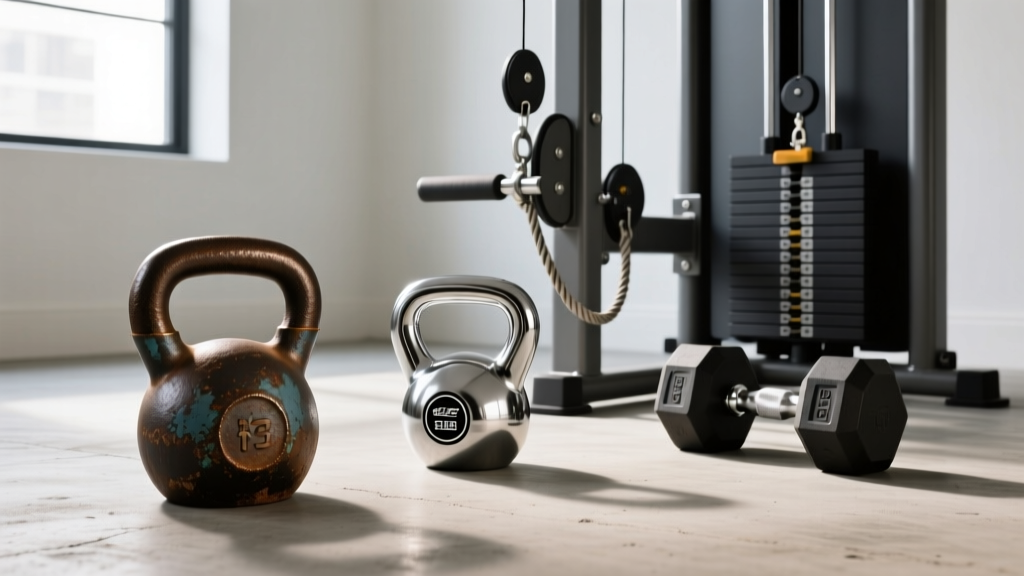
Cast iron kettlebells, such as the Kettlebell Kings Standard Cast Iron Line, are typically sand-cast. This process leaves microscopic pitting and a porous surface that is highly susceptible to oxidation when exposed to the urea and lactic acid in human sweat. Conversely, competition kettlebells feature a solid steel outer shell with a hollow core filled with steel shot and epoxy. While the steel shell resists deep pitting, the painted finish and internal structural integrity require an entirely different maintenance approach.
Expert Insight: Never use a steel wire brush on cast iron kettlebells. Steel bristles can break off and embed into the softer cast iron, creating localized galvanic corrosion cells that accelerate rusting. Always use a brass or nylon-bristle brush.Cast Iron Kettlebell Longevity: Fighting Porosity and Rust
Raw or powder-coated cast iron bells (typically priced between $1.50 and $2.20 per pound in 2026) require proactive moisture management. The handle is the most critical contact point; once the protective coating wears down from high-rep snatches and cleans, the bare iron is exposed.
Step-by-Step Cast Iron Restoration and Care
- Degreasing and Chalk Removal: Gym chalk (magnesium carbonate) absorbs atmospheric moisture and holds it against the iron. Once a week, scrub the handle and horns with a stiff nylon brush and a 50/50 solution of distilled white vinegar and water.
- Rust Eradication: For active orange rust, apply white vinegar directly to the affected area for 10-15 minutes. Scrub vigorously with a brass wire brush until the surface is uniformly dull grey.
- Neutralization: Wipe the bell down with a baking soda and water paste to neutralize any remaining acetic acid from the vinegar.
- Re-Seasoning: Apply 3 to 4 drops of 3-in-One oil or boiled linseed oil to a microfiber cloth. Rub it into the handle and horns, let it sit for 20 minutes, and buff off the excess. This creates a hydrophobic barrier that prevents oxygen from reaching the iron.
Competition Kettlebell Care: Protecting the Steel Shell
Competition kettlebells, like the Rogue Competition Kettlebells ($135-$155 for a 24kg bell as of early 2026), are precision-engineered with a universal 35mm handle diameter and a color-coded steel shell. The primary failure modes for these bells are paint chipping, handle corrosion, and internal filler shifting.
The 'Maraca Effect' and Internal Epoxy Failure
Because competition bells are hollow, manufacturers use steel shot suspended in a two-part epoxy to achieve the target weight. If you repeatedly drop heavy competition bells (24kg and above) onto raw concrete, the shockwaves can micro-fracture the internal epoxy. Over time, the steel shot breaks loose, creating a 'maraca' rattle that ruins the bell's balance and acoustic feedback during hardstyle swings.
The Fix: If your bell develops a rattle, locate the rubber or plastic plug on the flat base of the kettlebell. Pry it out, drill a shallow 1/4-inch pilot hole into the filler cavity, and inject a high-viscosity marine-grade epoxy (like West System 105/206). Let it cure for 48 hours in a climate-controlled room before resealing the plug.
"A competition kettlebell is a precision instrument. Treat it like a barbell's bearing sleeve—protect the finish, avoid concrete drops, and wipe the 35mm handle after every session to preserve the knurl-less grip texture." — StrongFirst Certified Instructors
Comparison Matrix: Maintenance Profiles
| Feature | Cast Iron (Standard) | Competition (Steel Shell) |
|---|---|---|
| Primary Enemy | Surface oxidation (Rust) | Paint chipping & internal epoxy cracking |
| Cleaning Tool | Brass wire brush | Microfiber cloth & mild soap |
| Lubrication | 3-in-One or Boiled Linseed Oil | None (keep handle dry) |
| Drop Tolerance | High (solid mass) | Low (risk of shell dent/epoxy fracture) |
Integrating the Lat Pull Down Dumbbell Alternative into Your Maintenance Routine
Not every home gym has the footprint or budget for a commercial cable stack. Consequently, many lifters rely on free weights to target the latissimus dorsi. The most effective lat pull down dumbbell alternative using free weights is the heavy kettlebell straight-arm pullover, performed on a flat bench. This movement mimics the sagittal plane extension of a cable pulldown, heavily recruiting the lats and teres major without requiring a lat bar.
However, executing high-rep kettlebell pullovers introduces a unique maintenance variable: sweat pooling on the horns. When you grip the bell by the horns for pullovers or goblet squats, the underside of the handle and the inner horns trap sweat against the metal, an area often missed during quick post-workout wipe-downs.
Maintaining Your Lat Pull Down Dumbbell Alternative Setup
- Horn Corrosion Prevention: After performing pullovers, use a damp cloth with a drop of dish soap to clean the inner horns. If using a cast iron bell, ensure you re-oil the horns monthly, as the friction from the heel of your hand strips the protective oil layer faster than on the main handle.
- Resistance Band Pulldowns: If your lat pull down dumbbell alternative involves anchoring heavy-duty TPE or latex resistance bands to your squat rack, inspect the bands for micro-tears and ozone degradation every 90 days. Store bands in a UV-resistant tote away from direct sunlight and heat sources to prevent polymer chain breakdown.
- Bench Upholstery Care: Heavy pullovers cause significant back sweat. Wipe down your bench's vinyl upholstery with an alcohol-free antibacterial wipe to prevent the vinyl from drying out and cracking over time.
Environmental Storage Solutions for Free Weights
Your maintenance routine is only as effective as your storage environment. Basements and garages are notorious for fluctuating humidity, which causes condensation on cold cast iron. In 2026, the gold standard for free weight storage in non-climate-controlled spaces involves Vapor Corrosion Inhibitors (VpCI).
Placing VpCI emitter chips (like Rust-Oleum Vapor Stop) inside your kettlebell storage rack or drawer creates an invisible molecular layer over the metal that blocks moisture. Combined with a smart dehumidifier set to maintain ambient humidity below 45%, you can virtually eliminate the need for weekly oiling of your cast iron bells.
Frequently Asked Questions
Can I use WD-40 to maintain my cast iron kettlebells?
Standard WD-40 is a solvent and water-displacer, not a long-term lubricant or rust preventer. It will strip away existing protective oils and leave the iron vulnerable once it evaporates. Stick to 3-in-One oil, boiled linseed oil, or specialized mineral oils designed for gym equipment.
How do I fix a chipped paint job on a competition kettlebell?
Use a fine-grit sandpaper (400-grit) to smooth the edges of the chip, clean the area with isopropyl alcohol, and apply a rust-inhibiting enamel paint that matches the bell's color code (e.g., green for 24kg). This prevents the exposed steel shell from developing surface rust, which can stain your flooring.
Are adjustable kettlebells worth the maintenance hassle?
Adjustable kettlebells save space but introduce mechanical failure points like locking pins and internal weight plates. If you choose an adjustable model, you must regularly lubricate the locking mechanism with dry PTFE spray to prevent grit buildup, which can cause the pin to seize during a heavy swing.
More gear to consider
All reviews
Double Arm Dumbbell Row: Complete Home Setup & Form Guide

Leg Curl Alternative with Dumbbells: 2026 Rubber vs Urethane Trends

Senior Dumbbell Storage & Seated Dumbbell Exercises for Seniors PDF Guide

Bumper vs Iron Plates: 2026 Trends & Dumbbell Chest Press Analytics
Rubber Hex vs Urethane: Maintaining Bells of Steel Urethane Dumbbells